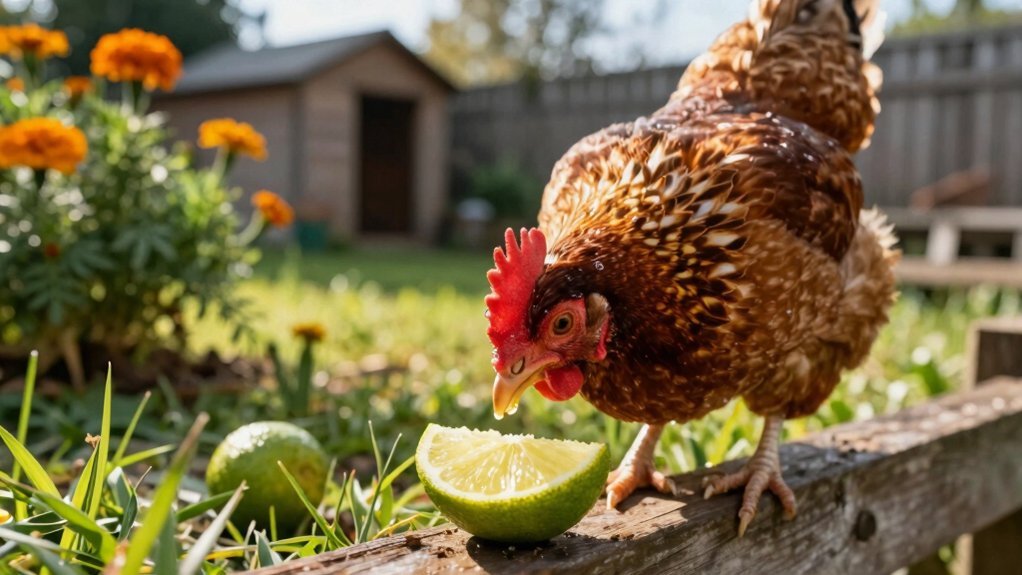
You’re probably wondering if a lime slice is safe for your chickens, and the short answer is yes—just a tiny, occasional piece can be a harmless, vitamin‑C boost, but overfeeding it can irritate their mouths, upset digestion, and even cause lethargy or abnormal droppings. Offer only a pea‑sized, seedless flesh bit once a week, no more than a teaspoon total per bird, and always wash and peel it first. If you see fluffed‑up birds, watery green droppings, or a loss of appetite, cut the lime right away; otherwise, a little zest now and then is fine. Keep reading to learn how to prep and monitor lime safely.
Can Chickens Eat Limes? The Short Answer
Now, moderation matters. Overfeeding citrus can irritate mouths and cause digestive upset, much like giving a human too much orange juice. Stick to bite‑size bits a few times a week, and keep the main diet focused on quality poultry feed. While these fruits offer benefits like boosting the immune system, excessive consumption leads to issues due to acidity. It is important to remember that citrus fruits are generally listed among those to avoid because they can cause these specific digestive issues. All right, the takeaway is simple: limes are safe in small amounts, but treat them like a snack, not a meal. Just like orange peels, ensure the fruit is free of pesticides and wax to avoid harmful residues before offering it to your flock. Ready to try a tiny slice and watch their reaction?
Why Chickens May Like or Dislike Lime
You’re probably wondering why some chickens peck avidly at a lime slice while others turn up their beaks. Here’s the thing: chickens taste sour, bitter, sweet, salty and umami, but the sharp acidity of lime hits their sour receptors hard. Individual preferences swing wide—one bird may sample a tiny piece then quit, while another, bolder bird, tries a few more bites. Flock curiosity also plays a role; a few daring hens can spark interest, yet many stay away because the citrus aroma and bitter peel smell off‑putting.
Why do they reject it? The strong scent of lime peel and the slippery texture of pulp feel unfamiliar compared with grain or insects. High acidity triggers a sour reaction, and bitter compounds in the pith reinforce dislike. Chickens favor energy‑dense, familiar foods, so a lime wedge looks and feels like a foreign snack.
What could make them like it? Tiny flesh‑only bits mixed into regular feed reduce the sour punch and hide the bitter rind. Birds raised with varied treats often show more willingness to explore new flavors, especially when weather is hot and they’re thirsty. Pecking order matters too—dominant chickens may test a lime slice first, and if they enjoy it, the rest of the flock might follow. While citrus requires caution, offering nutritious vegetables like leafy greens or carrots provides a safer, vitamin-rich alternative that supports overall bird wellness without the risk of excessive acidity. It is important to remember that while dietary lime is acidic, applying regular lime application to the coop floor helps neutralize ammonia odors and creates an environment hostile to pathogens. Owners should always ensure that any fruit or vegetable treats remain a small supplement to a balanced, complete layer feed rather than replacing the primary diet.
Takeaway: Lime isn’t a natural favorite; acceptance hinges on texture, scent, and acidity. Try offering a few milliliters of flesh‑only juice mixed into feed, watch individual preferences and flock curiosity, and adjust based on what you observe. Next, consider how vitamin C and antioxidants could affect your chickens’ health. food‑grade diatomaceous earth can be mixed into dust baths to help control parasites while offering lime treats.
Vitamin C & Antioxidants: What Lime Gives Chickens
You’re probably wondering why a lime slice could matter for your flock’s health. Here’s the thing: limes pack vitamin C, the antioxidant that neutralizes free radicals. When chickens face heat stress, their internal vitamin C synthesis drops, so dietary sources become vital for heat stress mitigation. This boost helps white‑blood‑cell activity, improves antibody production, and supports calcium handling for stronger shells.
What does that mean for you? Adding a small lime wedge can give birds a quick vitamin C hit, akin to a natural supplement. It aids collagen formation, mineral mobilization, and overall resilience during hot days or transport. Takeaway: a modest lime treat supplies antioxidant support when natural synthesis falters. Next, consider how much lime you’ll safely offer. Since heat stress significantly impacts flock health, providing fresh, cool water alongside dietary antioxidants is essential for effective temperature regulation. Without early intervention to address signs like panting and lethargy, the condition can escalate to fatal heat stroke. Because excessive heat causes chickens to reduce their appetite and lay poor-quality eggs, managing their environment is just as critical as dietary supplements.
How Much Lime Is Safe for Chickens? Serving Sizes
How much lime can you safely give your chickens? You’re probably wondering how tiny a treat can be before it hurts. Here’s the thing: chickens tolerate only a sliver of citrus because their digestive acid tolerance is low. Offer a few bite‑sized pieces of peeled lime pulp—no more than one or two teaspoons per bird per week. Avoid the rind entirely; its concentrated oils and bitter compounds raise rind risk factors and can irritate the gut.
What’s a good serving size? Think of a single chicken’s treat as a single pea‑sized cube of flesh, not a whole slice. Give it sparingly, maybe once a week, and always alongside their regular feed. Just as apple seeds contain cyanide compounds that are dangerous to your flock, the acidic nature of citrus requires similar caution regarding quantity and frequency. Excessive intake has been anecdotally linked to undesirable behaviors and potential egg quality problems, reinforcing why moderation is critical. While exploring safe treats, remember that sweet potatoes are a beneficial alternative, unlike white potatoes which contain harmful solanine.
Takeaway: tiny, occasional, rind‑free pieces keep your flock safe. Next, watch for any signs of upset after a new treat.
How to Spot Lime Over‑Consumption in Your Chickens
Spotting lime over‑consumption can feel like hunting for clues in a mystery, but the signs are usually obvious once you know what to watch for. You’ll notice behavioral changes first: a sudden loss of appetite, lethargy, or a bird sitting fluffed up for hours. If your flock isolates itself, looks hunched, or moves sluggishly, that’s a red flag.
Next, watch for digestive distress. Watery diarrhea, greenish droppings, or a swollen abdomen signal the lime is upsetting their gut. A drop in feed conversion or visible weight loss means the issue is progressing. Since dietary imbalances and intestinal inflammation can disrupt hydration balance, it is crucial to address gut health immediately to prevent severe dehydration and further complications. While green droppings often result from eating leafy greens, they can also indicate serious health issues when paired with appetite loss or lethargy.
Here’s the thing: combine these cues. If you see both behavioral changes and digestive distress together, act fast. The takeaway: monitor appetite, activity, and droppings daily; any shift could mean over‑consumption. Keep in mind that while diet often causes color shifts like bright blue or teal tint from specific foods, persistent abnormal colors alongside these symptoms may indicate serious health issues rather than just what they ate. Next, consider how to re‑introduce lime safely.
Introducing Lime to Chickens Gradually: Monitoring Tips
Starting small is key—offer a pea‑sized piece once, then wait 24 hours and watch. You’re probably wondering how to keep the experiment safe; the initial exposure schedule should be one piece per bird, then a day of observation before any repeat.
Now, you’ll want to run separate group trials. Pick a handful of birds you think tolerate new foods, give them the lime, and keep the rest on regular feed. Compare appetite, droppings, and energy levels between the two groups.
Here’s the thing: monitor for reduced intake, watery droppings, or lethargy. If more than one bird shows signs of intolerance, stop the trial.
Takeaway: a controlled, day‑by‑day approach with clear group comparisons lets you see if lime fits your flock’s diet. Next, think about how to prepare the fruit safely.
Since citrus is not listed among the safe fruits like strawberries or blueberries, extra caution is required when introducing it to your flock. Just as banana peels require thoroughly washing to remove pesticides before feeding chickens, lime rinds should also be cleaned meticulously to avoid chemical exposure. Remember that treats should generally not exceed 10% of the diet to prevent digestive upset or nutrient imbalances in your birds.
Preparing Lime for Chickens: Peel, Flesh, and Seed Guidance
You’re probably wondering how to turn those tiny lime pieces you tested into a safe, tasty treat for your flock. First, pick an organic selection or well‑scrubbed conventional lime. Wash it under running water, scrub the rind, and dry it. Peel the lime and slice the rind into fine strips—chickens peck easier when it’s tiny, not chunky. The flesh is the star; cut it into bite‑size wedges or dice it. If the flesh is very sour, mix a few pieces with other fruit to boost appeal. Seeds aren’t toxic, but you can pull out loose ones to avoid choking, especially for chicks. Now, focus on preparation safety: keep the cutting board clean, serve on a separate dish, and discard any leftovers after a few hours to prevent pests. Just as carrot greens are edible for chickens, ensuring all parts of your chosen treat are safe enhances the nutritional value of the snack. Like carrot tops providing beneficial dietary fiber, lime flesh offers hydration and vitamins when served correctly. Takeaway: a quick wash, fine rind, small flesh pieces, and optional seed removal give you a safe, tasty lime treat. Ready to try feeding a few wedges tomorrow?
When to Skip Lime: Health, Stress, and Environmental Factors
When should you skip lime? If your birds show dietary sensitivities—reduced appetite, sour crop, or odd droppings—pull the treat immediately. Heat waves and cold snaps also lower tolerance; stress already taxes gut health, so adding acidic fruit can tip the balance.
Are they stressed or ill?
Now, notice any coughing, labored breathing, or eye irritation. Lime dust acts like a tiny irritant, worsening respiratory issues in poorly ventilated coops. If you’re dealing with disease outbreaks, transport, or predator pressure, stick to familiar feed.
What about the coop environment?
All right, excessive lime raises litter pH and ammonia, which can burn footpads and irritate mucous membranes. In crowded or damp houses, the risk outweighs any vitamin boost.
Takeaway: Stop offering lime whenever you see digestive upset, stress, or environmental irritants. Keep the diet simple until the flock recovers, then reassess. What’s your next step—monitoring health signs or adjusting coop ventilation?
Lime vs. Other Citrus: Safety & Taste for Chickens
If you’re wondering whether limes are safer or tastier than other citrus for your chickens, you’ve hit the right spot. Limes are non‑toxic in small bites, but their citric toxicity isn’t higher than oranges or lemons. The real issue is flavor aversion: chickens usually reject the sharp, tart bite of a lime, while sweet oranges win them over with higher sugar content.
Here’s the thing: lemons share the same acidity as limes, so they also provoke a sour‑taste turn‑off, whereas tangerines and mandarins, with lower acidity, get more pecks. Even tiny amounts of peel or pith can irritate a chicken’s gut, leading to loose droppings.
All right, the takeaway: all citrus are safe in moderation, but limes often trigger flavor aversion and digestive upset more than sweeter fruits. Offer a tiny, seed‑less piece and watch their reaction before deciding to include them regularly.
Lime Feeding Cheat Sheet: Portion, Frequency, and Safety Tips
Limes may look tempting, but you’re probably wondering how much is safe before they become a problem. You can give a chicken a pea‑sized, seedless lime piece once a month at most. Think of it as a novelty garnish, not a regular snack, and always strip the rind and any soft spots.
Now, how often should you offer it? Only occasionally—think a handful of treats per flock per season. Frequent citrus spikes acid moderation, which can irritate the digestive tract and knock down diet balance. Keep the main diet on complete feed, grit, calcium, and fresh water.
All right, what safety steps matter? Offer tiny pieces, avoid mold, and watch for soft droppings or reduced appetite. If any issue appears, stop the treat and monitor. Takeaway: lime is a rare, tiny supplement; use it sparingly and maintain a balanced diet. Ready to try a tiny slice?