You’re right to wonder if chickens actually eat roaches—yes, they’ll peck them like a snack because the bugs pack protein, magnesium, zinc and calcium that help feather growth and egg production. Here’s the thing: a single bird can cover about 120 sq ft a week, so they’ll knock down surface roaches, but hidden colonies and night‑active bugs stay out of reach, meaning chickens aren’t a full‑time exterminator. Obviously, you’ll want to keep feed sealed, clean up spills, and use food‑grade diatomaceous earth to protect the flock while letting the birds do their natural foraging. If you keep the coop tidy and let the chickens roam safely, you’ll see a modest drop in roach numbers and a healthier flock—more tips await if you keep exploring.
Do Chickens Eat Roaches? The Straight‑Answer Overview
Do chickens actually eat roaches? You’re probably wondering if that pecking habit is just a myth or a real part of roach diets. The straight answer: yes, they do. Chickens are natural foragers, and when a roach wanders into a coop they’ll snap it up, just like they do with beetles or mealworms. This is typical poultry behavior—scavenging for protein snacks when the opportunity appears.
Now, why does this matter? Roaches often hide in feed spills or damp bedding, so their presence signals a sanitation issue. By pecking at exposed insects, chickens can lower visible numbers, but they won’t eradicate a hidden infestation. The takeaway: chickens will eat roaches, helping you spot and reduce a problem, yet you still need proper cleaning and pest control. Next, ask yourself: how clean is your coop, and what steps can you take to keep it that way? The chickens were initially reluctant to try the dead cockroaches, but a few brave birds eventually ate them. As omnivorous birds, chickens actively hunt insects to obtain essential nutrients like protein and amino acids necessary for their health and egg production. Beyond insects, their wild ancestors also consumed seeds and plants to ensure a balanced intake of vitamins and minerals. While chickens act as opportunistic feeders that may consume pests they encounter, relying on them alone for control is problematic because effective management requires sealing coop entry points to prevent infestations.
Why Chickens Eat Roaches: Protein Benefits
All right, think of roaches as a natural multivitamin snack. They deliver magnesium, zinc, iron, and calcium alongside the protein, so your birds get a balanced nutrient boost without excess fat.
Obviously, a few roaches won’t replace a balanced ration, but they’re a handy supplement when you want to enhance your flock’s health. Takeaway: feed a modest amount of clean, food‑grade roaches to support protein synthesis and metabolic enrichment. Next, consider how to safely introduce them into your coop. Just as chickens are voracious omnivores that consume frogs and other small wildlife, they eagerly hunt roaches as part of their natural foraging behavior. However, similar to the risks associated with black soldier fly larvae, some pests may carry parasites like tapeworms if consumed by your flock. This mirrors the caution needed when allowing chickens to forage for termite nests, where avoiding chemical contaminants is essential for flock safety.
How Chickens Catch and Eat Roaches in the Yard
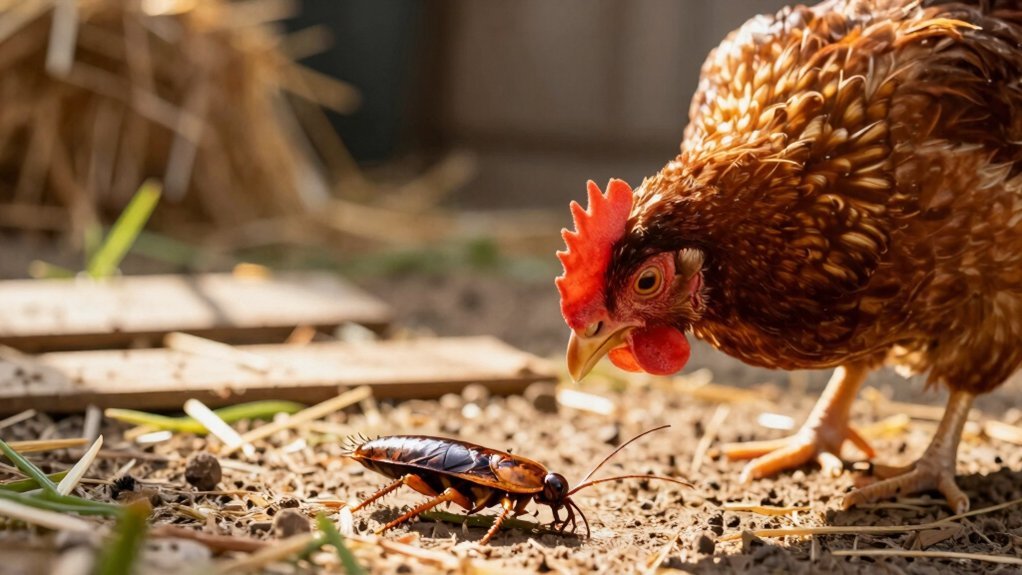
How do chickens actually find roaches in the yard? You’ll notice them scratching and pecking across the yard layout, especially where leaf litter, damp mulch, or fallen fruit collect. Their natural foraging behavior makes them excellent roach detectors—fast movement triggers a chase‑and‑peck response that flushes insects out of hiding.
Here’s the thing: when you turn over boards or lift debris, you expose roaches, and the flock surrounds the spot, reducing escape routes. Early morning and evening light increase activity, so you’ll see chickens pecking more aggressively around compost edges and coop perimeters. Just as chickens benefit from eating ants for protein, they gain similar nutritional value from consuming roaches, provided the insects haven’t been exposed to harmful toxins or pest control products. Like their preference for slow-moving caterpillars, chickens find these visible pests particularly appealing due to their size and movement patterns. Similar to how they crunch wasp stingers to prevent injury, chickens rely on their protective feathers and quick pecking to handle roaches safely without harm.
All right, keep the yard dry and clear of clutter to boost detection. The takeaway: a tidy, well‑structured yard lets chickens hunt roaches efficiently. Next, consider how many birds you need for ideal coverage. The pickle jar can be placed under a dripping water spout to continuously attract and trap cockroaches.
Limits of Chickens Eating Roaches for Pest Control
If you’re wondering why chickens can’t single‑handedly wipe out a roach infestation, you’ve hit the right spot. Chickens are opportunistic foragers, not roach exterminators, so they mainly snatch bugs they see on the surface. Hidden colonies in walls, drains, or deep mulch stay out of reach, and night‑active roaches dodge the birds’ daytime foraging.
Here’s the thing: a single chicken can “debug” about 120 sq ft per week, so a small flock only covers a limited yard. Large or commercial roach populations reproduce faster than the birds can eat them, especially when you have composting considerations that keep moisture and food abundant. The major problem area is actually the chicken coop, where cockroaches emerge from droppings. Just as accessible food sources attract rats to coops, spilled feed and waste draw cockroaches to the same location, making sanitation critical. While rats typically avoid confrontation with adult chickens, an established rat infestation can increase risks to chickens at night when they are vulnerable, compounding the need for rigorous coop hygiene against all pests. Furthermore, because chickens rely on flock dynamics for emotional well-being, a stressed or isolated bird may be less effective as an active forager against pests.
All right, the takeaway: chickens reduce visible roaches but won’t eradicate an infestation on their own. Pair them with sanitation, exclusion, and targeted treatments for lasting control.
Health Risks When Chickens Eat Roaches
When you wonder whether letting chickens snack on roaches is safe, you’ve hit a pivotal point.
Can roaches bring in environmental contaminants?
Sure. If a roach crawls through a sprayed basement or a pesticide‑treated garden, it can coat its shell or gut with toxic residues. Chickens swallow the whole bug, so those chemicals bypass digestion and enter their bloodstream. The risk spikes when you collect insects from freshly sprayed areas.
Are roaches pathogen carriers?
Absolutely. They walk through filth, drains, and garbage, picking up bacteria and parasites. When a chicken eats a contaminated roach, it can develop diarrhea, lethargy, or even respiratory distress. Young birds feel the impact more because their bodies are smaller and their immune systems weaker. Just as slugs can transmit gapeworms to poultry, roaches may also harbor internal parasites that threaten flock health.
What should you watch for?
Look for sudden vomiting‑like regurgitation, tremors, or a flock‑wide drop in appetite. Those signs mean you need a vet fast.
Takeaway: Roaches can deliver both toxins and microbes, so treat them as risky snacks, not nutritious treats. Next, ask yourself how you’ll keep your flock away from these hidden hazards.
Just as chickens employ tactics like biting off a scorpion’s stinger to avoid venomous stings, they may instinctively avoid the most toxic parts of a roach, though the risk of ingesting harmful residues remains.
Similar caution applies to spiders, where severe sickness and death have occurred in backyard chickens after consuming certain live species like wolf spiders.
How to Protect Your Flock When Chickens Eat Roaches
You’re probably wondering why roaches in your coop matter, and you’re right to ask—those bugs can bring toxins and germs straight into your birds.
How do I keep my chickens safe while they hunt?
Now, lock feed in sealed metal containers; open bowls act like roach magnets. Use feeders that spill‑proof the grain, and clean dropped bits within minutes. Elevate feed stations and seal cracks so pests can’t hide. Install tight‑fitting doors, latches, and screened vents to block entry.
What about chemicals?
Here’s the thing: apply food‑grade diatomaceous earth only where chickens can’t over‑expose themselves, and keep it dry. Choose non‑toxic traps placed out of reach. Avoid broad‑spectrum poisons—accidental ingestion risks nutritional deficits and parasite transmission. This natural powder works by shredding and drying pests on wooden surfaces and in bedding without harming your birds.
How can I use my chickens’ natural instincts?
All right, let them forage under supervision, but treat it as a supplement, not a cure. Monitor roach activity daily and adjust barriers as needed.
Takeaway: Secure feed, seal the coop, use safe barriers, and supervise foraging to protect your flock from nutritional deficits and parasite transmission. Just as deep cleaning and diatomaceous earth are crucial for eliminating mites, maintaining a sanitized environment is equally vital for controlling cockroach populations. While roaches are the current target, remember that unsecured feed is the primary attractant for many other pests, including rats that may prey on chicks or eggs if infestations become severe. What’s your next step for tightening coop security?
Coop Clean‑Up to Prevent Roach Infestations
You’re probably wondering why cleaning matters after you’ve learned how to protect feed, and you’re right to ask—roaches thrive on the mess you leave behind.
How often should you deep‑clean?
You’ll deep‑clean once or twice a year, but do weekly upkeep. Refresh dry litter, sweep feed spills, and scrub roosts. A quick weekly sweep prevents moisture buildup that roaches love. By turning the bedding regularly, you encourage beneficial microbes to decompose waste naturally, which helps maintain a dry, odor-free environment that discourages pests. Just as sealing cracks and crevices prevents mites from hiding, you should seal cracks in your coop to eliminate the dark shelters where roaches breed and survive.
What steps stop roaches from moving in?
First, strip all bedding, manure, and debris. Wash walls, floors, and nesting boxes, then let everything dry completely. Replace wet bedding with fresh, dry litter—sand works great because it stays drier than pine shavings. Finish with a deep disinfection of feeders and waterers. Flame sanitization reaches nooks and crannies that dust and cobwebs often hide.
Takeaway
Keep the coop dry, clean, and regularly inspected; roaches can’t survive a spotless, dry environment. Ready for the next move? Consider how to let your chickens hunt roaches safely.
Poison‑Free Ways to Let Chickens Hunt Roaches
If you’re wondering how to let chickens hunt roaches without any poison, you’ve asked the right question.
How can I set up safe, poison‑free traps?
Now, place simple jar traps with a bit of sugar or fruit peel at coop edges. Choose non‑toxic bait, keep it fresh, and check daily. You’ll need minimal trap maintenance—just empty the jar and replace the bait when it dries.
What should I feed the chickens after they catch roaches?
Here’s the thing: let the birds peck the trapped insects directly. This gives them protein and avoids waste. If you prefer a container, use a shallow dish with a few drops of water and a crumb of corn; chickens will hop in and eat any roach that falls out.
How do I keep the area attractive for chickens but hostile for roaches?
Obviously, keep the yard clean, trim vegetation, and spread a thin layer of diatomaceous earth on the ground. This deters roaches while staying safe for your flock.
Takeaway: Simple bait selection, easy trap maintenance, and a clean environment let chickens hunt roaches naturally. Next, consider how to balance roach control with flock safety.
Quick Checklist: Balancing Roach Control and Flock Safety
How do I keep roaches out while keeping my chickens safe? You’re worried about hidden pests and poisoned birds, so let’s sort it out.
What should I clean first?
Seal feed in airtight bins, scoop up scraps nightly, and replace wet bedding weekly. Remove manure piles and clutter that give roaches shelter.
How do I block their entry?
Patch cracks, cover vents, and store equipment off the floor. Use fine mesh on windows and doors.
Can I use chemicals safely?
Only if you isolate the coop, move eggs and water away, and wait 48 hours before letting birds return.
What about fertilizer safety?
Avoid spreading raw manure near the coop; it attracts roaches and can spread parasites.
Should I introduce predators?
A controlled predator introduction—like a cat—can deter roaches, but keep it away from feed to prevent stress.
Takeaway: Clean, seal, and monitor; chemicals stay distant, and manage fertilizer and predators wisely. Next step: audit your coop this week and note any roach hotspots. Chicken chases roaches in the yard, showing they will actively hunt them.