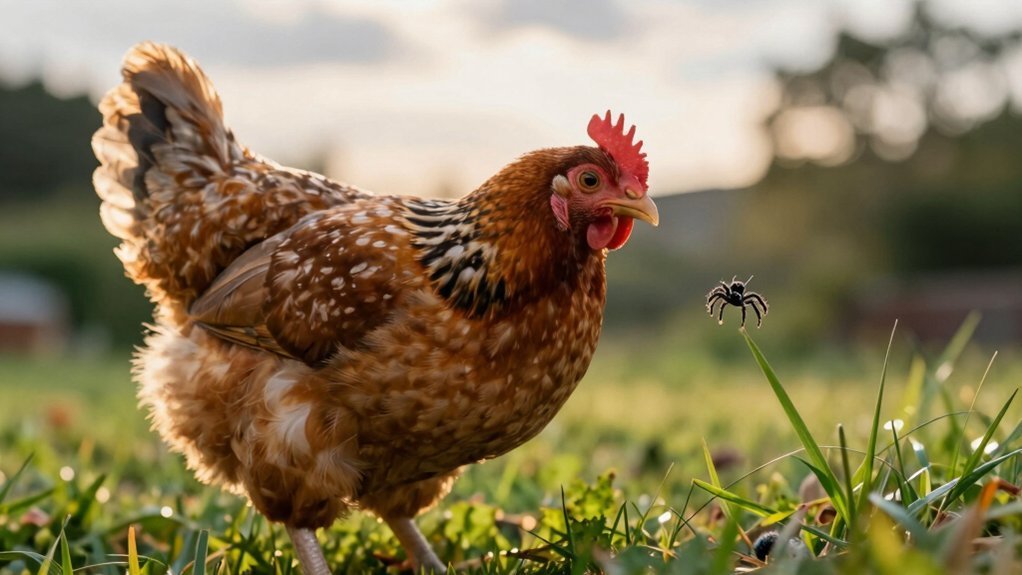
You’re probably wondering if chickens actually eat spiders and what goes down when a hen spots one in the yard. Chickens are opportunistic eaters, so when a small spider wanders across the ground they’ll freeze, peck, and usually swallow it whole—its venom gets neutralized by the acidic stomach, and the gizzard crushes the chitin into protein‑rich paste. Obviously, most spiders are harmless, but keep an eye on venomous species and maintain a tidy coop to avoid choking hazards. If you keep watching, you’ll see how hens help keep spider numbers down and learn a few easy coop‑maintenance tricks.
Do Chickens Actually Eat Spiders?
Do chickens really eat spiders? You’re probably wondering if those little critters end up on the menu, and you asked the right question. Chickens are omnivores, so when a spider wanders into a coop, they’ll peck it up if it’s small enough to swallow. Spider avoidance only kicks in when the spider’s size or movement scares them; a tiny house spider poses no threat. Obviously, most spiders are safe to eat—venom works on injection, not digestion. The protein boost from a spider can help a growing chick, and the occasional iron or calcium is a bonus. By consuming spiders along with other bugs, chickens actively support their natural dietary needs while helping to reduce local pest populations. This foraging instinct extends beyond insects, as chickens are known to consume small wildlife such as frogs, lizards, and mice. All right, the takeaway: chickens will eat spiders when the spider’s size is manageable, and the risk is minimal. Next, consider how this foraging behavior fits into your overall pest‑control plan. While chickens effectively hunt small invertebrates like spiders, this natural predation is generally not sufficient to control a rat infestation involving larger, more agile rodents.
What a Hen Does When It Sees a Moving Spider
When a spider darts across the yard, you’re probably wondering why your hen freezes then lunges. The hen’s scanning response kicks in instantly; she turns her head fast, eyes locked on the dark speck against pale dirt. She gauges distance, taking a few cautious steps before the first peck, then pauses to reassess if the spider darts away.
Here’s the thing: her body lowers, head forward, and she side‑steps when the spider changes direction. The first peck tests the prey, and if it’s still moving she launches a rapid succession of pecks aimed at the body, not the legs. Larger spiders provoke several strikes; tiny ones often fall after one. This behavior mirrors how wild chickens primarily consume insects and small animals to obtain essential protein. Just as they hunt slow-moving caterpillars, chickens are natural foragers that eagerly include various arthropods in their normal diet.
All right, you’ll see her shake the head once the spider’s in the beak, aligning it before swallowing. The takeaway? Your hen’s reaction is a blend of quick visual detection, distance gauging, and precise pecking. This intense focus stems from highly motivated instincts inherited from wild ancestors that drive chickens to work hard to perform essential survival behaviors. Next, watch how she handles a caught spider inside her beak.
How a Hen Handles a Caught Spider Inside Its Beak
You’re probably wondering exactly how a hen deals with a spider once it’s lodged in her beak.
First, the hen uses beak alignment mechanics, opening and closing rapidly while shaking her head side‑to‑side. This shifts the spider head‑first, folds its legs inward, and reduces escape chances.
Now, the tongue positioning aid takes over. The tongue pushes the compressed spider toward the throat, while saliva moistens it for a smoother glide.
All right, the gizzard then crushes any remaining legs and chitin, turning the spider into a nutrient‑rich paste.
Takeaway: a hen’s quick beak and tongue coordination lets her swallow even a struggling spider efficiently.
Next, you might wonder whether the spider’s venom poses any risk. Similar to how chickens crunch the stingers of wasps to prevent injury, their digestive process typically neutralizes spider venom before it can cause harm. Just as non-toxic methods are recommended for managing pests in coops, a chicken’s natural digestion safely handles venomous prey without external intervention. Although spiders differ from scorpions, hens employ similar tactics like biting off the stinger before consuming venomous creatures to avoid injury to sensitive areas.
The farmer’s report of a giant spider attacking chickens highlights how unusual this predator is.
Are Venomous Spiders Dangerous for Chickens?
If you’re wondering whether a venom‑spider bite could actually hurt your flock, the short answer is: it’s rare. The bite safety risk stays low because spider fangs are tiny, and a chicken’s thick skin, feet and combs repel most attacks. Even black widows or brown recluses rarely manage a proper bite, so healthy adults usually walk away unharmed.
Now, what happens if a chicken eats a venomous spider? Venom digestion works like this: the stomach’s acidic environment breaks down the proteins, neutralizing them before they can cause trouble. Think of it as a blender that turns a dangerous ingredient into harmless mush.
Chickens are natural foragers and will often snap up spiders without hesitation, providing pest control for the yard. Just as they safely consume nutritious earthworms for high-quality protein, their digestive systems effectively handle various small invertebrates found while free-ranging. However, similar to how certain flies pose health risks like tapeworm if consumed, some spiders may also carry parasites that require careful coop management to mitigate. While spiders are generally safe, poultry keepers must remain aware that feeding on decaying matter can introduce botulism risks similar to those associated with maggots from older carcasses.
All right, keep your coop tidy, remove clutter where spiders hide, and you’ll maintain bite safety while letting chickens enjoy natural pest control. The takeaway: venomous spiders pose minimal danger, especially when you focus on good hygiene.
Which Spiders Free‑Range Hens Are Most Likely to Catch
Which spiders free‑range hens are most likely to catch? You’re probably wondering why some spiders disappear while others linger. The answer hinges on spider size and spider visibility. Small, mobile spiders dart across open soil or short grass, making them easy for you to spot and for hens to peck. Their tiny bodies stay within a hen’s visual range, so the birds snap them up opportunistically while foraging for seeds and worms.
Now, consider wolf spiders. Even though they’re larger, they hunt on the ground without webs, so they’re visible on mulch or coop floors. When they cross open areas, hens still grab them despite the size.
All right, jumping spiders are next. Their quick, jittery bursts of motion on leaves or fences draw a hen’s attention instantly. Their small size lets the hen swallow them whole.
Here’s the thing: web‑building spiders stay high on corners or lights, out of a hen’s sight and reach, so they’re rarely caught.
Takeaway: Your hens will mainly catch tiny, ground‑dwelling spiders that move in plain sight. Focus on keeping open, bug‑rich zones in your yard to encourage this natural pest control. Just as chickens benefit from eating high-protein termites, consuming spiders offers a similar nutritional boost while aiding in farm pest management. While chickens consume insects like spiders, their primary agricultural value often lies in serving as disease sentinels for monitoring mosquito-borne viruses rather than acting as major biological control agents. It is important to remember that relying solely on poultry for pest reduction may be ineffective since scientific evidence shows they do not consume enough pests to significantly lower populations.
How Hens Help Reduce Spider Populations in Your Yard
You’re probably wondering how your flock actually lowers the number of spiders crawling around your yard. The answer is simple: hens forage on the ground, pecking through leaf litter, mulch, and grass, and they eat spiders whenever they spot them. This creates biological disruption—each peck and scratch disturbs spider hiding spots, making the habitat less attractive.
How does this work across your property? Hens concentrate activity in specific yard zones, like garden edges and building perimeters, where spiders often hunt. By repeatedly visiting those zones, they reduce both spiders and the insects that feed them, lowering overall spider pressure locally. Just as chickens benefit from the protein in ants while owners must watch for harmful ant species, allowing hens to hunt spiders offers similar rewards provided you monitor for venomous varieties that could threaten your flock. While adult birds typically handle such prey well, choking hazard risks exist if the spider or associated debris is too large for safe swallowing. Similar to how chickens are opportunistic feeders regarding mice, they will consume spiders they encounter but do not actively seek them out as primary prey.
What should you expect? You won’t eradicate every spider, but you’ll see fewer visible ones in the areas where hens roam most often. The takeaway: let your hens roam the zones you want spider‑free, and watch natural pest control take hold.
Practical Tips for Managing Spiders Around a Backyard Flock
Your backyard’s spider problem can feel overwhelming, but you’re asking the right question. Obviously, most yard spiders aren’t lethal, but black widows still hide in corners. Here’s the thing: you can cut risk with coop maintenance and habitat modification.
How do I keep spiders out of the coop?
Seal feed in airtight bins, clear brush piles, and trim vegetation within three feet of the coop. Fix cracks, seal gaps, and keep the floor dry; spiders love damp, cluttered spots. Take a quick walk each week, remove webs with a long tool, and discard egg sacs. While performing these checks, you should also inspect for gaps that could allow predator entry and seal them with sturdy hardware cloth to ensure overall flock safety. Securing all six sides of the structure with solid materials further prevents pests and predators from finding shelter inside.
What should I do when I see a spider?
Supervise free‑range time in known spider zones, inspect bedding before letting hens settle, and move birds away from large webs. If you can’t ID a spider, treat it as risky and relocate it safely.
What’s the next step?
Start a weekly checklist for coop maintenance, then watch spider activity drop. Ready to try a simple habitat‑modification plan this weekend?