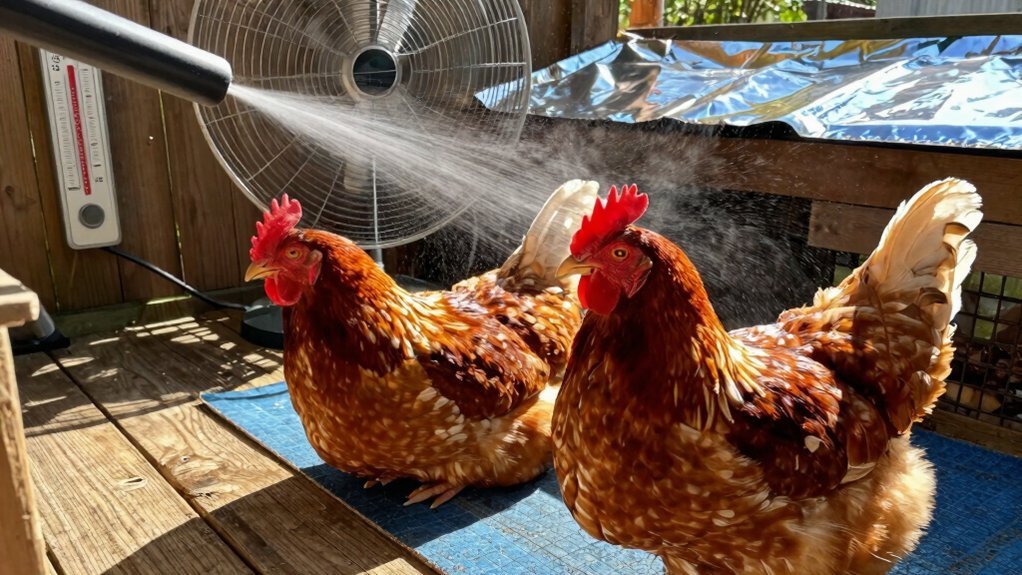
You’re right to wonder—chickens start feeling the heat once the coop hits 75 °F, and they’re in real danger above 95 °F, especially if humidity tops 60 %. Their bodies can’t shed heat well, so they’ll pant, seek shade, and drink twice as much; a quick drop in feed intake or pale combs means you need to act now. Cool them with shade cloth, high‑velocity fans, and ice‑chilled water, and keep a daily temp‑humidity log to stay ahead of the heat. If you follow these steps, you’ll know exactly when to intervene and keep your flock comfortable.
Which Temperature Zones Trigger Heat Stress in Chickens?
Now, once you hit 95°F (35°C) or higher, you’re in the high‑risk zone; heat load overwhelms their ability to shed warmth, and you’ll need active cooling. Seasonal variations and environmental acclimatization shift these thresholds a bit—birds raised in cooler climates tolerate less heat, while those used to warmer summers cope a little better. While adult birds are hardy, it is important to remember that chicks require higher starting temperatures around 90-95°F due to their sensitivity and immature feathers. Untreated exposure in these conditions can lead to heat stroke and death as the birds’ natural cooling mechanisms fail. In extreme heat, the survival window without water shrinks drastically to just 12 to 16 hours, making constant access to hydration vital for preventing dehydration. All right, remember: stay below 85°F for ideal feed intake, and act fast if you see panting. Your next move? Check your ventilation and shade options before the next heat wave hits.
Humidity’s Role in Raising the ‘Feel‑Like’ Temperature for Chickens
Why does humidity make it feel hotter for chickens? You’re wondering why the same temperature can feel brutal when the air is moist. Here’s the thing: chickens pant to evaporate water from their respiratory tract, and that process hinges on evaporative efficiency. When relative humidity climbs above 60 %, the air can’t soak up the moisture, so panting removes far less heat. The result is higher “feel-like” temperature, even if the thermometer reads unchanged.
Now, think of thermal inertia. A chicken’s body stores heat, and high humidity slows heat loss from core to skin, so the bird’s temperature rises faster. You’ll notice quicker panting and hotter peripheral skin. During these stressful conditions, consumption can reach twice their usual amount as the birds struggle to stay cool. While chickens typically do not drink once they have settled to roost for the night, ensuring ample hydration during the day is critical when humidity hampers their cooling mechanisms.
All right, keep an eye on both temperature and humidity. The takeaway: high humidity cuts evaporative cooling and boosts thermal inertia, making the environment feel much hotter for your flock. Next, ask yourself how you’ll monitor and control humidity during hot spells. To further assist your flock in these conditions, you should ensure they have access to plenty of fresh, cool water to aid their internal temperature regulation.
When Heat Becomes Dangerous: Critical Temperature Limits
If you’re wondering when heat actually turns deadly for chickens, you’ve hit the right spot.
What temperature is unsafe?
Lethal thresholds start near 113 °F core body heat. When ambient temps climb above 75 °F, birds lose the ability to shed heat fast enough, and their internal temperature can sprint toward that danger zone. Young chicks feel the pinch sooner because they can’t regulate as well as adults.
How do you keep them safe?
Provide cool housing with shade, ventilation, and fresh water. A well‑ventilated coop stays near 65‑75 °F, keeping core temps in the safe 105‑107 °F range. If the air feels hot, add fans or misting to pull the temperature down before the lethal range looms. While extreme cold requires managing coop moisture to prevent frostbite, summer care focuses on maximizing airflow to avoid heat stress. Installing breathable shade cloth on the coop roof or sides effectively blocks direct sunlight while allowing the necessary airflow to reduce heat stress and maintain optimal egg production. Just as draft-free shelter is vital for surviving subzero temperatures, proper ventilation is the key defense against lethal heat.
Takeaway
Watch ambient temperature; once it nudges past 75 °F, act fast to maintain cool housing. Your flock’s survival hinges on preventing core heat from hitting 113 °F.
What’s your next move? Check your coop’s airflow and add shade today.
Early Warning Signs of Heat Stress in Your Flock
Spotting the first hints of heat stress is easier than you think. You wonder why your birds linger in shade and stop roaming—behavioural observations reveal reduced movement, panting, and wings held away from the body. Now, you’ll notice they prefer water over feed, and feeders stay fuller during the hottest hours.
What does a quick physical assessment show? Look for pale combs, drooping posture, and feathers lifted for airflow. You’ll see elevated wings and loose droppings as early clues. All right, these signs appear before production drops, so you can act fast. Since excessive water intake during heat stress impairs intestinal water absorption, monitoring for watery feces helps confirm the severity of the condition before infections set in. It is crucial to distinguish heat-related paleness from anemia due to parasites, as both conditions reduce blood circulation and require different interventions. Remember that while adult birds might endure 12 to 48 hours without water depending on temperature, young chicks are far more vulnerable and can perish in just a few hours.
Takeaway: Watch behaviour and run brief physical checks each morning. If you catch these early warnings, you’ll keep your flock comfortable and avoid severe stress. What’s your next step to monitor these signs?
Proven On‑Farm Cooling Tactics to Reduce Heat Stress in Chickens
You’re probably wondering how to turn those early‑stress signs into practical relief for your flock.
How can shade cut the heat?
Shade cloth over runs, doors, and water stations blocks direct sun while still letting air flow. You’ll see a cooler water source and less radiant gain, which delays panting.
What air‑movement tricks work best?
High‑velocity fans create constant convection; position them to avoid dead‑air pockets. Opening roof vents lets hot air escape, keeping bird‑level temps down.
Which evaporative methods are safe?
Misters on roofs or shade covers cool surfaces, not feathers, so you avoid wet‑bird stress. In humid zones, limit misting to prevent respiratory issues.
How do you keep water fresh?
Add ice or frozen bottles to waterers, flush lines twice daily, and place stations in shade. Electrolyte mixes boost hydration strategies during peak heat.
What ground‑level tricks help?
Shallow tubs let feet dissipate heat; dust‑baths stay dry for comfort. Reduce bedding depth to two inches to avoid trapped warmth.
Takeaway: Combine shade, airflow, selective misting, and robust hydration strategies for effective on‑farm cooling. Ready to set up your first shaded water station?
Supplementing these tactics with frozen watermelon treats provides an additional source of hydration and cooling relief for your flock during extreme heat. Offering this 90% water fruit once or twice a week ensures chickens receive vital vitamins and antioxidants without the digestive issues caused by excessive sugar consumption. You can also offer fresh cucumber slices as a low-calorie, nutrient-rich treat packed with vitamins and mostly water to further support hydration.
Daily Heat‑Stress Monitoring Checklist
Most growers wonder how to spot a problem before birds get sick. You’ll notice panting birds with open beaks early on, and rapid breathing as they try to dump heat. When they lounge more, move less, or sit still for long periods, that’s a red flag in flock behavior. However, since open mouth breathing can also signal dangerous respiratory infections or airway obstructions rather than just heat, you must distinguish between thermal panting and signs of illness like wheezing or coughing.
Now, check feed and water. A drop in appetite or a sudden refusal of feed signals the body’s cooling priority, while a spike in drinking tells you heat is rising. Keep waterers clean and full; heat‑stressed birds need immediate access.
Here’s the thing: monitor combs, wattles, and droppings. Pale combs and watery droppings often accompany stress; droppings monitoring helps separate heat issues from normal flock behavior.
All right, track egg output and shell quality. A dip in production or thin shells during hot spells warns of calcium imbalance. While managing heat is critical, remember that balanced exposure to sunlight supports health by regulating hormones and providing essential Vitamin D for strong eggshells. Just as daylight hours trigger reproductive systems to resume laying in spring, extreme heat can disrupt these same biological rhythms and halt production.
Takeaway: use this checklist each day, especially at peak heat, record temperature and humidity, and move any panting or lethargic bird to shade. Next step: set a simple log sheet and start daily observations.