You’re probably wondering exactly how cold or hot is’s for your chickens to be out, and that’s a great question. Below 35 °F they’ll huddle, puff feathers, and lift a foot—if you see shivering or reduced activity, add low‑wattage heat to keep the coop around 40‑45 °F; above 75 °F they’ll pant, spread wings, and drink more, so provide shade, cool water, and limit outdoor time once it hits 95 °F. Keep the coop dry, well‑ventilated, and use deep litter for natural insulation; then you’ll know when to let them roam safely.
Chicken Temperature Guide: Ideal Outdoor Range for Adult Birds
What temperature feels just right for your adult chickens? You’re probably wondering why they seem happy at 70 °F but restless at 78 °F. The sweet spot sits between 70 and 75 °F; most breeds stay active, scratch, and forage without panting. When the thermometer drifts above 75 °F, they’ll spread wings, seek shade, and reduce feed intake, so keep the range modest.
Now, you can boost comfort with outdoor enrichment activities—add perches, dust‑baths, and foraging stations to keep them moving and warm. Adult acclimation strategies matter too: introduce temperature shifts gradually, let them dry‑off after rain, and protect them from drafts. Obviously, a dry, draft‑free shelter lets them tolerate brief dips below 65 °F. While chickens prefer mild weather, they can actually withstand temperatures well below freezing if protected from drafts and frostbite, especially on their combs and feet. Breeds like the Chantecler and Wyandotte feature small combs that significantly reduce the risk of frostbite during harsh winters. Even fluffy varieties like Silkies can survive extreme cold down to -9°F as long as owners prioritize keeping feathers dry.
Takeaway: Aim for 70‑75 °F, enrich the yard, and acclimate slowly. Next, consider how wind chill might affect your flock.
Chickens are hardy and can handle a wider range if healthy, but cold‑hardy breeds such as Orpington and Brahmas tolerate lower temperatures better.
Chicken Temperature Guide: Cold‑Weather Impacts & When to Add Supplemental Heat
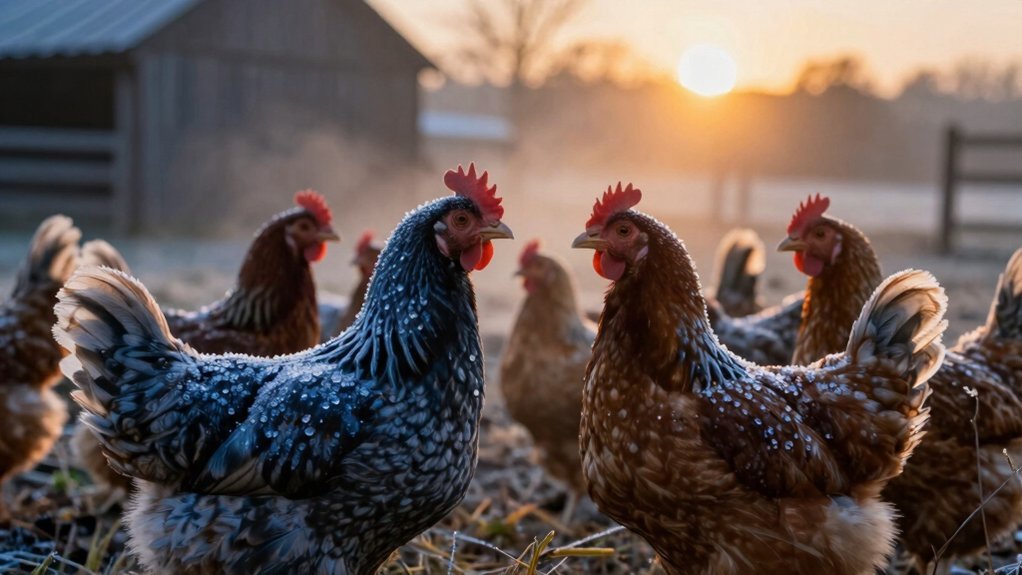
When does cold become a problem for your flock? You’ll notice huddling, puffed feathers, and a foot lifted to the breast when the coop temperature drops below 35°F. That’s when heat loss outpaces production, especially if coop humidity rises and bedding moisture stays high. Moisture conducts cold, so damp litter can make the same air feel far colder. While chickens can tolerate quite low temperatures, prolonged exposure becomes dangerous if the coop temperature drops below minus 20 degrees Fahrenheit, particularly for less resilient breeds. To further protect your birds without relying solely on artificial warmth, you can utilize the deep litter method to generate natural insulation through decomposing bedding.
What signs tell you it’s time for a heater? If you see birds shivering, reduced activity, or frostbite on combs, add supplemental warmth. A low‑wattage heat lamp or heated pad can raise the space temperature a few degrees, keeping the environment in the 40‑45°F comfort zone for hardy breeds while preventing soggy bedding. When using heat lamps, always maintain minimum safe distances between the bulb and combustible materials like bedding or wood to prevent fire hazards.
Takeaway: Monitor temperature, humidity, and moisture; add heat when it falls under 35°F and birds show stress. Next, check how to keep the coop dry and draft‑free.
Provide supplemental heat when temperatures drop below 35°F to prevent frostbite.
How Can I Keep My Coop Dry and Draft‑Free in Winter?
If you’re wondering why your coop feels damp even when you’ve sealed the obvious gaps, you’re not alone—many owners think “draft‑free” means “no airflow at all.” The truth is, chickens need a steady stream of fresh air to whisk away moisture and ammonia, so you must balance sealing with ventilation.
How do I seal without choking airflow? Seal cracks with caulk or spray foam only where wind hits roosts. Keep high vents open; use removable winter blockers for lower vents. Air should exit via roofline vents, not sweep the floor.
What about moisture management inside? Use deep litter—straw, pine shavings, wood chips. Stir it weekly and add fresh material as it breaks down. Dry bedding absorbs droppings and respiratory moisture, preventing ice and ammonia. Promptly remove wet spots. While pine shavings offer good absorbency, hemp bedding is highly absorbent, low dust, and long-lasting, making it an excellent choice for maintaining a dry coop environment during cold months. Unlike traditional materials, this option can soak up four times its weight in moisture to significantly reduce dampness and harmful ammonia fumes. It is also critical to ensure any wood shavings used are dust-extracted to minimize respiratory risks from fine particles.
How can I keep the run dry? Lay a gravel base or concrete pad under the coop, add a 6 mm plastic vapor barrier, and insulate skirting around legs. Wood chips in the run cut mud and keep feet drier.
Takeaway: Seal strategically, ventilate high, and maintain dry litter. Next, check your water setup to avoid indoor humidity spikes. Adding storm shields eliminates drafts while preserving necessary airflow.
How to Spot Heat‑Stress Signs and Set Safe Outdoor Limits?
You’re probably wondering why your chickens start panting the moment the sun hits the coop, and you’re right to ask—heat stress shows up fast, and you need to recognize it early.
What early signs should I watch for?
Look for open‑ak breathing, wings spread, and a sudden drop in activity. Those clues mean the birds are already struggling to cool down.
How does behavioral monitoring help?
You’ll notice they drink more, eat less, and stop dust‑bathing. If they become quiet or vocalize distress, you’ve crossed a danger threshold. This physiological strain can lead to oxidative stress and hormonal changes that severely impact fertility and overall health. Without adequate hydration, this strain quickly escalates because water is critical for regulating body temperature and preventing fatal dehydration.
When should I limit outdoor time?
If coop temperature hits 95 °F (35 °C) or higher, cut exposure. Heavy panting or limp posture means pull them inside immediately.
Takeaway
Spotting panting, wing‑spreading, and reduced movement lets you act before temperatures exceed 100 °F (38 °C). Adjust outdoor access right away to keep your flock safe, and remember that offering fresh, cool water with ice cubes is a critical step to help regulate their body temperature during extreme heat.
Seasonal Water, Shade, and Ventilation Tips for Temperature Control
A lot of folks wonder how to keep their chickens cool without turning the whole yard into a science lab. You’re right to ask—temperature control starts with water, shade, and airflow.
How much water do they need?
You should aim for about 500 ml per bird daily, roughly a gallon for every seven adults. In heat, consumption can double, so keep multiple waterers out and refill them morning and evening. Light‑colored containers stay cooler, and you can boost cooling by adding ice or frozen bottles. Regular water quality testing prevents bacterial blooms, and an automated hydration system can deliver fresh water on schedule. Monitoring intake is vital because sudden drops in consumption can indicate water line problems or illness within the flock.
Where should you shade them?
Shade cloth or a simple A‑frame cover over the run cuts direct sun while still letting breezes flow. Natural tree shade works too, but keep waterers in the shade to keep water cool. Using breathable shade cloth on the coop roof or sides helps block direct sunlight while allowing airflow to reduce heat stress and maintain optimal egg production.
How do you ventilate the coop?
Install high vents near the roof and open predator‑proof windows for cross‑ventilation. Small fans help when the air is still. Screened doors improve airflow without letting predators in.
Takeaway
Provide ample, cool water, shade the run, and guarantee steady airflow. Next, check your coop’s temperature daily and adjust shading or ventilation as the weather shifts. Since chickens prefer temperatures around 60 to 75 degrees, managing the coop environment carefully is essential to prevent stress and health issues when conditions rise beyond this comfort zone.
Chicken Temperature Guide: Temperature Settings for Chicks Versus Mature Birds
What temperature should I keep my chicks versus my adult chickens? You’re probably wondering why the numbers differ so much. Here’s the thing: day‑old chicks need a brooder set around 90‑95°F, then drop roughly 5°F each week. By week 5 they’re comfortable at 70‑75°F. Use soft brooder bedding to keep heat steady and avoid drafts. When using heat lamps, position them 18 to 24 inches above the chicks to prevent overheating and fire risks while ensuring the brooder remains well-ventilated. For adult birds, aim for a steady 65‑75°F; they tolerate brief swings of ±15‑20°F but start panting above 75°F. Obviously, fully feathered hens can survive sub‑freezing nights, especially if the coop stays dry. Takeaway: match chick heat to their age, keep adult coop within the comfort zone, and adjust bedding and ventilation accordingly. Next step: check your brooder thermometer and set a weekly temperature schedule. To ensure safety during this critical heating period, prioritize using radiant heat plates over fire-prone heat lamps to prevent overheating and fire hazards. Since newly hatched chicks cannot regulate their own body heat, maintaining proper warmth is essential until they are fully feathered and capable of adapting to ambient conditions.