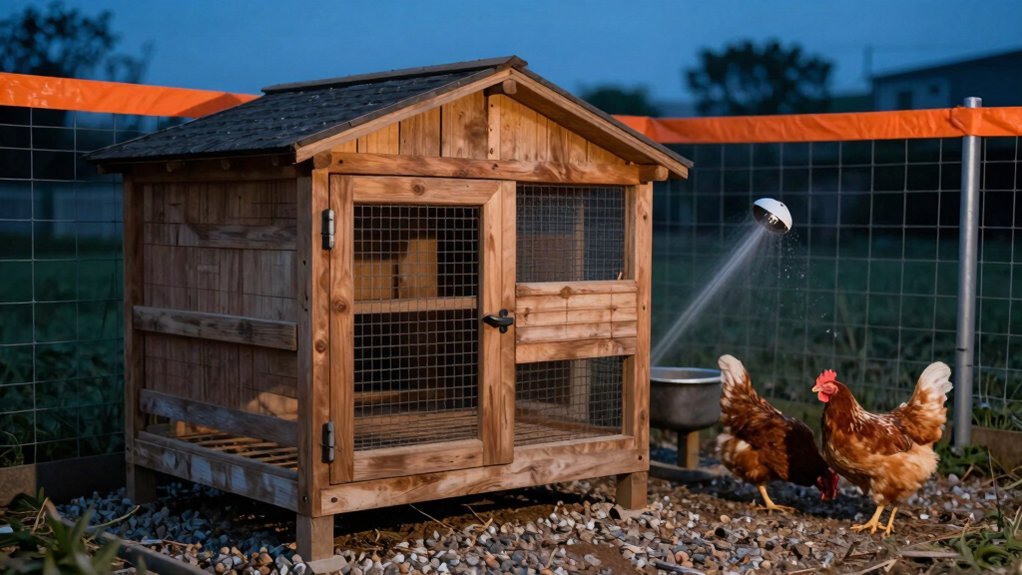
You’re right to wonder why raccoons keep slipping into your coop; they’re strong, clever, and can chew through flimsy wire. Use 1/4‑inch hardware cloth, screw it in with washers, and double the 2×4 studs around any door, then add two independent barrel‑style latches with shims for a tight seal. Bury a 12‑inch‑deep hardware‑cloth skirt with an L‑shaped apron, and sprinkle in motion‑activated lights, sprinklers, and noise devices that fire at random intervals. Store feed in locked metal bins three feet up and keep water in tip‑proof containers. Sprinkle ammonia‑soaked cotton balls and peppermint‑vinegar mix around entry points, and set up trail cameras at corners to spot weak spots early. This combo of solid barriers, sensory deterrents, and vigilant monitoring will keep raccoons out and your chickens safe; the next step is to fine‑tune each layer for your specific setup.
Spot Raccoon Attacks & Stop Them
How can you tell a raccoon was behind the damage? You look for attack patterns that differ from foxes or hawks. A missing head with the body left in place is a classic carcass clue, and scattered feathers around the kill zone signal a nocturnal intruder.
What else should you notice? Raccoons often mutilate the neck and upper chest, leaving the rest of the carcass behind, while small birds may be scattered rather than carried off. Muddy footprints or broken latches near the coop confirm their presence. Unlike canines that may bury remains, raccoons tend to kill multiple birds in a single attack, sometimes biting heads off. While weasels also target the head and neck area, raccoons are distinct in their habit of reaching through fencing to pull off and consume chicken heads.
How do you act right away? Confine the flock, seal every gap, and set a night‑vision camera. The takeaway: identify those carcass clues, block the attack patterns, and you’ll stop raccoons before they strike again.
Beyond physical injuries, these predators can transmit dangerous illnesses like roundworm and rabies to your remaining birds, making immediate cleanup and health monitoring essential after an incident.
Build a Raccoon‑Proof Coop With Hardware Cloth and Secure Roofs
You’re probably wondering why a regular chicken‑wire coop still lets raccoons in. The wire’s big gaps give a raccoon a hand‑sized opening, and they can tear it apart. Switch to 1/4‑inch hardware cloth, screw it on with washers, and you’ll block every claw and nose.
How do I seal the roof?
Use solid roofing or tightly covered wire topped with hardware cloth. Cover skylights and vent gaps with the same mesh. Overlap sheets and tie seams; a raccoon can’t pry apart a heavy‑gauge barrier. Raising the coop off the ground also helps deter pests like rats and snakes from finding easy entry points underneath.
What about the perimeter?
Dig a 12‑inch trench, lay hardware cloth down and out 18 inches, then backfill with rocks or gravel. The L‑shaped apron stops digging predators dead in their tracks.
How do I keep the coop functional?
Install automated feeders and solar lighting inside the sealed space; the mesh won’t interfere with power or light. Even when prioritizing security, ensure your design maintains the 3-4 square feet of space per bird recommended for healthy backyard hens. To further deter persistent diggers, you can install anti-dig spikes along the fence line for added protection.
Takeaway: hardware cloth everywhere, solid roof, buried apron, and you’ll have a truly raccoon‑proof coop. Ready to add dual‑latch doors next?
Install Dual‑Latch Doors and Reinforced Locks for a Raccoon‑Proof Coop
If you’re wondering why a single latch still lets a raccoon slip out, you’re on the right track. A raccoon’s dexterity makes a basic hook‑and‑eye latch feel like an open door; it can pry, twist, and slip through tiny gaps.
How does a dual‑latch improve predator identification?
Now, install two independent latches: one holds the door closed, the other backs it up. If the first latch gets nudged, the second still secures the door, cutting off the raccoon’s escape route. Use a barrel‑style latch or a self‑locking design that requires twisting and lifting—actions a raccoon can’t coordinate.
What about the door’s strength and coop ventilation?
All right, double the 2×4 studs around the opening and add shims so the latch aligns perfectly. This reinforced frame prevents prying and keeps hinges from flexing. Leave a narrow vent strip at the top; it maintains airflow without creating a gap large enough for a raccoon to exploit. It is also vital to ensure your fence foundations extend underground to stop digging predators from bypassing your secure door entirely. Proper good ventilation is equally critical to prevent respiratory infections and maintain a healthy environment for your flock. Just as securing the door is essential, you must also use heavy-duty wire mesh throughout the coop structure to prevent predators from tearing through weak points.
Takeaway
Dual‑latch doors with reinforced framing give you a true predator‑identification barrier while preserving coop ventilation. Next, check if your coop’s perimeter needs extra protection. The ChickenGuard self‑locking door adds an extra layer of security by engaging its wings when lowered, preventing predators from lifting the coop door.
Use Dig Skirts and Optional Electric Perimeter to Block Raccoon Tunnels
Why dig skirts matter for raccoon‑proofing
You’re probably wondering why a simple wire apron can stop a clever raccoon. Here’s the thing: raccoons dig right at the base of a coop, so a 1/2‑inch mesh buried 12‑18 inches deep forces them to hit metal before they reach the fence. Use heavy‑duty galvanized hardware cloth, pin it with landscape spikes, and overlap the edges. While raccoons are persistent, coyotes remember chicken locations and may return to the same spot, making consistent barrier maintenance crucial for all predators. Implementing multiple layers of fencing creates an even more robust defense system that significantly increases safety against various predators. Unlike raccoons that often leave partial remains, foxes carry off entire chickens, so securing the perimeter prevents total loss from these different threats.
Do you need extra deterrence?
All right, add an optional electric perimeter. A low‑voltage strand six inches above ground and another at eighteen inches creates a mild shock zone. It discourages digging and gives you a backup if a gap appears.
How do you keep the system reliable?
Obviously, place motion‑activated sprinklers near the skirt’s edge and keep water bowl placement away from the electric wires to avoid short‑circuits. Regularly inspect for lifted edges or broken mesh.
Takeaway: a properly installed dig skirt plus a simple electric line blocks tunnels, while sprinklers and careful water bowl placement keep the whole setup safe and effective. Next, consider how to integrate lighting and noise devices for added protection.
Stainless steel staples add durability and prevent corrosion when attaching the apron to pressure‑treated lumber.
Turn On Motion‑Activated Lights, Sprinklers, and Noise Devices to Deter Raccoons
How do motion‑activated lights, sprinklers, and noise devices work together to keep raccoons out? You’re probably wondering why you need three gadgets instead of one. The answer is simple: each triggers a different sense, and when they fire together they create a chaotic environment that raccoons can’t learn.
How does timing patterns help?
Now, you set sensors to fire at random intervals, not a steady every‑minute beat. This prevents raccoons from memorizing when a flash or splash will happen, so they stay wary. You can also program a short delay between light and water, making the surprise feel like a chain reaction. Since chickens struggle to see in low light due to their night blind physiology, these sudden activations are especially effective at alerting the flock without relying on their visual detection. Aligning these deterrents with the natural rhythm where chickens typically sleep from dusk ensures the flock remains undisturbed while predators are kept at bay. Because chickens naturally jump onto their coop’s roosting bars as daylight fades, activating deterrents before this settling period maximizes protection without disrupting their rest.
Where should you place them?
Strategic positioning means covering entry routes, corners, and gateways. Mount a floodlight 10 ft from the coop door, aim a sprinkler toward the low‑lying brush, and set a noise emitter near the feed trough. Overlapping fields guarantee a raccoon triggers at least one device even if it sneaks around a blind spot.
What’s the takeaway?
Combine unpredictable timing patterns with strategic positioning, and you’ll keep raccoons guessing, not confident. Next, think about how to protect feed and water from those persistent critters. Raccoons are nocturnal animals that are startled by unexpected brightness.
How to Store Feed & Water So Raccoons Can’t Get to Them
You’re probably wondering why your coop’s feed and water keep attracting raccoons despite your best efforts.
What containers actually block a raccoon’s paws?
Use galvanized metal bins with locking lids; they resist gnawing and prevent odor leakage. Slick‑sided containers give no leverage, so raccoons can’t twist them open. Keep bins at least three feet from the coop and elevate them on bricks or a shelf.
How do you keep the area clean and scent‑free?
Promptly sweep up spilled grain and discard scraps; that’s the core of odor control. Store only the amount chickens will eat in a day, and seal trash cans tightly. While some natural deterrents like mint around the coop may help, maintaining a rodent-proof environment is key to protecting backyard chickens from mice rather than expecting chickens themselves to control infestations. Implementing a treadle mechanism ensures feed is only exposed when chickens step on the platform, effectively deterring pests like rats and wild birds.
What’s the safest way to protect water?
Place waterers inside a secure enclosure or inside the coop at night. Choose a heavy, tip‑proof container and clean it weekly for water sanitizing.
Takeaway: Seal, elevate, and clean everything. Next, consider how to make the coop itself less inviting.
Just as unsecured feed draws rats, eliminating these food sources is critical for effective prevention against all predators seeking easy meals.
Raccoon‑Proof Coop Scent Repellents & Exact Application Steps
Any scent you pick has to be strong enough to make a raccoon think you’ve got a predator nearby. You’re probably wondering which smell actually works and how to keep it fresh.
Which scent scares raccoons most?
Ammonia tops the list—its sharp, eye‑watering odor mimics predator urine. Soak cotton balls in household ammonia, place them in open containers at coop doors and under decks, and refresh every three days. Never pour ammonia on soil or where kids and pets roam.
How do you apply mint or vinegar?
Peppermint oil works like a menthol bomb. Soak cotton balls or mix a few drops with water in a spray bottle, then mist vents, fence gaps, and the coop perimeter. White vinegar, diluted 1:1, can be sprayed on exterior walls or draped on cloths near raccoon paths. Reapply after rain or heavy sun.
What about spicy sprays?
Blend cayenne pepper, hot sauce, and water, shake, and spray a thin line around the coop. Capsaicin irritates raccoons, but the scent fades quickly, so keep a schedule for scent refills.
Takeaway
Choose one strong scent, apply it with spray methods or soaked refills, and refresh regularly. This creates a consistent barrier that keeps raccoons at bay. While managing external threats is vital, remember that harmful recessive traits from inbreeding can also compromise your flock’s health and productivity just as severely as predators. Just as bears learn to associate human properties with food, raccoons are intelligent opportunists drawn to easy meals like unsecured poultry.
Now, which scent will you try first?
Set Up Trail Cameras and a Routine Inspection Schedule to Catch Weak Points Early
You’re probably wondering why a strong scent isn’t enough to keep raccoons out. The answer is they’re smart, nocturnal, and can slip through gaps you never see. Trail cameras give you eyes when you’re not looking, catching raccoon visits after dark and showing exactly where they test fences or pry latches.
How do you place them for best results?
Use placement tips like targeting doorways, fence corners, and water sources. Aim one camera at the coop door to record latch manipulation, another near the feeder to spot attraction points. Elevate or angle them to catch climbing on posts and overhangs. Choose a model with 80‑foot detection, sub‑0.5‑second trigger, and 1‑second recovery for fast movers.
What should you do with the footage?
Do footage analysis daily. Timestamped clips reveal which night a gap appeared, letting you repair before the next raid. Repeated clips from the same spot flag a persistent weak point that needs reinforcement. Pair this with a routine inspection schedule: visual checks each day, hardware checks each week, and a same‑day perimeter walk after any alert.
Takeaway: Cameras expose hidden entry points; quick footage analysis and regular inspections close them fast. Ready to set up your first camera and start the inspection routine?