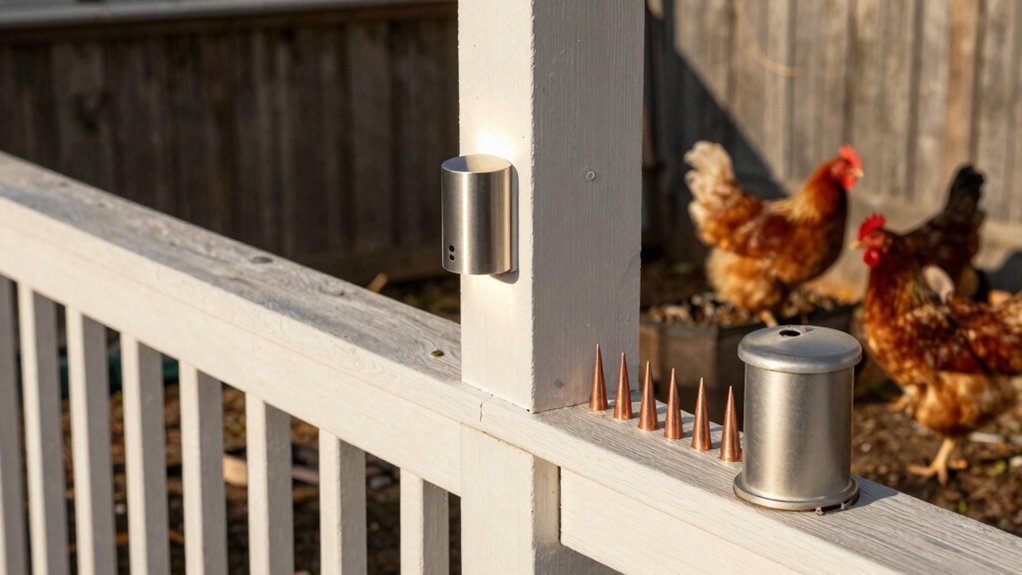
You’re right to wonder why the porch feels like a runway for your chickens—shade, a perch, and a dust‑bathing spot lure them in. Install a low‑profile ½‑inch 14‑gauge wire mesh fence, bury the bottom 12 inches, and add a motion‑activated sprinkler that sprays the exact entry points. Sprinkle citrus peels or a cinnamon‑paprika blend along the rail and set up a bright predator‑eye light to startle them. Finally, create a tasty, sprouted‑lentil feeding zone far from the porch with fresh forage and water. The barrier stops them, the scents and water scare them, and the alternative zone gives them a better place to hang out—try these steps and you’ll see the porch stay chicken‑free.
Identify Why Chickens Target Your Porch
Why do chickens keep showing up on your porch? You’re probably puzzled, but the answer’s simple: they’re after unsecured feed and sheltered comfort. When you leave crumbs or an open bag of seed, chickens treat your porch like a buffet. They also love the shade, a cool floor, and the wind‑break a covered porch gives, which feels safer than the open yard.
Here’s the thing: chickens have strong foraging habits and will remember any spot that offers food and a cozy perch. Even a few stray kernels can turn your entryway into a regular hangout. They’ll linger longer if the porch blocks rain or sun, because that sheltered comfort reduces stress. Natural deterrents such as lemon extract and vinegar were tried but proved ineffective. All right, you can break the cycle by removing food sources and making the area less inviting. The takeaway: eliminate unsecured feed and reduce the comfort factor, and the chickens will lose interest. Next, consider how to stop them physically from returning. Just as sturdy fences block access in gardens, installing physical barriers on your porch prevents chickens from entering the space entirely. While free-range farming promotes lower stress through outdoor roaming, your porch inadvertently mimics these ideal conditions, encouraging them to stay. Beyond seeking food and shelter, chickens may also be drawn to your porch to find grit for digestion if loose gravel or sandy textures are available in the area.
Install a Chicken‑Proof Barrier Around the Porch
You’re probably wondering why the chickens keep finding their way onto your porch even after you cleared the crumbs. The answer is that they slip through tiny gaps, so you need a solid chicken‑proof barrier.
What barrier materials work best?
Use welded wire mesh, preferably ½‑inch by ½‑inch, 14‑gauge panels. This mesh stops even the smallest bird from slipping through, and it’s tougher than plain chicken wire. Attach panels to existing railings or deck posts for a seamless fence.
How do you apply installation techniques?
First, lay the mesh low to the ground—no more than a few inches up—so chickens can’t walk under. Secure every corner and gate with extra brackets; wind can loosen loose sections. If you need a temporary solution, use lightweight poultry fencing that you can reposition each season. Barriers placed approximately two inches from plants ensure the mesh stays just enough from the ground to prevent chickens from slipping underneath.
Takeaway
A tightly fitted, welded‑wire barrier, installed low and anchored well, blocks chickens for good. Next, consider how scent deterrents can complement this physical shield.
Apply Scent Deterrents Chickens Dislike
How do scent deterrents actually keep chickens off my porch?
You’re right to wonder—chickens hate strong odors.
Here’s the thing: citrus creates a short‑range barrier that they sniff and avoid.
What citrus barrier tips work best?
Peel orange, lemon, or lime strips and tuck them along the railing.
Spray fresh citrus juice every few days; rain washes it away quickly.
Use a few drops of citrus essential oil on cotton balls for extra punch.
Although these peels contain essential nutrients when eaten, their potent smell effectively repels chickens from your porch.
How does a spice application guide look?
Mix cinnamon, paprika, and a pinch of cayenne; sprinkle the blend around steps.
Add garlic powder or crushed garlic for a pungent edge.
Reapply after heavy foot traffic to keep the scent strong.
Takeaway
Combine citrus and spices for a layered, temporary repellent.
Next, consider how to reinforce the physical barrier.
Chickens can escape cages and become loose, so a strong scent barrier helps keep them away. While these fruits are generally safe for chickens when fed in moderation, their intense aroma serves as an effective deterrent when used externally on your porch. Unlike catnip, which is safe for chickens and may even calm them when consumed, the strong scents of citrus and spices are designed to be unpleasant and keep birds at a distance.
Set Up Motion‑Activated Scare Devices
If you’re wondering why a motion‑activated sprinkler can actually keep chickens off your porch, it’s because the sudden burst of water creates a strong startle response that they associate with that spot. You’ll need sprinkler calibration to aim the spray at the exact access route—corners, steps, or the walkway. Adjust the sensor so it triggers only when chickens approach, not when a breeze rattles a leaf.
Here’s the thing: infrared sensor adjustments let you set range and angle, covering the porch approach without blasting guests. Position the motion unit about three feet off the ground and test sensitivity; a low setting avoids false triggers from passing cats. Because their eyes are placed on the sides of their heads, chickens possess a nearly 300-degree panoramic field of view that makes them exceptionally alert to movement from almost any direction, ensuring they notice the device immediately.
All right, add flashing predator‑eye lights for a visual cue, but avoid using red lights since chickens possess tetrachromatic vision that allows them to see red wavelengths clearly without the same startling effect as other colors. Their ability to perceive ultraviolet light means they detect visual cues in the environment that are completely invisible to humans, potentially altering how they interpret your deterrent setup. The flicker plus water makes the area feel unsafe, reinforcing avoidance. Takeaway: aim, calibrate, and fine‑tune sensors, then layer light for maximum effect. Ready to try a simple test?
Create an Attractive Alternative Feeding Zone
A chicken’s favorite hang‑out is often the porch because it’s easy, dry, and full of crumbs. You’re probably wondering how to lure them elsewhere without a fight. The answer is a tasty, reliable alternative feeding zone that beats the porch on every level.
Here’s the thing: set up a fixed station far from the porch, with water, scratch grain, and a daily schedule. Add kitchen scraps, root crops, and occasional sunflower heads to keep interest high. Rotate treats weekly so chickens stay curious but don’t depend on one item. Incorporating sprouted grains into this mix can further enhance nutrition while reducing the total quantity of feed needed. Sprouting seeds like lentils or oats at home creates highly nutritious greens rich in enzymes and fiber that improve digestibility compared to unsprouted grains. Soaking whole lentils for 5 to 7 days breaks down anti-nutrients and significantly boosts levels of protein, vitamins, and minerals.
Now, plant forage plantings like comfrey, chicory, and plantain, plus brassicas for shoulder‑season grazing. Use seasonal rotation of these crops, ensuring fresh greens year‑round. Pair the zone with a compost pile and deep bedding for insects and microbes. The takeaway? A well‑stocked, rotating forage area draws chickens away and keeps them satisfied. Ready to try this before moving on to a layered plan? Modern hybrid layers can produce up to 320 eggs per year, so providing a nutrient‑dense alternative feeding zone helps meet their higher nutritional demands.
Tailor a Layered Plan to Your Flock’s Habits
You’re probably wondering why the porch still draws your chickens even after you set up a tasty feeding zone. Here’s the thing: chickens follow patterns, so you must map their routines before you choose deterrents. Note peak porch visits—after feeding, during shade‑seeking hours, and at dusk. Identify the birds that lead the charge and the triggers they love, like open doors or a sunny corner.
Now, use habit training to reinforce a safe evening routine. Close coop doors at dusk, call them with a treat or a familiar cue, and guide them with panels or funnels toward the roost. This boundary reinforcement creates a clear, repeatable path that the flock learns to respect.
All right, separate the porch from their main corridors. Block straight yard‑to‑porch routes, add fencing to redirect traffic, and keep the porch out of shade or dust‑bathing zones. The result: chickens see the porch as off‑limits and choose the coop instead. Since young birds are especially prone to wandering as they adjust to surroundings, observing their specific exploration habits is crucial for effective containment. Because preventing access to natural activities like dust bathing can cause frustration, ensuring your designated zones meet these instinctual needs helps keep them away from the porch. Providing a dedicated area with fine sand and soil satisfies this urge in a location far from your entryway.
Takeaway: map habits, train routines, and reinforce boundaries, and the porch will stay chicken‑free. Next, ask yourself which specific deterrents match your flock’s quirks.
Maintain and Troubleshoot the Porch Deterrent System
Maintaining your porch deterrent system can feel overwhelming, especially when you see chickens slipping through despite your best efforts. You’re probably wondering why the setup keeps failing. The answer lies in consistent upkeep and quick fixes.
How often should I check everything?
Now, start with weekly inspections. Walk the perimeter, tug loose wire, and verify motion sensors still power on. Replace worn staples and reseal gaps before chickens exploit them.
What causes devices to stop working?
Here’s the thing: battery replacements keep motion‑activated sprinklers and sensors reliable. Weak batteries or corroded contacts cause delayed triggers, so swap them out every three months or after heavy rain.
When do I need to adjust deterrents?
All right, watch chicken behavior. If they ignore decoys, rotate reflective objects or move sprinkler heads. Refresh scent repellents after watering. Since lighter breeds are more active flyers, you may need to ensure your barriers reach a fence height of at least 5 to 6 feet to effectively contain them.
Takeaway: Regular checks and fresh batteries keep your system humming. Next, log any breaches to spot patterns and fine‑tune your barriers. Install secure fencing around the coop to prevent chickens from digging under barriers. Remember that burying hardware cloth at least 12 inches deep or using an apron prevents predators from tunneling underneath your existing defenses. Complementing these structural fixes with raised beds can further protect vulnerable plants by keeping them out of reach of scratching and foraging chickens.