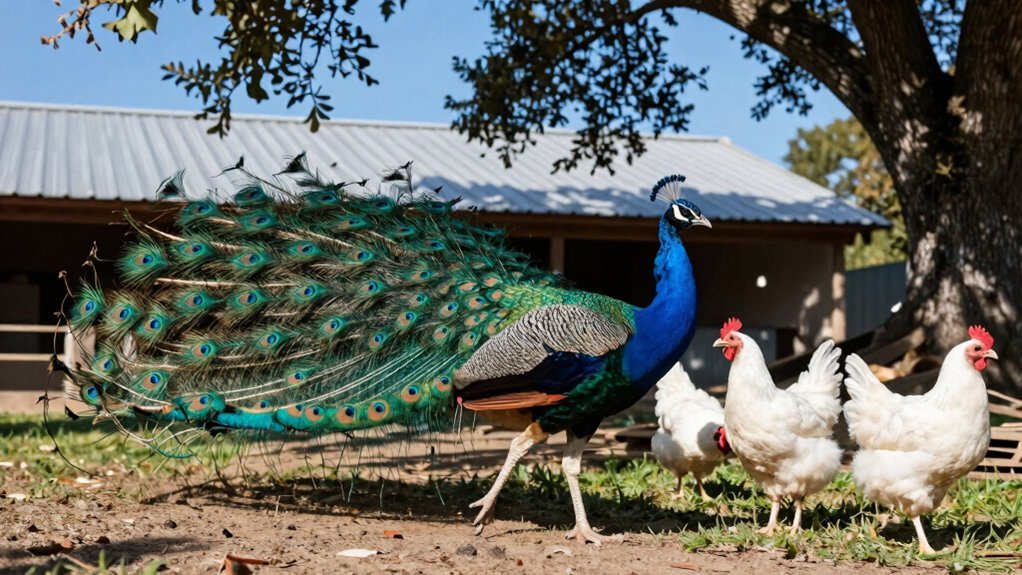
You’re right to wonder if peacocks can share a yard with chickens—yes, they can, but only if you give each enough space, separate feeding stations, and strict health checks. A single peacock needs about 100 sq ft and 8 ft vertical clearance, while chickens need 3‑5 sq ft per bird inside a coop and a roomy run; keeping them in distinct pens reduces fighting and disease spread. If you set up proper perches, clean water, and quarantine new birds for at least 30 days, they’ll coexist peacefully, and you’ll see fewer pecking incidents and healthier birds. Continue for a step‑by‑step guide on introductions and ongoing management.
Can Peacocks and Chickens Live Together? The Quick Answer
If you’re wondering whether peacocks and chickens can share a yard, the quick answer is: it’s possible, but not ideal. You’ll find that both species can coexist when you manage disease risk, aggression, and feeding differences. Here’s the thing: peacocks need more protein and separate water, while chickens thrive on standard feed, so you must set up distinct feeding stations to avoid competition.
How does habitat decoration affect peace? Adding perches, shrubs, and visual barriers gives each bird a retreat, reducing territorial fights. Flight training for peacocks also matters—free‑range space lets them stretch wings without crowding chickens, which lowers stress. Obviously, close observation catches bullying early. Takeaway: you can mix flocks, but only with careful supervision and thoughtful habitat design. Next, consider how much space each bird truly needs. Free‑range is the healthiest option when mixing species. Just as with quail, keeping birds in physical barriers initially helps prevent injury and stress during introductions. While housing them together is generally discouraged due to sanitation concerns, implementing separate housing ensures that droppings do not contaminate shared shelters and reduces disease transmission risks. Providing ample space is also essential to prevent overcrowding and minimize stress between the different species.
Space Requirements for Peacocks and Chickens
How much room does each bird really need? You’re probably wondering if a backyard can fit both peacocks and chickens without crowding. A single peacock wants roughly 100 sq ft, so a pair comfortably lives in a 10 × 20‑ft pen. Chickens need only 3‑5 sq ft each inside a coop, but you must size the whole enclosure to the peacock’s needs, not the chickens’. While sizing the area, remember that providing adequate space is crucial to prevent stress, disease, and pecking behaviors among the flock. For standard-sized chickens, a common recommendation is 4 square feet of indoor coop space per bird if they have adequate outdoor run space. To ensure sufficient space for movement and health, chickens should also have about 10 square feet each in the attached run. Now, vertical clearance matters. Peacocks fly and fan their 10‑12‑ft trains, so aim for at least 8 ft high fencing and perches 4‑5 ft off the ground. Chickens roost lower, around 2 ft, so give them separate, lower bars. All right, remember: larger rectangular runs beat tight squares, and separate roost zones keep aggression low. Takeaway: design enclosure dimensions around the peacock, add ample vertical clearance, and give each species its own perch level. Next, think about how to feed both without competition.
Feeding Strategies to Meet Both Species’ Nutrition
You’re probably wondering why a single chicken starter won’t cut it for your peachicks.
What feed should I give each bird?
Use gamebird starter for peafowl chicks (30 % protein at 0‑3 weeks) and chicken starter for chickens (23 %). Switch both to a gamebird maintenance mix at 6 weeks; peahens add oyster shell during laying.
How do I balance protein without waste?
Peacocks need higher protein through 8 weeks, so keep a separate high‑protein bin for them. Chickens can stay on the lower‑protein maintenance feed, which saves cost and prevents excess calcium.
When and what supplements help?
Offer mealworms or crickets as a protein boost after meals—this improves protein conversion efficiency. Add mixed grains in winter for extra calories. While mealworms are excellent for boosting immunity and feather regrowth, you should ensure they remain about 10% of the daily intake to maintain a balanced diet. Sourcing bulk dried mealworms from specialty suppliers ensures your flock receives consistent, high-protein treats with over 50% protein content. For additional variety, dried black soldier fly larvae provide around 40% protein while offering valuable calcium benefits for your birds.
Takeaway: Separate feeds, timed supplements, and species‑specific rations keep both flocks healthy and economical. Next, consider how to prevent disease spread.
Stopping Disease Spread Between Peacocks & Chickens
You’re probably wondering why your feeding plan doesn’t automatically keep disease at bay. You’re right to question that—nutrition alone won’t stop pathogens.
How do quarantine protocols protect my flock?
First, isolate any new peacock or chicken for at least 30 days. During quarantine, watch for diarrhea, lethargy, or scabs. If a bird shows signs, keep it separate and call a vet. This window catches fowl pox, avian flu, or blackhead before they mingle with healthy birds.
What’s the role of vector control?
Mosquitoes and other biting insects spread fowl pox; you can reduce them with standing‑water removal, screens, and insect‑repellent lighting. Regularly clean feeders, waterers, and litter to limit Heterakis eggs and dust that carry Histomonas. Just as a well-designed chicken coop relies on proper ventilation to prevent respiratory infections, maintaining fresh air flow in your mixed-species housing is critical for reducing pathogen buildup.
What’s the bottom line?
Quarantine protocols and diligent vector control cut the main transmission routes. Implement them, and you’ll keep both species healthier. While coccidiosis is rarely transmitted between these species, maintaining clean poultry environments is essential to reduce any chance of zoonotic transmission from other pathogens like Salmonella. Ready to set up a simple 30‑day isolation area?
Keeping Peacocks and Chickens Peaceful in the Same Yard
You’re probably wondering why the peacocks keep eyeing your chickens‘ feed and how to stop the tension.
How much space do they need?
You’ll need at least 80 sq ft per peacock and generous run space for chickens. Bigger yards reduce crowding, so aggressive roosters can’t dominate a tiny spot. A free‑range layout with multiple escape routes and visual barriers keeps the flock calm and protects backyard aesthetics. Just as Silkies require covered runs to shield them from rain and snow due to their sensitive plumage, providing adequate shelter in a mixed flock prevents weather-related stress for all birds. While different species have unique dietary requirements, understanding that ducks need less protein than chickens highlights why specific feed formulations are critical when managing diverse flocks.
What about feeding?
Set up separate stations; peacooks require higher protein, so give them their own feed to avoid guarding. Protect each area from the other species, and keep water clean. Consistent, ample food cuts hunger‑driven aggression.
How should they roost?
Provide higher perches for peacocks and separate roosts for chickens. Overcrowded perches trigger night‑time pecking. Clean, dry roosts improve calmness. Just as mixed flocks of chickens and ducks require proper nutrition tailored to each species’ specific needs to thrive, ensuring your peacocks and chickens receive distinct dietary formulations is essential for preventing health issues and maintaining harmony.
Takeaway: Space, distinct feeding, and separate roosts keep peace and preserve your yard‘s look. Ready to map out your layout?
Step‑by‑Step Guide to Introducing Peacocks to Your Chicken Flock
What’s the first step before any peacock meets your chickens? You quarantine the newcomer for at least 14 days, watching appetite, droppings, breathing and parasites. Keep the pen far enough apart that they can’t peck each other’s noses.
How do you get them used to each other? Set up a “see but don’t touch” barrier so the peacock experiences visual acclimatization while you observe. Let both flocks peck through a mesh for a few minutes daily, then increase the time. Just as chickens suffer from stress and loneliness when isolated, introducing new birds requires patience to ensure the existing flock does not become distressed by the change in social dynamics. Since domesticated birds rely on flock dynamics for emotional well-being, abrupt changes can weaken their immune systems and reduce egg production. Providing separate feeding areas helps prevent the larger peacocks from excluding chickens during these initial stages.
When do you let them interact? Begin supervised interactions on neutral ground—no chicken territory, plenty of space to retreat. Keep sessions short, under 30 minutes, and intervene at the first sign of bullying.
Takeaway: Quarantine, visual acclimatization, then brief supervised interactions pave the way for peaceful co‑habitation. Ready to build that barrier? Extra coop space greatly improves the chances of a calm integration.