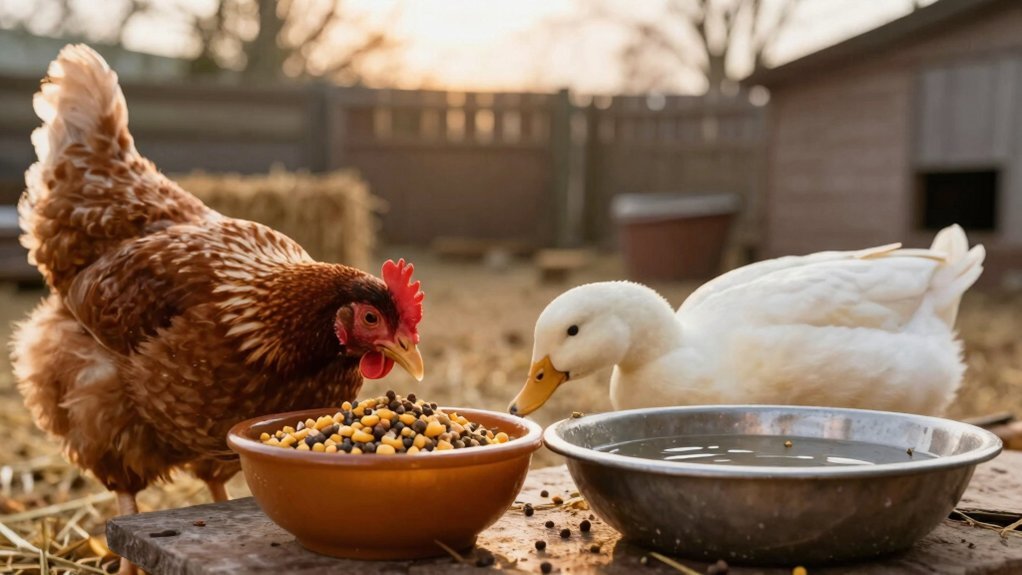
You’re right to wonder if chicken feed works for ducks because their needs aren’t identical. Ducks need about 55 mg niacin /kg feed—roughly double what chickens require—so a standard layer mash can leave them leg‑weak and sluggish, especially when the corn base has low bioavailability. If you feed ducks chicken starter, add 0.4–2 % brewer’s yeast or a niacin supplement, keep the protein at 16‑18 % for adults, and give them deep water to dip pellets. Otherwise, stick to duck‑specific feed and you’ll avoid costly deficiencies.
Can Chickens and Ducks Share the Same Feed?
If you’re wondering whether chickens and ducks can eat the same feed, you’ve hit the right spot. You’ll find that adult birds usually share a base ration without trouble, especially when you’re feeding a mixed flock. Use standard layer feed for both species, and you’ll see ducks happily pecking it while chickens finish their portion. However, for optimal egg production in chickens, ensure the feed contains 16-18% protein to support their specific laying requirements alongside the ducks’ needs.
Now, the key is timing. Align feeding times so the birds eat together, then watch the flock closely. Flock monitoring lets you spot any drop in egg production or weight loss early, so you can adjust the diet before problems grow. Although these species can coexist peacefully, their genetic differences prevent them from successfully hybridizing despite occasional mating behaviors.
All right, remember that adults thrive on shared feed, but ducklings and chicks need separate starters. Keep water deep for ducks, and check litter moisture to prevent soggy feed. While their basic needs overlap, you must provide enough niacin specifically for the ducks to maintain their health alongside the chickens.
Takeaway: Adult chickens and ducks can share feed safely if you sync feeding times and practice diligent flock monitoring. Next, ask yourself whether you have the right water setup for both species. Proper ventilation is essential to keep the coop dry and healthy.
Why Niacin Is Critical in Chicken Feed for Ducks?
You’re probably wondering why the same chicken feed that works for adults might leave ducklings struggling.
Why does niacin matter for ducks?
Ducklings sprint through growth in the first eight weeks, so they need about 55 mg niacin per kilogram of feed—roughly double the chicken requirement of 27–35 mg/kg. Their bodies can’t turn tryptophan into niacin efficiently, so they rely on the vitamin directly. Corn, a staple in many chicken mixes, contains niacin but its corn bioavailability for ducks is low, leaving a big nutritional gap.
What happens if the gap stays open?
Deficiency shows up fast: weak legs, poor mobility, and even deformities appear when ducklings eat standard starter without extra niacin.
How can you fix it?
Add brewer’s yeast, nutritional yeast, or a ground niacin tablet to the feed. These sources are readily absorbed and safe because excess niacin is water‑soluble.
Takeaway: Guarantee ducklings receive at least 55 mg/kg niacin, especially when corn dominates the ration. Next, check how much protein each species truly needs. While ducks have unique vitamin needs, chicken feed must be carefully tailored with optimal protein levels and specific calcium amounts to support healthy growth and egg production without causing harm. Just as layers require precise calcium levels for strong eggshells, ensuring the correct mineral balance is fundamental to preventing health issues in all poultry. Proper digestion in poultry is further aided by providing grit to help grind food in the gizzard.
How Much Protein Do Ducks and Chickens Need?
Takeaway: Match protein levels to life stage, not just species, and keep the amino acid balance right for ideal growth. Next, decide whether you’ll keep separate feeds or blend a balanced mix for your flock. Commercial formulations often include added amino acids specifically designed to support optimal growth and egg production across different life stages. Since nutrient requirements shift significantly as birds mature, chicks and growing pullets require different nutrient balances based on age to maintain health and productivity. Selecting high-quality commercial feed matched to the flock’s specific age and production needs is essential for reducing waste and maintaining overall flock health.
Is Medicated Chick Starter Safe for Ducks?
You’ve probably seen “medicated chick starter” on the feed aisle and wondered whether it’s safe for your ducklings. The short answer: it depends on the active ingredient specifics. If the label lists amprolium, sulfaquinoxaline, zoalene, or lasalocid, you can usually feed it with caution; these coccidiostats have been shown safe for ducklings up to four weeks.
Here’s the thing: blackhead drugs are a no‑go. They’re flagged as unsuitable for waterfowl, so you must read the tag carefully. Use label interpretation guidance to confirm the exact drug and dosage before you pour. While amprolium is commonly used in chicken feed to prevent coccidiosis, its application in waterfowl requires specific verification of safety windows and dosage limits. This compound acts as a proven coccidiostat effective not only for chickens but also for other livestock like cattle, goats, sheep, turkeys, and rabbits. It functions by mimicking thiamine to effectively kill the parasite, a mechanism that requires careful consideration when adapting dosing regimens for different species. All right, you’ll likely find non‑medicated starter easier and safer when it’s available. Takeaway: check the ingredient, avoid blackhead meds, and you’ll keep your ducklings healthy. What’s your next step—reading the label or picking a plain starter?
Which Feed Form (Pellets, Crumbles, Mash) Works Best?
You’re probably wondering which feed form will keep your chicks and ducklings eating well without turning your coop into a mess.
Which form works for tiny beaks?
Mash feels like baby cereal—fine, uniform, and easy for newborns to swallow. It prevents picky picking, but you’ll need extra water for ducks, and the loose grains can scatter, hurting storage efficiency.
When birds grow out of mash?
Crumbles break pellets into bite‑size pieces, giving young birds a softer texture while retaining pellet nutrition. They reduce waste compared with mash and stay tidy enough for mixed flocks.
What’s best for mature birds?
Pellets pack complete nutrition into a compact cylinder, cutting sorting and spillage. They occupy less space, improve storage efficiency, and usually win a cost comparison because you waste less feed. Choosing a uniform feed type like pellets ensures consistent nutrient intake by preventing chickens from selectively eating only their favorite ingredients.
Takeaway: Use mash for the youngest, shift to crumbles, then switch to pellets as birds mature. Now ask yourself: which stage are your birds at, and how much mess can you tolerate? While selecting the right texture is vital, remember that providing unlimited access to high-quality complete feed allows chickens to eat according to their needs and minimizes competition within the flock. Proper feed storage and feeder hygiene are also essential to prevent pest contamination and ensure the diet remains safe for your birds.
Water & Litter Tips for Ducks on Chicken Feed
How do I keep ducks hydrated without turning the coop into a swamp? You’re right to wonder—ducks love to dip pellets, so they need water right by the feeder. Use water placement strategies like a deep bucket or kiddie‑pool on a wire platform; the deeper water lets them immerse their whole bill, keeping nares clean. Keep a secondary chicken waterer elevated for chickens, but don’t rely on it for ducks. While chickens may benefit from automatic watering cup systems that minimize spillage, ducks require open water sources to clean their bills effectively. For mixed flocks, you can also construct an efficient system using a 5-gallon bucket inverted into a pan to create a vacuum seal that prevents overflow. Choosing a BPA-free plastic container ensures durability and safety while helping to reduce algae growth and disease spread in your flock’s water supply.
For litter management techniques, spread wood chips or straw around the water station. Dump the tub daily, and replace bedding often to stop mud from building up. A small, easy‑to‑dump tub prevents sludge and odor.
Takeaway: Deep, separate water sources plus dry bedding keep ducks healthy and the coop tidy. Next, ask yourself if you need a splash‑proof setup for mixed flocks. Niacin is essential for leg development and overall well‑being in ducks.
Do You Add Brewer’s Yeast, Oyster Shell, and Other Supplements?
You’re probably wondering whether tossing a handful of brewer’s yeast or a few oyster shells into the mixed feed will actually help your flock.
Will brewer’s yeast boost growth?
Here’s the thing: low‑dose yeast (0.4–2 % of the ration) improves gut health, nutrient absorption, and feed conversion in both broilers and layers. You’ll see better egg shell thickness and stronger birds without digestive upset, as long as you stay within the researched range.
Do oyster shells belong in a mixed diet?
Obviously, calcium balance matters most for laying hens. Free‑choice shells let layers self‑regulate, but non‑laying chickens or ducks can become calcium‑overloaded, leading to poor bone health and wasted feed. Similarly, offering crushed eggshells separately allows hens to self-regulate their intake to prevent calcium toxicity while ensuring they get enough to avoid skeletal problems. Oyster shells are considered a more reliable calcium source than crushed eggshells and support overall hen health including immune and cardiovascular function.
Do other supplements add value?
Supplement synergy works when each additive targets a different need—yeast for gut microbes, shells for calcium, and maybe a probiotic for immune support. Stacking them without checking total nutrients just creates waste.
Takeaway: Use yeast at ≤2 % and offer shells only to layers, then monitor calcium balance. Next, test a small batch and watch performance before scaling up.