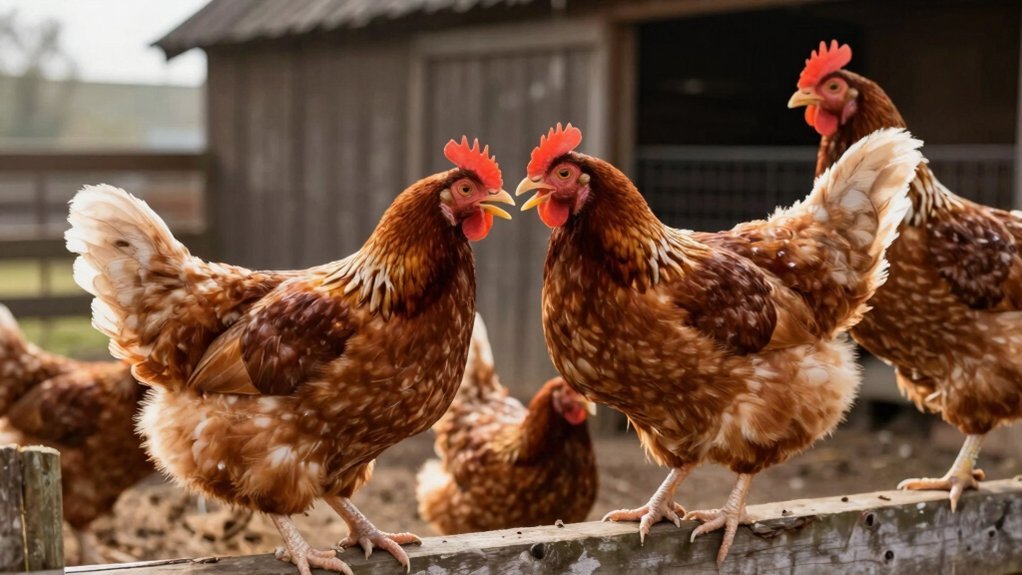
You’re probably wondering why your flock keeps pecking each other, and the short answer is space, nutrition, and boredom. Overcrowding—less than 4 sq ft per bird indoors—creates constant jostling, while missing protein or sodium drives feather‑pecking for nutrients; a dull coop with no foraging toys makes normal social pecks turn aggressive. Give each chicken at least 4 sq ft inside, 8‑10 sq ft outside, add perches, dust baths, and rotating toys, and feed a balanced mash with adequate protein and salts. Now you’ll see fewer fights and healthier birds, and the next steps will show you how to spot early warning signs and protect injured birds.
Quick‑Start Guide: Prevent and Stop Excessive Pecking
If you’re wondering why your flock keeps pecking each other, you’ve hit the right spot—crowding is usually the culprit. You need at least four square feet per adult chicken, minus roosts and feeders, so give them room to scratch and wander.
How do diet adjustments help?
Protein shortfalls and missing sodium push birds to peck feathers. Feed a balanced starter‑type mash, keep feeders full, and limit treats that displace the ration. Ensuring the diet includes adequate phosphorus levels is also critical to preventing nutritional deficiencies that trigger aggression.
What stress management steps work?
Stable lighting, good ventilation, and routine feeding cut tension. Add perches, nest boxes, and daily outdoor time for dust‑bathing and foraging. Removing environmental stressors like predator threats can also prevent the aggression that triggers pecking behavior.
Takeaway: More space, proper nutrition, and calm routines stop the peck‑fest. Ready to try a quick coop redesign? For immediate protection of injured birds, applying anti-pecking sprays can mask wounds and discourage further aggression while the flock dynamics improve.
What’s Normal Pecking and When It Becomes Aggression?
When you wonder whether the pecking you see is just chicken social life or something nasty, you’ve hit the right spot.
What counts as normal social signals?
Brief pecks, chest pushes, wing flaps, and short chases happen when birds sort out rank. You’ll see a quick reminder peck on a newcomer’s comb or head, then a submissive bird backs away. This is dominance maintenance, not harm. The interaction stays intermittent, usually around feeding or roosting, and no single bird harasses the same mate constantly.
When does it cross into aggression?
Repeated, targeted attacks on one bird, feather loss, raw skin, or blood signal bullying. Constant chasing, cornering, or blocking access to food shows the hierarchy has tipped. When prevented from expressing instinctual behaviors, chickens may exhibit frustration or harmful behaviors, highlighting the importance of supporting their natural behavioral goals for welfare. Just as feeling scared or stressed can drive chickens to flee their coop, these negative emotional states often trigger aggressive pecking within the flock. Scientific studies confirm that chickens possess sensory receptors for painful stimuli, meaning severe pecking causes genuine physical pain similar to that experienced by mammals.
Takeaway
Watch for brief, situational pecks without injury; intervene if you see repeated, harmful attacks. Next, ask yourself: are any birds consistently harassing a particular flockmate?
Recognize Overcrowding Triggers That Spark Pecking
You’ve probably noticed your chickens getting jittery and wondered if the coop feels too cramped. You’re right to suspect overcrowding; space shortage fuels environmental stressors and physical bottlenecks that spark pecking. When birds compete for a single feeder or perch, tension spikes, leading to loud distress calls and aggressive posturing.
How do you spot the signs? Look for constant jostling at waterers, feather loss, and open wounds—these are red flags that the flock density exceeds the recommended 2‑4 sq ft per bird indoors and 8‑10 sq ft outdoors. Hot, stuffy coops amplify irritation, while too few nest boxes create guarding behavior. Sodium imbalance can also drive birds to peck at blood as a source of missing salts. Maintaining pasture with short grass around two inches is vital because restricted foraging increases frustration and aggression within the flock. For a standard 4×8 coop, adhering to 4 square feet per bird ensures adequate room if outdoor access is available, whereas lacking a run requires significantly more indoor space to prevent conflict. Providing 6 inches per bird of roosting space helps reduce competition and stress during nighttime rest.
What can you do now? Expand the coop or add vertical perches, and install extra feeders, waterers, and nest boxes to dissolve bottlenecks. Better ventilation and shade cut down environmental stressors. The takeaway: more room and resources equal calmer birds. Ready to adjust your layout and watch the pecking drop?
Why Boredom Makes Chickens Peck Their Feathers
You’re probably wondering why your chickens start pulling out their own feathers when nothing else seems to be happening. Boredom hits when a coop offers only environmental monotony, so the birds’ natural urge to forage disappears. You’ll see them redirect pecking onto feathers because they lack foraging substitutes and safe objects to explore.
Here’s the thing: chickens spend hours scratching and pecking for insects or seed. If you give them a barren floor, they turn to the soft texture of feathers, especially short or exposed patches. Obviously, a dull routine makes them more reactive, and the curiosity that once led to ground foraging now targets flockmates. Ensuring proper lighting conditions can also help reduce the stress and boredom that contribute to these destructive behaviors.
All right, give them constant foraging substitutes—scratch boxes, perches, hanging veggies—and rotate toys every few days. Incorporating DIY hanging swings and treat dispensers made from upcycled materials can provide the necessary mental stimulation to keep them occupied. Simple additions like tree branches or straw further encourage natural behaviors and reduce the urge to peck at flockmates. The takeaway: richer environments curb feather pecking. Next, check how your coop layout might be creating boredom. Severe feather pecking often results from prolonged stress and boredom.
Spot Early Signs of Problematic Pecking
Boredom may have sparked the feather‑pecking, but spotting the first warning signs tells you whether it’s a harmless habit or a growing problem.
What does early detection look like?
You’ll notice tiny bald patches on the neck or back before any bleeding starts. Those subtle signs—ragged feathers, a few missing plumes—often precede larger wounds. If a bird over‑preens or huddles in a corner, that’s a red flag.
How do skin changes warn you?
Red, inflamed skin around the vent or comb signals the next stage. Scabs and crusty lesions appear quickly, and any blood draws more attacks.
What behavior shifts signal trouble?
A bird that skips the feeder, flinches, or stays low is likely being bullied. Loud squawks and constant chasing confirm aggression. Monitoring chickens for behavioral changes is essential to catch these issues before they escalate into severe injury or disease. Since noise is often a sign of stress or boredom, addressing these underlying causes through enrichment can help prevent the agitation that leads to pecking.
Takeaway: Scan daily, note feather loss, skin redness, and shy behavior—those are your early detection cues. Next, isolate the affected bird and adjust flock dynamics. Remember that natural molting can also cause neck feather loss without aggression, so distinguish seasonal shedding from bullying by checking for new feather growth rather than wounds.
How Age & Breed Mixes Affect Pecking Patterns
Why does mixing ages and breeds change pecking behavior? You’re right to wonder—age gaps spark hierarchical conflict, and visual differences carve breed subgroups. Older birds claim dominance, so when you add younger chickens they chase and peck more, especially if the gap exceeds a few weeks. At the same time, chickens gravitate toward look‑alikes; a black Rhode Island Red will bond with its own kind, while a contrasting Leghorn may become a target for bullying.
Here’s the thing: conventional layer hybrids tend to peck more than dual‑purpose strains, and the aggression rises with age. Dual‑purpose hens stay calmer, showing lower feather‑pecking even in mixed flocks. However, assertive breeds like Rhode Island Reds can become aggressive or disruptive with smaller, docile flockmates if not provided adequate space. Larger breeds specifically require 2-4 square feet per bird in the coop to prevent the stress that fuels such aggression. Implementing proper ventilation alongside sufficient room for pecking and dust bathing is also key for maintaining healthy, happy hens and reducing tension.
All right, keep an eye on size and temperament differences, and introduce new birds gradually. The takeaway: balanced age and breed mixes reduce hierarchical conflict and keep the flock harmonious. Next, consider how space and enrichment can further curb pecking.
Space Requirements and Enrichment Ideas That Stop Pecking
If you’re wondering why your flock keeps pecking each other, the answer often starts with how much room they actually have. You need at least 4 sq ft per bird indoors and 8‑10 sq ft outdoors; anything less forces constant contact and spikes stress.
How much space is enough?
Obviously, more floor space lets subordinate chickens slip away from dominant ones, cutting fights before they start. Remember that feeders, waterers, and nests don’t count as walkable area, so plan extra open zones around them. While standard guidelines suggest specific dimensions, providing larger spaces beyond the minimum is highly beneficial for the chickens’ overall well-being and can further reduce tension.
What enrichment works?
A dust bath setup gives birds a natural outlet for scratching and grooming, which eases boredom‑driven pecking. Add perches and hiding spots for vertical escape routes.
How should you arrange food?
A feed spacing layout with multiple stations prevents bottlenecks; each bird should reach feed without crossing a bully’s path. Spread waterers similarly.
Takeaway: Give your flock the space and enrichment they crave, and watch aggression melt away. What’s the first change you’ll try today? Incorporating hanging snack dispensers with vegetables or fruits can further engage their foraging behaviors and reduce boredom-related aggression.
Immediate Steps to Protect Injured Birds and Halt Ongoing Pecking
All right, you’ve just set up the right space and enrichment, but now one of your chickens is bleeding and the flock’s already eyeing it. First, move the bird to an isolated recovery box—metal crate or small brooder works fine. This stops the flock from pecking the red wound and reduces stress.
Now, get that bleeding under control. Apply pressure with a clean cloth, then dust the spot with styptic powder or a pinch of cornstarch. Keep pressure on for a minute until clotting starts.
After bleeding stops, clean the wound gently with a poultry‑safe antiseptic spray like Vetericyn Plus. Cover it with a purple wound spray or a light bandage to mask the red color that attracts pecking.
Finally, give the bird fresh water, electrolytes for a day, and monitor for swelling or odor. Keep the flock’s eyes away until the wound heals.
Takeaway: isolate, control bleeding, clean, cover, and watch—then you’ll halt the pecking and help your chicken recover.
Long‑Term Management Practices for a Peaceful Flock
Peaceful flocks start with the right balance of space, routine, and enrichment, and you’re right to wonder how those pieces fit together. You need at least 4 sq ft indoors and 10 sq ft outdoors per bird, plus separate feeders and waterers so lower‑ranking hens can eat without being blocked.
How do I keep the environment comfortable?
Now, keep the coop dry, ventilated, and at a steady temperature; replace litter weekly and clean feeders daily. A secure enclosure reduces predator stress, which otherwise spikes pecking.
What about nutrition and feeding?
Here’s the thing: maintain consistent feed and water, use feed rotation to meet changing needs, and watch for drops in egg production or feather quality as early stress signals.
How can I monitor flock health long‑term?
Obviously, regular stress observation—checking feather condition, social interactions, and activity—lets you catch problems before they become entrenched.
Takeaway: space, routine, enrichment, and vigilant observation together create a calm flock. Next, consider a weekly checklist to track these factors.