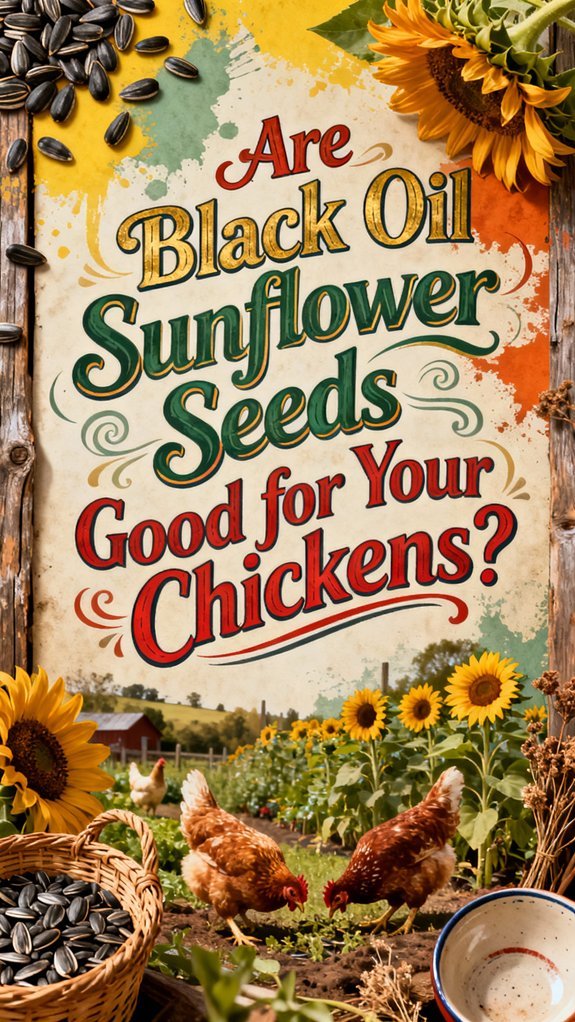
Black oil sunflower seeds (BOSS) are excellent for your chickens when you’re strategic about portions. They’re nutrient-dense, delivering 44% fat, 17–26% protein, and essential vitamins that boost egg production and feather quality. However, you’ll need to limit BOSS to no more than 10% of your flock’s daily intake because their phosphorus-to-calcium ratio creates imbalance risks. The high fat content also poses obesity concerns. When you understand the specific guidelines and timing, you’ll maximize BOSS benefits while protecting your birds’ long-term health.
Nutritional Benefits of Black Oil Sunflower Seeds
Black oil sunflower seeds (BOSS) pack substantial nutritional value that makes them a strategic supplement for your flock’s diet. You’ll find they’re roughly 44% fat and 17–26% protein depending on variety, delivering concentrated energy at approximately 2,500 kcal/lb. The thin hulls on BOSS improve digestibility compared with striped varieties, enhancing feed efficiency and usable nutrients. Their protein quality supports tissue maintenance and feather regrowth through amino acids essential for keratin synthesis. Additionally, ensuring proper nutrition, including adequate calcium, can help prevent vent prolapse in your hens. Including BOSS in your feed can create a more balanced nutrition profile for your chickens. You’ll also benefit from their mineral content—including magnesium and phosphorus—which supports metabolic and neuromuscular functions. Notably, providing nutrient-dense treats like nuts occasionally can further enhance their overall health. The substantial neutral detergent fiber slows digestion, promoting gut fill. Moreover, BOSS are a popular treat due to their high-fat content, making them an excellent source of energy when given in moderation. However, you should monitor the calcium-to-phosphorus ratio, as BOSS phosphorus levels can skew this balance without adequate calcium supplementation like oyster shell. When introducing BOSS to your flock, start with small quantities to help observe their response and prevent overfeeding while promoting healthy dietary habits.
How Black Oil Sunflower Seeds Improve Egg Production
While the nutritional profile you’ve just learned about supports overall flock health, these same compounds directly enhance your hens’ laying capacity. The high protein content—approximately 26%—fuels muscle development directly linked to consistent egg laying performance. Simultaneously, the 44% fat content provides sustained energy essential for maintaining production during metabolically demanding periods, particularly winter months. Additionally, an ideal balance of essential vitamins such as A, D, E, and K plays a vital role in overall chicken health, further supporting egg production. Providing a comfortable and spacious environment, including a secure chicken run, also contributes to your hens’ overall well-being and productivity.
Vitamin E acts as a reproductive cell protector, strengthening eggshell quality while supporting immune function that indirectly sustains laying consistency. However, achieving ideal results requires careful nutritional balance. You’ll maintain steady egg laying by incorporating black oil sunflower seeds as a supplement—roughly one cup per six cups of feed—rather than overfeeding, which risks unbalanced diet and reduced output. Black oil sunflower seeds also serve as a good source of calcium and protein for laying hens, further supporting their nutritional needs. Moreover, providing the right combination of calcium supplements guarantees your hens produce quality eggs without production decline.

Attracts the widest variety of birds

Natural Seed for Bird Delight: Our Non-GMO Black Oil Sunflower Seeds provide a chemical-free and sustainable food source, attracting a diverse array of birds to your outdoor spaces

Premium Black Oil Sunflower Seeds for Birds - A classic choice for bird enthusiasts, Trailmark Naturals sunflower seeds are ideal for attracting a wide range of backyard birds to your feeder.
Effects on Feathering, Molt, and Body Condition
Since your hens’ feathering quality and body condition directly reflect their nutritional intake, black oil sunflower seeds offer a targeted nutritional intervention that addresses both concerns simultaneously. The seeds’ 17% protein and 44% fat content support robust feather growth while providing quick energy for maintaining body weight during seasonal stress. The dermal melanin inhibitor gene affects pigmentation in chickens and may influence the overall aesthetic appeal of their plumage during this growth phase. Additionally, incorporating nutritious treats like plantains into their diet can further enhance overall health and immunity. Offering insoluble grit can also aid in proper digestion, ensuring that the nutrients from these seeds are effectively absorbed.
During molt periods, you’ll notice remarkably shortened molt duration when incorporating black oil sunflower seeds into your flock’s diet. The elevated protein prioritizes feather production over competing metabolic demands, while high fat content fuels the intensive energy requirements of regrowth. Offering a handful per chicken every 2-3 days during winter molt optimizes results without triggering nutrient imbalances. Black oil sunflower seeds are rich in linoleic acid and antioxidants, which further support feather quality and overall flock health during this demanding physiological period.
Moderate inclusion—up to 28-30%—prevents the adverse effects associated with excessive supplementation while maximizing feathering benefits.
Calcium and Phosphorus Imbalances to Watch For
Because black oil sunflower seeds contain roughly 8.5 times more phosphorus (660 mg/lb) than calcium (78 mg/lb), you’ll need to carefully manage their inclusion in your flock’s diet to prevent mineral imbalances. Your chickens require a 2:1 calcium-to-phosphorus ratio for ideal health, yet sunflower seeds deliver the opposite. This phosphorus-dominant profile disrupts bone development and enzyme function when you overfeed seeds as a primary nutrient source. Excess phosphorus without adequate calcium can trigger urinary calculi and metabolic complications similar to those seen in other livestock. To mitigate these risks, you should limit sunflower seeds to no more than 10% of your birds’ daily intake and pair them with calcium-rich feeds to restore proper mineral equilibrium and support skeletal integrity. Additionally, ensuring your chickens receive a balanced diet will help prevent nutritional deficiencies and improve their overall health. Incorporating supplemental calcium sources like oyster shells is also beneficial in maintaining this critical ratio, as they provide essential calcium for eggshell formation. This is particularly important because, without adequate calcium, hens risk drawing it from their bones, leading to weakness and increased fracture risk. Providing weatherproof feeders can further assist in managing their feeding habits efficiently and minimize waste.
Risk of Obesity and Excess Fat Intake
Beyond mineral management, the high fat content of black oil sunflower seeds presents another significant health concern for your flock. Your chickens naturally prefer these calorie-dense seeds, leading to selective overconsumption and obesity risks when you offer them excessively. The high fat intake triggers internal fat accumulation, promoting fatty liver disease that can impair liver function and cause fatal bleeding. Tylan 50 is sometimes utilized in flocks experiencing health problems, which can be exacerbated by obesity. Diatomaceous earth is an effective natural treatment for pests that can further stress your chickens, so maintaining a healthy environment is vital. Pumpkin seeds are another nutritious treat that could complement your chickens’ diet without the same high risks when offered in moderation. Obesity simultaneously reduces egg production, increases circulatory problems, and compromises mobility. Proper nutrition is essential for preventing health complications like wry neck, which can be aggravated by poor dietary choices. Your birds face heat stress, joint problems, and shortened lifespans. Additionally, when your chickens gorge on palatable seeds, they skip their formulated feed, diluting essential nutrients and creating dangerous dietary imbalances. During colder months or molting periods, you may increase sunflower seed amounts to support increased energy demands, but baseline portions should remain conservative. Fresh sage can be a beneficial supplement due to its nutritional properties, so consider including it as part of a balanced diet. Limiting sunflower seeds to no more than 10% of your flock’s diet prevents these obesity-related complications while maintaining their health and productivity.
Pest Management and Storage Considerations
While black oil sunflower seeds offer nutritional benefits to your flock, their high oil content and palatability create storage and pest management challenges that demand careful attention. You’ll want to implement rodent- and insect-proof containers with tight lids to protect your seed storage from mice, rats, and pantry pests. Inspect containers regularly for webbing, frass, or live insects that signal infestation. Maintaining a clean storage area is essential by sweeping spilled seeds and removing debris that attracts pests. Additionally, incorporating seeds that encourage movement and foraging can help keep your chickens active when feeding seeds. Store quantities you’ll consume within weeks to months, reducing exposure time considerably. For pest prevention, discard any contaminated seed immediately and sanitize your storage area before restocking. The high oil content of black oil sunflower seeds makes them particularly attractive to rodents and insects, requiring vigilant monitoring of storage conditions. It is vital to ensure your birds receive a balanced diet that provides adequate energy for egg production, as this can affect their overall health and laying capabilities. Never feed compromised seed to your birds, as contamination poses serious health risks to your flock.

Pest Protection: keep your birdseed fresher for longer with our airtight bird seed storage container; Featuring locking clips and a rubber gasket, this metal storage container ensures a tight seal that keeps out moisture, insects, squirrels, and rodents; Say goodbye to clumping and critter break-ins, and hello to fresh bird food every day

Keeps Food Fresh and Flavorful: our patented GAMMA SEAL TECHNOLOGY, featuring a threaded locking system and double gaskets, create a controlled moisture balance making it the ideal airtight dog food storage container (suitable for cat food, too)

Heavy-Duty Galvanized Steel Construction for Maximum Durability Built from high-quality galvanized steel, this storage can outperforms plastic alternatives with superior strength and longevity. The rust-resistant and weather-proof design withstands harsh outdoor conditions, making it ideal for storing pet food, bird seed, charcoal, or ash without corrosion or degradation. The reinforced base keeps the can elevated off the ground, preventing moisture damage and ensuring years of reliable use.
Practical Feeding Guidelines and Recommended Amounts
Once you’ve secured your seed storage against pests and contamination, establishing proper feeding protocols becomes your next priority to maximize the nutritional benefits while preventing overconsumption-related health issues. Offer black oil sunflower seeds 1–3 times weekly as a supplement rather than daily. Use practical portions: approximately one tablespoon per adult laying hen per session, or half that amount for smaller breeds. Employ feeding methods that encourage natural behaviors—scatter seeds as foraging treats or mix small amounts into scratch. Increase frequency to every other day during molt or cold weather when energy demands spike. Black oil sunflower seeds are preferred for their thinner shells, making them easier for your flock to crack and consume. Additionally, ensure to keep all treats, including seeds, below 10% of weekly calories to maintain nutritional balance and prevent obesity-related complications. Chickens can safely eat whole corn as part of a balanced diet, which complements the energy provided by sunflower seeds. Sunflower seeds are rich in protein and healthy fats, yet keeping total sunflower seed intake below 10% of weekly calories is essential to maintain nutritional balance and prevent obesity-related complications. Furthermore, the sharp tip of seeds could potentially harm the chicken’s palate, so ensure they are properly monitored while eating. This approach helps to ensure that your chickens benefit from a varied natural diet, supporting their overall health and well-being.

Premium Black Oil Sunflower Seeds for Birds- A classic choice for bird enthusiasts, Trailmark Naturals sunflower seeds are ideal for attracting a wide range of backyard birds to your feeder.

Premium Quality Bird Seed – Includes a 35.3-pound bag of 100% pure black oil sunflower seeds, perfect for attracting a wide variety of wild birds.

Attracts the widest variety of birds
Best Times to Supplement Your Flock
Timing your black oil sunflower seed supplementation strategically maximizes their nutritional benefits and aligns with your flock’s seasonal metabolic demands. Begin winter preparation approximately four to six weeks before temperature drops, allowing your chickens to build energy reserves and develop insulation through increased fat and protein intake. Additionally, enhancing their diet with optimal calcium sources supports strong bones and eggshell quality during colder months. During fall and winter molting periods, increase supplementation to support feather regeneration with the seeds’ high protein content, which is essential for tissue repair. Furthermore, providing a balanced diet that includes high-protein layer feed can further enhance your hens’ overall health and productivity. Moreover, ensuring a clean environment with barn lime can further promote the health of your flock while they benefit from these nutritious seeds. Conversely, implement summer reduction by minimizing or eliminating supplementation when natural foraging provides adequate nutrition from insects and vegetation. This seasonal approach prevents overfeeding while optimizing metabolic efficiency. Maintaining a balanced rooster to hen ratio in your flock can also help ensure that hens remain healthy and stress-free during their breeding cycle. Your flock requires approximately one handful per chicken every two to three days during cold months, then shift to occasional treats during warmer seasons. Monitoring consumption quantities remains essential to avoid creating nutritional imbalances that could compromise your flock’s long-term health and productivity. This strategic timing guarantees your birds receive peak nutritional support precisely when they need it most.

Nutrient-Rich Wild Bird Food: Packed with protein, fiber, and essential oils, our premium black oil sunflower seeds provide the balanced nutrition wild birds need to stay healthy and energetic year-round.

Natural Seed for Bird Delight: Our Non-GMO Black Oil Sunflower Seeds provide a chemical-free and sustainable food source, attracting a diverse array of birds to your outdoor spaces.

Nutrient-Rich Wild Bird Food: Packed with protein, fiber, and essential oils, our premium black oil sunflower seeds provide the balanced nutrition wild birds need to stay healthy and energetic year-round.
Combining Black Oil Sunflower Seeds With Other Feed
To maximize black oil sunflower seeds‘ nutritional value without compromising your flock’s health, you’ll need to integrate them strategically into your existing feeding program rather than treating them as a standalone ration. The recommended BOSS mixing ratios keep supplemental seeds at approximately 1 cup per 6 cups of formulated layer feed, maintaining complete feed limitations below 10% of total daily calories. This approach prevents nutrient displacement while leveraging BOSS’s higher protein and fat content. When combining BOSS with commercial pellets, scatter them as top-dress rather than mixing directly, which avoids selective feeding and guarantees consistent mineral intake. For grain-based mixes, blend BOSS at low proportions to enhance amino acid profiles without drastically increasing fat content, preserving your layers’ calcium balance and shell quality. Additionally, a well-balanced diet tailored to growth is essential for maintaining optimal health and productivity. Adding grit alongside BOSS ensures proper digestion and prevents compaction in the digestive system. It is also important to consider the developmental stage of your chickens, as a high-protein diet during the chick stage and pullet stage supports their overall growth and future egg-laying capabilities. Remember to provide high-calcium layer feeds for your egg-laying hens to optimize egg production and maintain bird health. Furthermore, it’s crucial to monitor calcium levels in their diet, especially during non-laying periods, to ensure they do not suffer from calcium deficiency.

BLACK OIL SUNFLOWERS: Black oil sunflower seeds are most effective choice for feeding wild birds, attracting more bird species than any other seed or wild bird meal. Our bird...