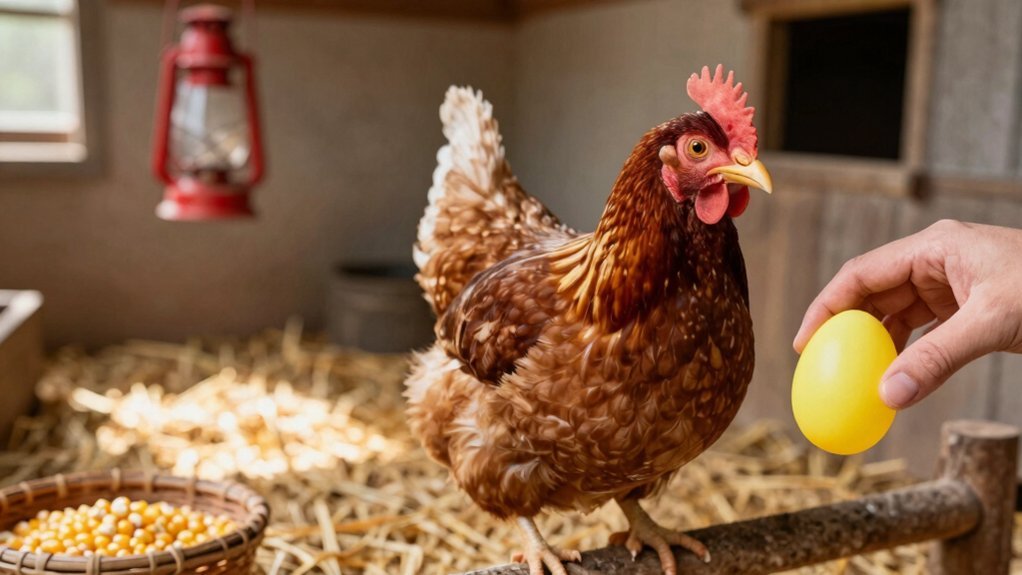
You’re probably fed up with a hen glued to the nest, puffed up and refusing to leave, and you’re right to look for a fast fix. First, collect every egg at least twice a day and block her favorite box; the lack of a clutch breaks the hormonal drive. Next, put her in a well‑ventilated “broody jail” for 2‑4 days, give her cold water or ice packs near the nest to cool the brood patch, and keep her active with free‑range time and treats. After a few days she’ll lose the urge and return to normal laying, and the next section shows you how to re‑integrate her safely.
Identify the Signs of a Broody Hen Early
How can you spot a broody hen before she settles in? You’re probably tangled in molting confusion, but a broody hen shows a distinct brood patch—bare, moist skin on her chest. She flattens low over the nest, even when no eggs sit there, and stays put for hours, taking only brief bites or sips.
What does her body language say? Her feathers puff up, wings hug her sides, and her comb turns pale. You’ll hear growls or clucks if you approach, and she may peck to protect the spot. It is important to distinguish this protective aggression from pain responses, as chickens possess sensory receptors for painful stimuli that trigger different behavioral changes than broodiness. Unlike their usual social bonding with caregivers where they show affection and comfort, a broody hen becomes intensely focused on the nest rather than human interaction. While some farmers use boxing gloves for roosters to manage aggressive sparring and minimize injury, such physical interventions are not applicable to the nesting behavior of a broody hen.
How do you confirm it? She stops laying entirely, drops drinking frequency, and produces a few smelly droppings each day.
Takeaway: Spotting the brood patch and nest fixation early lets you act before the cycle deepens. Ready to break the cycle?
Collect Eggs Frequently to Break a Broody Hen’s Clutch Cycle
Collect eggs at least once a day. If you have many layers, aim for two or three collections. The sooner you empty the box, the less the hen sees a clutch forming, and that cuts brooding prevention in half. An empty nest removes the visual cue that tells a hen “stay put,” so she stays productive instead of sitting.
When a clutch reaches about a dozen eggs, the hen often settles firmly. By scooping eggs before that point, you interrupt the “egg‑present, keep sitting” cycle. This simple habit boosts flock productivity and keeps eggs safe from breakage or theft. Maintaining one nesting box for every 4-5 hens helps prevent the overcrowding that can exacerbate competitive sitting behaviors and makes frequent collection easier to manage. Remember that even healthy hens typically lay one egg every 24 to 26 hours, so daily collection aligns perfectly with their natural production rhythm. Since the reproductive cycle of a hen typically lasts about 24 to 27 hours, removing eggs daily ensures you are working within the timeframe of their biological egg-forming process.
Takeaway: Frequent egg removal is your first‑line defense against broody behavior. Ready to schedule your next collection?
Use a “Broody Jail” or Crate to Separate the Hen Safely
You’re probably wondering why a “broody jail” works when other tricks fail. Here’s the thing: it removes the nest, so the hen can’t sit on anything cozy. You place her in a vent‑ilated crate with wire floors, which keeps her cool and stops her from nesting comfortably. The cage stays near the flock, so she still sees mates and eats, but she can’t get to any box.
Now, set up a simple wire‑bottom dog crate or rabbit hutch. Give her fresh water and feed, shade the spot, and leave it for 2‑4 days. Check daily; if she still tries to nest, extend to six days. Unlike the rare biological process where hormonal imbalances cause a hen to develop male traits, broodiness is a behavioral cycle that this confinement method effectively resets. Just as isolating affected birds is a primary strategy for controlling lice and mites, separating a broody hen prevents the behavior from spreading or becoming entrenched. However, because chickens are social animals that can suffer from stress and loneliness when kept alone, ensure this temporary separation does not last longer than necessary to break the cycle.
Takeaway: a short, safe confinement in a ventilated crate with wire floors breaks broodiness fast. Ready to try it?
Take Away Nesting Stuff and Block Her Favorite Spot
Takeaway: Make the preferred corner uncomfortable and inaccessible for several days, then watch her broodiness fade. Next, consider keeping her active with free‑range time and enrichment. Block Nest Box Entrance to prevent her from using her favorite spot. You can also try confining chickens to the coop to reinforce the area as their home and discourage them from seeking out hidden spots to brood. While managing these behaviors, remember that realistic dummy eggs are typically used to encourage laying in specific spots rather than to support broodiness. Installing a sloped roof on the nesting area can further discourage hens from settling down and roosting in their preferred spot.
Keep the Hen Active With Free‑Range Time and Enrichment
Free‑range time is the antidote you’ve been looking for; it breaks the hen’s nest‑sitting cycle by forcing movement. You’re probably wondering why letting her roam helps, and the answer is simple: natural foraging and environmental enrichment keep her brain and body busy. When she scratches for bugs, seeds, and weeds, she redirects the urge to sit on the nest into a productive task. This access to insects and greens provides a balanced supply of protein and vitamins that supports her overall health while distracting her from brooding.
Now, how do you set it up? Open the coop at the same hour each morning, let the flock out for at least three hours, and scatter grain or treats across the yard. Add a dust‑bathing pit and a few perches; these items create environmental enrichment that competes with nesting. Incorporating climbing and perching elements like ramps or swings further encourages physical activity and reduces the boredom that often fuels broodiness.
Here’s the thing: consistent free‑range blocks reduce total sitting time and normalize feeding, drinking, and social interaction. You’ll see the hen follow the flock, pecking and scratching instead of returning to the nest box. Providing adequate outdoor space ensures she has enough room to engage in these active behaviors, which supports her wellbeing and helps break the broody trance.
Takeaway: daily, structured outdoor time with natural foraging opportunities and simple enrichment breaks the broody cycle fast. Next, consider how to keep the routine steady—maybe a timer or a daily checklist?
Apply Cooling Techniques to a Broody Hen (Ice Cubes, Cold Water)
You’re probably wondering why a cool touch can calm a broody hen after she’s been busy nesting all day. The cooling benefits come from lowering the temperature around her brood patch, which short‑circuits the hormonal drive to stay on the eggs. Ice packs or a shallow pan of chilled water act like a gentle air conditioner for her underside, easing the urge to sit.
Now, how do you apply it safely? Slip a thin ice pack under the nest, making sure it touches the surface, not her skin, and rotate it every 30 minutes. a a shallow pan of cold water nearby, misting lightly if the coop is hot. Avoid soaking her feathers—excess wetness can cause chill stress.
All right, what about safety precautions? Keep the coop at least 10°F above freezing, watch for panting or lethargy, and never leave her unattended for long. If she seems distressed, remove the cooling source and give her fresh feed and water. The takeaway: gentle, indirect cooling can reduce broodiness, but monitor her closely and stay within safe temperature limits. Next, consider pairing cooling with a short, active routine to reinforce the break in the brood cycle.
While cooling helps break broodiness, it is vital to remember that chickens can tolerate inside coop temperatures down to −20°F if well managed, so ensure your cooling method does not push the environment below safe limits for the rest of the flock. It is also important to maintain adequate ventilation in the coop to prevent moisture buildup while applying these cooling techniques. Although adult birds are hardy, remember that chicks require higher starting temperatures around 90-95 degrees Fahrenheit, so these cooling methods should never be applied to young birds.
Implement a 2‑6‑Day Routine to End Broodiness
You’re probably wondering how to break a hen’s broody cycle without stressing the whole flock.
What’s the first move?
Start day 1 by stripping the nest of eggs and blocking her favorite box. Collect any stray egg multiple times daily, then lift her off the nest and move her to a different coop corner or yard. Encourage scratching and pecking; if she keeps returning, shut her out of the coop for a few hours.
How do you keep her busy?
Day 2‑3: put her in a wire cage with good cage ventilation, away from nesting material. Provide water and feed, but keep her under nighttime confinement. This disrupts the brood instinct while still linking her to the flock. Just as stressors like moving the coop can stop egg production, disrupting the broody environment helps reset her natural cycle. Unlike the annual chicken molting process triggered by shorter days which naturally pauses laying, broodiness is a behavioral instinct that requires active intervention to break.
When do you know it’s working?
By day 4‑6 watch for reduced nest‑seeking, more ground activity, and feather‑fluffing fading. If she still rushes back, extend confinement another day.
Takeaway: A consistent 2‑6‑day routine of egg removal, activity bursts, and well‑ventilated cage confinement breaks broodiness fast. Ready to see her rejoin the flock?
Re‑Introduce the Hen to the Flock and Watch Recovery Signs
Any hen that’s just finished a broody cycle can feel like a stranger in her own flock, and you’re probably wondering how to bring her back without a war of feathers.
How do I start the re‑entry?
You’ll give her a safe retreat: a crate or protected night‑run next to the main area. Keep the flock visible but separated for at least a day, letting them see each other without pecking. Then allow a short bonding period with one or two calm birds.
What signs tell me she’s adjusting?
Watch for normal roosting, regular eating, and a willingness to leave the crate. If she mingles beyond the protected zone and stops hiding, she’s progressing.
What’s the next step?
Gradual acclimation continues until the whole flock shares feed and water without tension. Once she’s calmly moving among mates, you can remove the barrier.
Takeaway: start with a safe retreat, monitor recovery signs, then ease her into full flock life.
If You Want to Keep a Broody Hen: Hatching Tips and Management
If you’re wondering how to keep a broody hen happy while she hatches, you’ve asked the right question.
How do I set up a nest that works?
Pick a quiet, dim, draft‑free corner and line it with clean straw. Keep the nest stable; once eggs are under her, avoid touching them. Mark each fertile egg during setting so you don’t extend the hatching timeline with stray eggs.
What eggs should I use?
Choose fresh, uniform, fertile eggs for the best hatch consistency. If you’re nervous, start with a few fake eggs—wooden or plastic—to confirm her commitment, then swap them for real eggs at night.
How can I support her during incubation?
Provide free‑choice feed and constant water; a higher‑calorie mix or chick feed helps maintain her condition. Watch her appetite and replace any missing eggs promptly.
What signs tell me the chicks are ready?
Around day 19, listen for cheeping. If she starts to pause, a one‑day delay is still fine. Have a brooder ready in case you need to intervene.
Takeaway: A calm nest, proper egg selection, and steady nutrition keep your broody hen on track for a successful hatch. Next, check her water and feed daily to secure she stays comfortable.