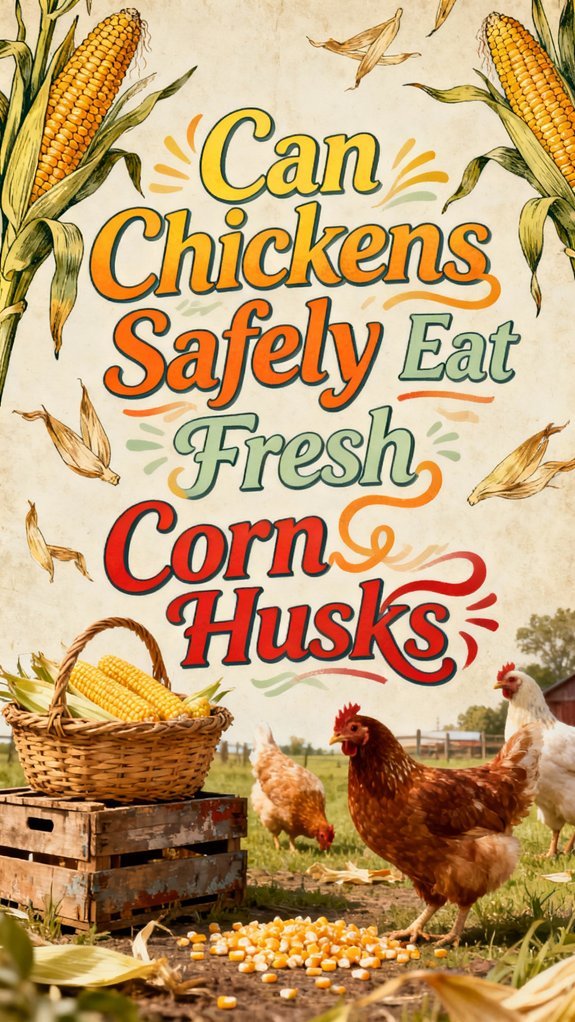
You can safely feed fresh corn husks to your chickens as occasional treats, but they shouldn’t comprise more than 10% of your flock’s daily diet. Confirm you rinse them thoroughly, remove silk fibers, and steam them for five to ten minutes to improve digestibility. Monitor your chickens for abnormal droppings or lethargy after introduction. While husks provide minimal nutrition and structural fiber, they support gut motility and gizzard development. Understanding proper preparation techniques and feeding protocols will help you maximize their benefits safely.
Safety Profile for Chicken Consumption
While corn husks offer chickens occasional enrichment, you’ll want to understand the safety considerations before incorporating them into your flock’s diet. Corn husks are non-toxic and safe as treats, making them suitable for pecking variety alongside silks and cobs. However, you must establish appropriate safety measures and feeding frequency to prevent complications. Limit corn husk consumption to avoid intestinal blockages and digestive impaction, particularly since their high fiber content can overwhelm your chickens’ systems when overfed. Chickens can safely eat cabbage, which also provides beneficial nutrients while being a good source of fiber. It is important to remember that proper preparation, such as washing the husks, can help ensure they are free from contaminants before feeding them to your chickens. You should monitor your flock after introducing husks, watching for abnormal droppings, lethargy, or appetite loss. Confirm husks are fresh and mold-free, as contaminated feed compromises your chickens’ well-being. Fresh corn husks can serve as a low-nutrient “junk food” that should be enjoyed only in moderation. Introducing new foods gradually to your chickens allows their digestive systems to adjust and helps you identify any individual sensitivities or preferences. By respecting these boundaries, you’ll safely offer corn husks as occasional treats rather than dietary staples.
Nutritional Content and Value
Corn husks deliver minimal nutritional value compared to conventional poultry feeds, primarily because they’re composed of structural fiber rather than energy-dense starch. Your nutritional analysis reveals negligible protein (trace amounts versus laying hens’ 15–18% requirement), virtually no usable fat, and minimal carbohydrates beyond insoluble polysaccharides. Micronutrient profiles are similarly disappointing—B vitamins, carotenoids, and vitamin E exist at concentrations too low to meaningfully supplement your flock’s needs. Additionally, the nutritional benefits of other treats, such as sunflower seeds, could be more advantageous for your chickens. Chickens, like humans, require a diverse diet that includes nutrient-rich treats for optimal health and productivity. Furthermore, ensuring adequate calcium intake is essential for maintaining strong eggshell quality, especially if husks replace more calcium-rich foods.
Interestingly, chickens also require specific protein-rich sources to support their growth and egg production, similar to the dietary needs of hens as they reach maturity. The fiber content presents a mixed picture. While high neutral-detergent fiber (NDF) and acid-detergent fiber (ADF) levels provide bulk and gizzard stimulation, they offer limited fermentable substrate for energy production. Unprocessed husks yield negligible prebiotic benefits, though xylooligosaccharides derived from corn husks through enzymatic processing can selectively stimulate beneficial microflora and reduce pathogenic bacteria in poultry. Additionally, a balanced diet is crucial for ensuring hens remain healthy and productive. Excessive husk consumption risks diluting your birds’ overall dietary energy and protein density, potentially compromising egg production or growth rates if husks replace balanced feeds.
Health Benefits for Your Flock
Despite corn husks‘ limited nutritional density, they’ll deliver meaningful health benefits to your flock when you introduce them strategically into your management program. The fiber benefits support gut motility and strengthen gizzard muscle development, enhancing mechanical digestion efficiency. Ferulic acid and other compounds provide antioxidant effects that reduce intestinal oxidative stress and inflammation within poultry digestive tissues.
You’ll observe improved immune responsiveness through enhanced systemic antioxidant capacity. Moderate husk inclusion maintains intestinal integrity, thereby reducing pathogen translocation and unnecessary immune activation. Additionally, you’ll notice behavioral improvements: husks reduce pecking boredom, encourage natural foraging, and promote beak wear through chewing activity. The small amounts of vitamins and minerals contained in corn husks contribute to overall nutritional supplementation when provided weekly in appropriate portions. When you balance husk supplementation with enzyme support and complete nutrition, your flock experiences measurable gains in both health markers and welfare outcomes.
Potential Risks and Concerns
To maximize the benefits you’ve observed in your flock, you’ll need to understand the genuine hazards that corn husks introduce when you don’t source and prepare them carefully. Pesticide exposure represents a significant concern—commercial husks accumulate residues linked to developmental issues and cancer in poultry. Young chickens prove especially vulnerable to contamination effects. You’ll also encounter digestive issues when feeding raw, fibrous husks; their tough texture resists breakdown, potentially causing bloating and impaction. Mycotoxins, heavy metals like lead and arsenic, and pathogenic microorganisms contaminate ground-contact husks. Additionally, nutritional deficiencies emerge from over-reliance on husks, which provide minimal essential nutrients. Steaming husks before feeding can help soften them and make digestion easier for your chickens. Always source organic husks or thoroughly wash conventional ones, chop them finely, and limit portions to prevent adverse health outcomes in your flock.
Proper Preparation Methods
Since the risks you’ve learned about stem largely from improper handling, you’ll need to master several preparation techniques that transform raw corn husks into safe, digestible treats for your flock. Your cleaning methods should begin with thorough rinsing under running water to eliminate dirt, dust, and pesticide residues. It is crucial to ensure that you also check for any harmful compounds that could negatively impact your chickens’ health. Inspect husks carefully for mold or discoloration, discarding compromised pieces to prevent mycotoxin exposure. Remove adhered silk fibers that trap moisture and promote spoilage. For non-organic sources, soak husks briefly in potable water before rinsing again. Air-dry cleaned husks completely on a clean surface to prevent excess moisture in your coop. Additionally, it’s important to remember that feeding chickens large quantities of high-fiber treats can lead to digestive issues, especially during egg production cycles. Nutritional formulations designed for various chicken life stages contribute to their overall health, making it essential to combine corn husks with balanced feed. Steam husks for 5–10 minutes until pliable, improving digestibility. In fact, the benefits of proper nutrition are crucial for maintaining a healthy flock, so be mindful of what you feed them. Chop them into 1–2 inch pieces to reduce choking risks and facilitate gizzard processing. Dried corn cobs can be coated with nut butter and rolled in grains and seeds to create engaging treats that combat boredom during confinement.
Best Feeding Practices
Once you’ve mastered proper preparation, implementing sound feeding practices guarantees your chickens receive maximum benefit from corn husks while maintaining nutritional balance. Establish consistent feeding frequency by offering husks weekly in small quantities as boredom-busting supplements rather than dietary staples. For portion control, provide small handfuls per chicken to prevent bloating and sluggishness. Ensure husks comprise less than 10% of your flock’s total diet volume, prioritizing complete feed as the foundation. Chickens should have unlimited access to a complete feed to meet their nutritional needs effectively. It is important to note that chickens can safely consume a variety of foods, including spicy foods like chili peppers, which do not affect them adversely. Monitor consumption patterns closely, adjusting portions based on your flock’s size, activity level, and observable health markers. Combine husks with protein-rich foods to offset their limited nutrient profile. Track weight regularly to prevent obesity, and watch for improved beak condition and reduced behavioral issues from increased foraging opportunities. The dietary fiber found in corn husks promotes digestive health and supports cholesterol levels in your birds.
How to Introduce Corn Husks Gradually
Successfully introducing corn husks requires a methodical approach that prioritizes your flock’s digestive adaptation and acceptance. You’ll start with minimal quantities—approximately 1-2% of your birds’ daily diet—offering single husk pieces per 5-10 chickens initially. Your introduction techniques should emphasize gradual progression: limit first feedings to once weekly, providing no more than one teaspoon per bird on day one. Additionally, it’s important to remember that most chickens have four toes, which may influence their ability to handle different food textures. Ensuring that the overall diet remains balanced is crucial for your hens’ health and egg production, as a lack of proper nutrition can affect optimizing flock performance. Chickens can enjoy a variety of treats that provide essential nutrients, just like corn husks.
The Ameraucana breed, known for their blue-shelled eggs, may also benefit from a diverse diet including treats like corn husks, as a varied diet can enhance both their health and egg production.
Corn husks can be a safe addition to your chickens’ diet when fed in moderation as they complement quality feed without replacing it. Adjust feeding frequency systematically based on your flock’s response. After successful initial trials, advance to twice-weekly feedings, then every other day once consistent interest emerges. You’ll gradually increase portions to 5% of total treats within one week, capping dietary fiber from husks at 10% maximum.
Monitor droppings and behavior closely throughout this changeover. Extend your trial period if hesitation persists beyond three days, or reduce portions if loose stools appear within 48 hours. Since corn husks are fibrous and difficult for chickens to digest, maintaining careful observation during this transition ensures your birds process this new food item safely.
Monitoring Your Chickens’ Response
After introducing corn husks to your flock, you’ll need to establish a systematic monitoring routine that tracks both behavioral and physical indicators of digestive adaptation. Observe feeding patterns closely, noting whether your chickens maintain interest in balanced feed or show decreased consumption. Monitor for behavioral changes like reduced activity, increased foraging at the coop perimeter, or coughing episodes that signal potential digestive distress.
Check droppings consistency daily for watery or darkened stools following husk ingestion. Perform regular crop palpation at midday and evening to guarantee normal emptying and detect impaction risk from fibrous material. Record time-to-empty-crop after standard feed versus husk offerings. It’s important to remember that deer corn should not replace their primary diet as it can lead to nutritional imbalances. Offering corn husks can be a fun way for chickens to engage in pecking behavior, but watch for weight fluctuations and feather condition changes over subsequent days, which indicate nutritional displacement or digestive upset. Remember that cracked corn lacks proper nutrient proportions and similarly, corn husks alone cannot provide the complete nutritional profile your chickens require for optimal health and egg production.
Storage and Freshness Guidelines
Proper storage conditions directly determine how long your corn husks’ll remain safe and nutritionally viable for your flock. Implement temperature control by refrigerating fresh husks for 1–2 days or freezing for extended use. Your storage techniques should prioritize ventilation—use breathable containers like mesh sacks or paper bags rather than sealed plastic, which traps moisture and promotes mold growth. Store husks off the ground on pallets to prevent moisture wicking and rodent access. Before storage, rinse husks thoroughly and allow surface-drying; remove debris, damaged leaves, and visibly rotted sections. Like fresh corn kernels, natural sugars convert to starch during storage, so prioritize using husks promptly for optimal nutritional content. For long-term preservation, fully dry husks before sealing in airtight containers. Interestingly, chickens raised in optimal conditions can thrive on a diverse diet that includes treats like corn husks, and they are generally known for their friendly temperament. Inspect regularly for musty odors, visible mold, or sliminess. Discard any compromised husks immediately to prevent cross-contamination in your poultry’s feed.
Alternatives and Complementary Foods
While corn husks offer valuable fiber and enrichment for your flock, they’re nutritionally incomplete and shouldn’t constitute your birds’ primary diet. You’ll need to complement husks with nutrient-dense feeds to meet your chickens’ requirements.
Incorporate high-quality layer or broiler feed to supply essential vitamins, minerals, and amino acids. For protein alternatives, introduce insects like mealworms or black soldier fly larvae, which boost digestible protein for egg production and maintenance. It’s important to ensure that chickens receive adequate nutrition, especially during their molting process, to support healthy feather regrowth. Include cooked legumes or fish meal in formulated rations to provide complete amino acid profiles.
Expand your fiber sources through pasture access and dried forage like clover and grass. Add oilseed meals for healthy fats, calcium supplements for shell quality, and grit to aid digestion. Rotate vegetable scraps and seasonal kitchen waste to maintain micronutrient diversity while keeping husks supplemental. Corn serves as an inexpensive energy source that can be incorporated into your feeding program alongside other grains like barley, oats, and wheat to optimize nutritional balance.