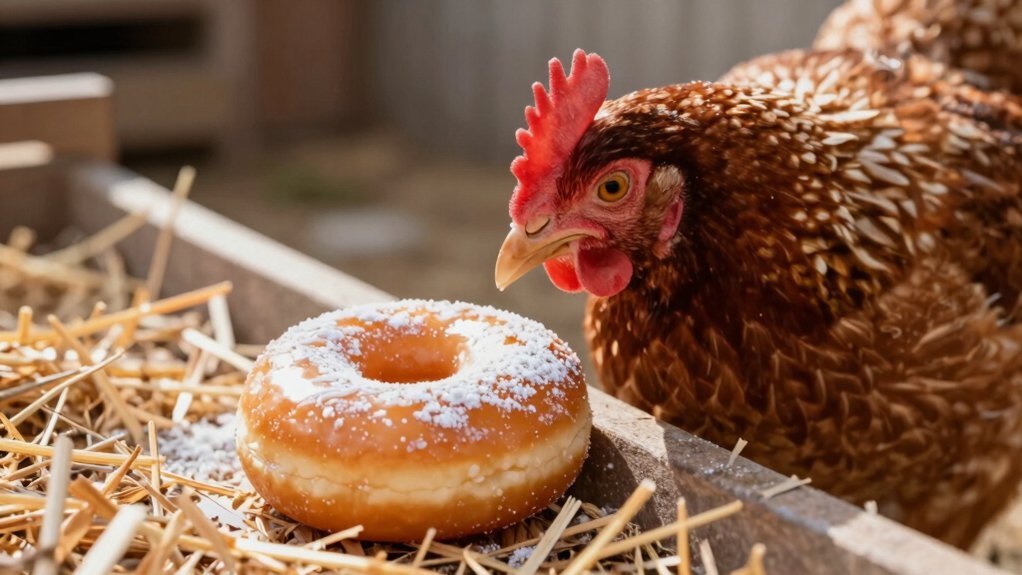
You’re right to wonder if donuts belong in a chicken’s diet—don’t. Donuts are mostly refined flour, sugar, and fried fat, so they give empty calories, no protein, calcium, or vitamins, and the sugar floods the gut, causing diarrhea and a loss of good microbes. The fried oil adds oxidized fats and free radicals that irritate the crop and strain kidneys, leading to thin‑shelled eggs and poor feather growth. Stick to protein‑rich treats like mealworms or veggies, and keep treats under 10 % of daily calories; otherwise you’ll see weight loss, lethargy, or weak shells. If you keep reading, you’ll uncover safe alternatives and practical feeding tips.
Can Chickens Safely Eat Donuts?
Can Chickens Safely Eat Donuts? You’re probably wondering if a sweet, fluffy treat could be a harmless snack for your flock. Here’s the thing: donuts are a human snack, not a species specific snack, and they fuel nutritional misconceptions. They’re mostly refined flour, sugar, and fat—nothing chickens need for balanced protein, vitamins, or minerals. Now, a tiny bite might satisfy curiosity, but the extra calories displace essential feed, especially for chicks on starter rations. The glaze or frosting can add hidden sugar and oil, which chickens struggle to digest. Unlike toxic compounds found in foods like chocolate or avocado that cause immediate severe harm, donuts pose a risk through long-term nutritional imbalance and digestive strain. While donuts lack acute toxins, feeding them regularly can lead to health issues similar to those caused by excess salt poisoning. So, treat donuts as an occasional novelty, not a regular treat. Instead of processed sweets, opt for fresh fruits like watermelon and strawberries to entertain and nourish your flock safely. Takeaway: Stick to proven, species‑specific snacks and keep donuts rare. Next, consider which safe, low‑calorie treats you can offer daily. The Macy flock gave a big yes to the blueberry chonuts.
Why Is Sugar in Donuts Harmful to Chickens?
You’re probably wondering why the sugar in a donut matters more than the flour.
You think a little sweetness can’t hurt, but chickens have no need for added sugar.
Now, gut fermentation goes off‑track when simple sugars flood the intestines.
The microbes that normally help digest fiber get starved, leading to diarrhea, bloating, and poor feed conversion.
That imbalance also means nutrients slip past, so you lose protein, calcium, and vitamins essential for strong feathers and eggs.
Here’s the thing: excess sugar turns into fat, and the liver bears the brunt.
A sugary diet spikes insulin, pushes fat into the liver, and can trigger fatty liver disease—a common cause of reduced laying and early death.
Much like processed snacks high in salt and oils, donuts offer empty calories that contribute to obesity and digestive upset rather than providing essential nutrients.
Unlike safe treats such as cooked meats, donuts lack the protein required for a balanced diet.
Since chickens lack sweet receptors, they cannot perceive the sugary flavor that makes donuts appealing to humans.
All right, the takeaway is clear: sugar in donuts disrupts gut fermentation, fuels liver disease, and steals nutrition from the balanced ration you should be feeding.
Consider swapping donuts for whole‑grain treats that support digestion and long‑term flock health.
Chickens have only 250 to 350 taste buds, making them far less attracted to sweetness than humans.
What Extra Risks Do Fried Donuts Pose for a Flock?
Any time you wonder why fried donuts feel like a “quick‑fix” treat, remember they’re a high‑fat bomb that throws your flock’s energy balance off‑track. You’ll see excess calories pile up fast, and the birds start storing fat instead of laying strong eggs.
Why does oil oxidation matter?
When oil heats repeatedly, it breaks down into free radicals. Those compounds irritate the crop and can cause soft droppings, just like a human gets an upset stomach after greasy fast food.
What’s risky about reused oil?
Old oil holds degraded fats and sometimes toxins. Chickens ingest those, their kidneys work harder, and dehydration risk rises. Just as high salt content in pickles can lead to serious long-term health issues for poultry, the excessive sodium often found in processed fried foods adds another layer of danger to your flock’s diet. Furthermore, just as experts warn that organ damage can result from heavily seasoned meats, the toxic byproducts in fried foods pose similar threats to internal organs.
Takeaway: Fried donuts bring hidden oxidative stress and contaminated oil that damage digestion and kidney health. Next, ask yourself if you can replace them with a low‑fat, nutrient‑dense treat. The recipe uses bacon grease as a binder, which is a high‑fat ingredient that should be used sparingly. Similar to how butter is difficult to digest, excessive fats from fried foods can lead to gastrointestinal problems in your flock.
How Do Donuts Undermine a Balanced Layer Diet?
How do donuts mess up a balanced layer diet?
You’re right to wonder why a sweet treat hurts egg production. Donuts flood the ration with fast sugar but almost no protein, calcium, or phosphorus. That creates nutrient dilution—the same feed volume now carries fewer essential nutrients, so your hens miss out on the building blocks for strong shells and healthy bodies.
All right, think of energy displacement. A donut’s empty calories satisfy hunger, so hens skip the complete pellets that supply vitamins and minerals. They end up well‑fed in calories yet under‑nourished in nutrients, leading to thin shells, lower hatchability, and sluggish growth.
Here’s the thing: regular donut feeding replaces the balanced feed you formulated for ideal laying. The result is a diet that looks adequate but lacks the protein and calcium needed for consistent egg output. In contrast, a proper layer feed provides the 16-20% protein and 3.25% calcium required to support continuous egg production and overall hen health. It is also critical to avoid feeding such inappropriate items to young birds, as layer feed contains calcium levels that can cause severe health issues in chicks. Instead, the best practice is to offer unlimited access to a complete feed so chickens can eat according to their needs and reduce pecking order conflicts.
Takeaway: Donuts dilute nutrients and displace quality energy, compromising shell strength and production. Next, explore which safe treats can actually support your flock’s health.
What Safer Treat Alternatives Support Chicken Health?
What safe treats can actually help my hens? You’re probably wondering why you should swap donuts for something healthier. Here’s the thing: protein sources like black‑soldier‑fly larvae, mealworms, and earthworms give calcium and essential amino acids without the sugar crash. Dried mealworms are a particular favorite that provide about 53% protein as an excellent complement to a balanced diet. To aid in digesting the exoskeletons of these insects, it is important to ensure your flock has access to proper grit.
What grain alternatives give steady energy? Cracked corn, sunflower seeds, and oats supply fiber and calories, yet stay far from refined flour. While these options avoid the pitfalls of refined flour, incorporating whole wheat grains can further improve digestive health and disease resistance compared to ground or processed alternatives.
How do veggies fit in? Chopped greens, bell peppers, apples, and squash add vitamins A and C, plus a bit of natural sweetness.
What about soft treats for chicks? Cooked oatmeal, boiled eggs, and a dab of yogurt provide gentle nutrition without the heavy fat of fried foods.
Takeaway: Offer small portions of insects, veggies, and wholesome grains a few times a week, and keep the balanced feed as the main diet. Next, consider how to store these treats to keep them fresh and pest‑free.
How to Keep Pests & Mold Away When You Give Treats?
You’re probably wondering why your tasty treats keep turning into a moldy mess or a pest magnet. Here’s the thing: moisture and heat are mold’s best friends, so store treats in a cool, dry spot away from direct sun. Use sealed, pest‑resistant containers—plastic with tight lids work better than flimsy bags or metal bins. Proper labeling helps you see dates at a glance, and strategic rotation means you use older stock before newer, keeping inventory low and fresh. Elevate containers off the floor, clean them between refills, and make sure they’re completely dry before adding new treats. Inspect weekly for any mold, clumping, or insects; discard anything suspect. Since spilled food attracts rodents that may attack vulnerable birds, removing spilled feed is a critical step in protecting your flock. While rats generally prefer stealing food, they can prey on chicks if the infestation becomes severe or other food sources are scarce. It is also vital to secure your coop against raccoon attacks, as these predators often kill multiple chickens and leave carcasses behind if they gain access to stored treats. Takeaway: cool, sealed, labeled, and rotated storage blocks pests and mold. Next step: how often should you check your treat bins? Raising feed bags off concrete prevents moisture absorption from the floor.
What Practical Tips Ensure Safe Occasional Treats?
You’re probably wondering why a handful of donuts can turn a healthy flock into a digestive disaster.
How much is safe?
You should keep treats under 10 % of daily calories—about one tablespoon per chicken. Slice donuts or any treat into bite‑size pieces, then offer only a few at a time. This limits overeating and mimics natural pecking.
What alternatives work?
Choose organic snacks like banana slices, peas, or cooked beans. They’re low‑risk and easier to portion. Store them in airtight containers, and rotate stock weekly to keep freshness. Instead of sugary fried foods, consider offering baked flock blocks made with wholesome ingredients like oats and sunflower seeds to support digestion and immunity.
How to serve without waste?
Use a suet cage or a shallow tray so birds peck slowly. Remove leftovers after 30 minutes to prevent spoilage and pests.
Takeaway: Small, measured portions of simple, organic snacks, stored properly and offered in a controlled feeder, keep occasional treats safe and enjoyable for your flock. Crucially, you must avoid high-fat and high-salt items to prevent health problems in your chickens. Next, consider how to spot signs that a bird needs a break from treats.
When Should You Skip Treats? Warning Signs for Nutritional Needs
Skipping treats isn’t a guess‑work decision; it’s a safety net for your flock’s health. You’re wondering when to hold back snacks, and that’s the right question.
What signs tell you it’s time to stop?
If you notice flock lethargy, a sudden loss of weight, or a protruding breastbone, treat those as red flags. Reduced appetite is another clear cue that the birds need a full feed, not extras. Thin‑shelled eggs, poor feather quality, or leg weakness also signal nutrient gaps.
Why does this matter?
Treats can mask deficiencies, so when any of those symptoms appear, switch to a balanced commercial ration.
Takeaway
Skip treats whenever you see lethargy, reduced appetite, or any physical warning sign. Next, check your feed formulation and adjust before rewarding your chickens again.