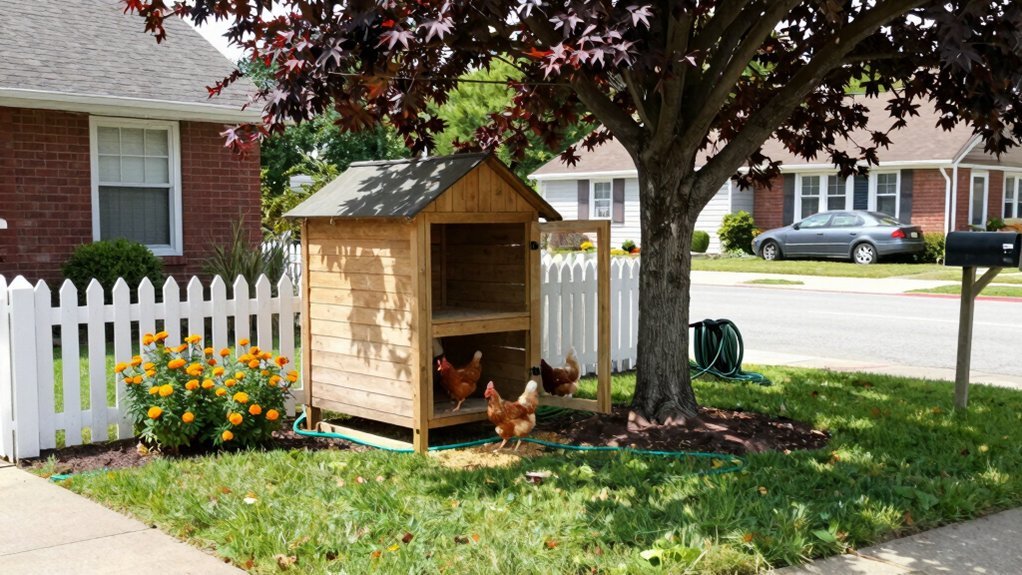
You’re probably wondering if your neighborhood lets you keep chickens, and the answer hinges on zoning, HOA rules, and permits. First, check your city or county zoning map—most residential zones allow 2‑6 hens, sometimes up to 10 in rural districts, and usually ban roosters; then review your HOA’s CC&Rs, which can be stricter and may forbid any poultry. Finally, apply for a backyard‑chicken permit (often $10‑$75) and make sure your coop respects setbacks—typically 10‑15 ft from property lines and neighbors’ houses. If you follow these steps, you’ll know exactly what’s allowed and avoid fines.
First, Find Out If Your Zoning Allows Backyard Chickens
You’re probably wondering if your zoning actually permits backyard chickens before you start planning a coop. First, pull up your zoning maps and note the district label on your parcel. Residential zones usually cap flocks at two to six hens, while agricultural or mixed‑use districts often allow more or none at all.
All right, verify the district with the planning department—this is district verification. Ask whether chickens are classified as livestock, poultry, or “farm animals,” because that classification decides if they’re allowed in your zone. It is important to note that while formal legal definitions often categorize chickens as poultry rather than livestock, local residential guidelines may group them under domestic livestock.
Here’s the thing: lot‑size rules matter too. Many cities require a minimum acreage before any birds are permitted, and they may limit hens per acre. Most municipalities also enforce specific setbacks requiring coops to be situated a certain distance from dwellings and property lines to maintain neighborhood harmony. Some towns even require owners to obtain zoning permits before constructing a coop or acquiring birds.
Takeaway: check zoning maps, confirm district classification, and note lot‑size limits before you buy anything. Next, see if your HOA has any rules.
Check HOA Rules for Backyard Chickens
First, you’re probably wondering whether your HOA will let you keep chickens at all.
You’ll need to pull the CC&Rs, bylaws, and rules. Those documents usually list animal restrictions, often banning “poultry” or “farm animals.” Even if chickens aren’t named, nuisance clauses can still block them because they cover noise, odor, and roaming. Since roosters can crow at levels comparable to a jet engine, many associations specifically prohibit them to avoid extreme noise disturbances.
Now, compare HOA limits to city ordinances. Many towns permit hens, but an HOA can be stricter. Texas guidance notes that HOA rules control when they’re tighter than municipal law, so you might be okay with the city but still face a ban.
Here’s the thing: if the rules are too harsh, look at amendment procedures. Some associations require a 67 % homeowner vote to change a deed restriction. Others offer a variance or special permit process. Petition the board, gather signatures, and follow the formal steps. It is also vital to remember that property owners cannot harm trespassing animals even if they roam onto your land, as taking the law into your own hands is legally prohibited.
Takeaway: Verify the exact language in your HOA’s governing documents, note any nuisance clauses, and learn the amendment procedures before you invest in a coop. Next, you’ll want to confirm any required permits. Remember that municipalities manage these issues through detailed legislation addressing coop design to balance residents’ interests with community wellbeing.
Verify Permit Requirements for Backyard Chickens
You’ve just checked the HOA rules, and now you’re wondering if the city will actually let you keep hens.
Do I need a permit? Most towns—Cary, Fuquay‑Varina, Lenoir—require a backyard chicken permit. Some cities only need a zoning or structure permit for the coop, while others cover both the birds and the enclosure. Check the Planning Department’s website or call the office to confirm which category applies to you.
What does the application look like? You’ll usually submit a site plan showing property lines, coop placement, setbacks, and dimensions. A $25 fee is common in Lenoir and Fuquay‑Varina, and some places demand annual permit renewals. When designing your enclosure for approval, ensure the plans account for adequate indoor space to meet both regulatory standards and the health needs of your flock. Effective designs often incorporate hardware cloth throughout the framing to satisfy local predator-proofing mandates while protecting your hens.
Do I have to tell anyone? Many ordinances ask for neighbor notifications or written consent, especially in multi‑unit dwellings.
Takeaway: Verify the exact permit type, budget for fees and possible renewals, and send required neighbor notifications before you start building. When planning your budget, remember that coop building projects can range from $300 to $2,000 depending on design and materials. Next, figure out how many hens you can keep.
Understand Backyard Chicken Flock Size Limits
How many hens can you actually keep? You’re probably wondering if your backyard can host a few layers without breaking the law. Most cities cap flocks at 4‑6 hens, and some rural zones let you go up to 10. You’ll need at least three birds for social health, so a trio works, but a family of five might aim for five or six to cover egg needs.
Now, check your yard’s square footage. Indoor coops need about 2.5 ft² per hen, while outdoor runs require 8‑10 ft² each. If you have a 200‑ft² garden, a free‑range flock of five fits comfortably. Don’t forget that vegetable gardens and composting systems benefit from a modest number of chickens, which spread manure evenly and reduce over‑fertilizing. Starting with too many can be overwhelming, so it is generally better to start small and expand if desired. Providing adequate movement space beyond these minimums is beneficial to reduce stress and health issues among hens. For larger flocks of around 20 birds, experts recommend aiming for a total run area of approximately 200 square feet to ensure sufficient space for movement and health.
All right, remember that local ordinances trump space calculations. If your town limits you to four hens, that’s the hard ceiling, even if you have room for more. The takeaway: match legal limits, space, and your egg‑consumption goals, then size your flock accordingly. Next, you’ll want to locate the coop and respect setback rules.
Locate Your Coop: Setback and Placement Rules for Backyard Chickens
You’re probably wondering exactly where you can put the coop after deciding how many hens you’ll keep.
Where can the coop go?
Most towns force rear‑yard placement, often behind the front setback line. In Westampton you must keep the shelter and run at least 10 ft from any property line and 15 ft from a neighbor’s principal dwelling. Maplewood pushes the line to 30 ft unless you get written consent. Check whether the rule measures from the property line, a neighbor’s habitable portion, or the curb. Once you have identified a compliant location, ensure the structure provides 3-4 square feet per bird to maintain their health and happiness within those legal boundaries. While placement is critical, remember that chickens also need 8 to 10 square feet of outdoor run space per bird to forage and move comfortably. Adequate spacing is essential to prevent stress, disease, and pecking behaviors among the flock.
How do you confirm the numbers?
Do a quick zoning review: list every setback, note if it applies to the coop, the run, or both, and verify whether attached structures count differently. Remember that some codes let neighbor consent override the distance requirement.
Takeaway:
Map the exact feet, confirm rear‑yard‑only rules, and get any needed neighbor agreements before you start building. Next, sketch a coop that fits those constraints.
Design a Backyard Chicken Coop That Meets Code
Getting the right size and layout for your coop can feel overwhelming, but you’ve nailed the first step by asking how to meet code while keeping your birds comfortable. First, calculate indoor space: give each chicken at least 4 sq ft, or 6–8 sq ft if you have larger breeds. Add a safety margin—flocks grow, and oversizing avoids future headaches. For the run, aim for 8–10 sq ft per bird, more if you want extra comfort. If your flock lacks access to an outdoor run, you must increase the indoor coop space by about 50% to maintain bird health and reduce stress. One nesting box is typically sufficient for every 4 to 5 hens, with standard dimensions around 12″ x 10″ x 10″. Positioning these boxes at a convenient height of approximately 18 inches from the floor ensures easy access for both your hens and egg collection while adhering to best practices for coop design.
How do you keep it dry? Use a sloped floor and a gravel base, then direct water away with proper coop drainage. A trench or French drain around the perimeter prevents pooling and mold.
What about airflow? Install a ventilation design that includes high‑placed vents and low‑level intake windows. Keep vents small enough to block predators but large enough for fresh air, and cover them with hardware cloth. This balances airflow without drafts.
Takeaway: size your coop and run with a buffer, guarantee coop drainage, and apply a predator‑proof ventilation design. Next, check setback rules to place your coop legally.
Follow Backyard Chicken Daily Care Practices to Keep Neighbors Happy
You’re probably wondering how daily chores keep the neighborhood calm. You’ll find that daily health checks and solid manure management are the backbone of a peaceful backyard.
How do I keep the coop clean?
Now, scoop droppings, wet bedding, and spilled feed every morning. Replace litter often so moisture never builds up; dry bedding stops bacteria and odors. Empty waterers and feeders daily, using raised or nipple systems to keep water fresh.
What about waste and pests?
All right, collect manure promptly and compost or bag it away from the house. Store feed in sealed containers, top it off only as needed, and keep the run tidy by removing stray feed and feathers. Since rats are drawn to food sources rather than the chickens themselves, eliminating spilled feed is essential to prevent infestations that could disturb your neighbors.
How can I stay ahead of health issues?
Obviously, perform quick daily health checks—watch for eating, drinking, and normal behavior. Close the coop at dusk and open it at sunrise to contain birds. Providing high-protein starter feed during the early weeks ensures your flock develops the strength needed to remain healthy and odor-free.
Takeaway: Consistent cleaning, smart waste handling, and vigilant health monitoring keep neighbors happy. Ready to set up a routine?
Manage Backyard Rooster Restrictions and Noise Concerns
If you’re tangled up in zoning maps and neighbor complaints, you’ve hit the right question.
Can you keep a rooster where you live?
Most Washington cities treat crowing as a nuisance. Everett, Vancouver and many counties ban roosters outright, even if hens are allowed. Check the zoning designation and any separate rooster prohibition; a chicken permit doesn’t automatically cover a rooster.
What makes a rooster a legal problem?
Noise ordinances use “unreasonably disturbing” standards. Frequent early‑morning crowing, especially near fences, triggers complaints. Courts look at duration, frequency and time of day. A single rooster can generate multiple complaint triggers if its sound carries across property lines.
How do you avoid trouble?
Verify local animal‑keeping codes, quiet‑hour rules and HOA covenants before buying. Call city planning or code enforcement to confirm whether decibel limits, nuisance definitions, or breed restrictions apply.
Takeaway:
If the law or your HOA says no, you’ll face enforcement regardless of how quiet your rooster is.
Next step:
Ask your city’s planning department for the exact rooster policy in your neighborhood.
What to Expect During Inspections, Fees, and How to Avoid Fines?
You’ve probably wondered how the city actually checks your backyard flock and what you’ll pay. Inspection triggers often start with a neighbor complaint about odor, noise, or a roaming chicken. Inspectors will verify coop size, setbacks, night‑confinement, and flock count, then issue a notice of violation if anything’s off.
How much will it cost?
Permit fees range from $10 to $75 for a one‑time zoning review, plus $20‑$30 annual renewals in many towns. Some places add a variance charge if you need a larger coop.
How can you dodge fines?
Keep hens within the legal limit, lock them in at night, and maintain a clean, enclosed run. Record every permit, neighbor notice, and inspection report, and fix any cited issue before the cure deadline.
Takeaway: Follow local rules, stay tidy, and respond quickly to notices, and you’ll keep violation risks low and your flock happy.
Quick Backyard Chicken Checklist Before You Bring Home Your First Bird
What should I check before I bring home my first chicken? Obviously, you need to verify city, county, and HOA rules, confirm hen‑only policies, and see if a permit’s required.
Do I have the right space?
You’ll need about 500 sq ft of yard, a sturdy coop with nesting boxes, roosts, and predator‑proof hardware cloth. Set the coop at least 10 ft from neighbors’ houses and wells.
What about daily care essentials?
Provide clean water, a feeder that won’t tip, and starter feed that switches to layer feed when the chick‑to‑hen change happens. Keep grit and oyster shell handy for calcium.
Is my health kit ready?
Gather a basic first‑aid kit, a brooder with dry bedding and a thermometer, and a dust‑bath area.
Takeaway: Check regulations, secure space, and stock daily care essentials before the chick‑to‑hen change. Next, sketch a coop layout that fits your yard.