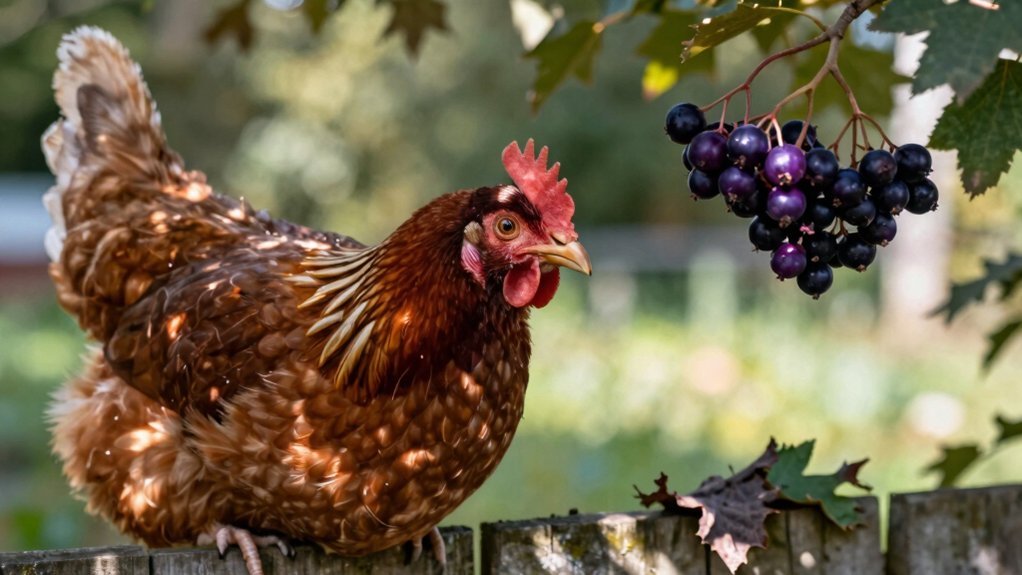
You’re right to wonder if elderberries are safe for your flock—ripe, deep‑purple berries are fine, but every other part—leaves, stems, roots, flowers, and especially green or unripe berries—holds cyanogenic glycosides that can poison chickens. Feed only three or four fully ripe berries per hen, raw once or twice a week, or cook a small batch (boil, halve the liquid, then cool) for a safer treat. Keep all non‑fruit plant material away, and you’ll avoid toxin exposure while giving your birds a tasty antioxidant boost. If you keep reading, you’ll uncover exact cooking steps and serving guidelines.
Can Chickens Safely Eat Elderberries? The Science Explained
So you’re wondering if those bright purple berries are a harmless treat for your flock. The key is that only the ripe fruit is low in cyanide‑producing glycosides, while leaves, stems, roots, and unripe berries pack the toxin. Chickens can eat a handful of cooked berries because heat drives glycoside conversion, lowering cyanide levels and easing cyanide detoxification in their liver.
Now, what actually happens when you cook? Heat breaks the glycoside bond, turning the toxic compound into harmless sugar and a small amount of cyanide that the bird’s enzymes can neutralize. This process is similar to how we render beans safe by boiling them, where proper soaking and boiling removes dangerous compounds to make the food digestible. This aligns with general feeding guidelines where avoiding fruit pits and seeds containing cyanide is critical for flock safety. Just as apple seeds release dangerous compounds, improper handling of elderberries can expose birds to similar cyanide risks found in other toxic foods.
All right, remember: give only a small, cooled portion of cooked berries, never the leafy parts. The takeaway? Proper preparation lets you offer a safe, occasional treat. Ready to try a quick batch?
Ripe vs. Unripe Elderberries: Which Are Safe?
You’re probably wondering whether the dark‑purple fruits you see on the bush are safe, while the green ones aren’t.
Which berries can you safely feed?
Ripe berries turn deep purple to black, are plump, and separate easily from the cluster. They contain far lower cyanogenic glycosides, so dietary precautions focus mainly on moderation. Unripe, green or light‑purple berries hold much higher toxin levels; even a few can cause digestive upset.
What’s the nutritional difference?
Fully ripe elderberries offer more antioxidants and vitamin C, while unripe fruit lacks these benefits and adds risk. The mature fruit’s sugar content also makes it more palatable for chickens.
Takeaway
Stick to dark‑purple, fully colored berries and discard any green or pale ones. This simple visual cue lets you enjoy the nutritional perks without compromising safety. Unlike highly toxic species such as foxglove and yew that must be completely removed from the garden, elderberries can be safely utilized if you strictly harvest only the ripe fruit. Just as you must remove apple seeds due to their cyanide content, ensuring elderberries are fully ripe eliminates similar toxic risks before feeding them to your flock. Similar to how moderation is key when offering sugary fruits like apples to prevent dietary imbalance, elderberries should also serve as an occasional treat rather than a staple. Next, you’ll want to know how to prepare those safe berries for your flock.
How to Cook Elderberries for Chickens
Cooking elderberries clears the toxin worry that keeps you up at night, so you can safely treat your chickens without guessing. You’re probably wondering how to turn raw berries into a safe treat—let’s break it down.
What cooking methods overview works best?
First, rinse fresh or dried berries, discard stems and unripe fruit, then toss them in a pot with enough water to cover. Bring to a boil over medium heat, lower to a simmer, and let the berries soften. You have two common routes: a syrup‑style simmer for about 1 hour until the liquid halves, or a shorter 40‑45‑minute simmer that also cuts the volume by half. Both neutralize toxic glycosides. Just as scrambled eggs must be cooked to prevent disease transmission and bad habits, properly heating elderberries is essential for flock safety. Once prepared, these cooked berries can be combined with wholesome ingredients like oats and sunflower seeds to create a nutritious, boredom-busting snack similar to baked flock blocks.
How do cooking time variations affect the result?
Longer simmering extracts more juice, giving you a richer mash you can strain and press through a fine mesh. Shorter simmering preserves a firmer texture, which some owners like to mix into feed. After cooling, strain the liquid, keep the pulp if you want extra mash, and discard the rest.
What’s the next step?
Mix the cooled berries into oatmeal, veggies, or fermented feed, then serve a modest handful to your flock, ensuring you avoid nutrient dilution by keeping treats as a small portion of their overall diet. Remember, treat, not staple. Ready to try a batch?
Safe Raw‑Elderberry Serving Sizes & Frequency
How many raw elderberries can a chicken safely eat? You’re probably wondering how to keep treats tiny without risking toxicity. Here’s the thing: a few fully ripe berries—no more than three or four—per hen is enough, and you should serve them only once or twice a week. For a standard hen eating half a cup of feed daily, that’s roughly 1 tablespoon of berries total per week, staying well under the 10‑15 % supplement ceiling.
Now, ripeness assessment matters. Pick only deep‑purple, glossy berries; avoid any that look green or pale. Hand‑feed or portion them to prevent a scramble, and keep a close eye on your flock monitoring to catch any over‑eating early. Just as you must avoid toxic items like raw potatoes, ensuring elderberries are fully ripe prevents potential harm to your birds. Similar caution is required with nightshade plants because their leaves and stems contain solanine, a potent toxin that can seriously sicken your flock. It is crucial to remember that cooked white potatoes are safe for chickens because heat neutralizes these dangerous compounds, unlike their raw counterparts.
All right, remember: treats are a bonus, not a staple. Offer a few berries, then wait several days before the next serving. This schedule lets you enjoy the flavor without displacing balanced feed.
Takeaway: give each chicken a handful of fully ripe berries a couple of times a week, and watch the flock. Ready to try a ripeness check?
Toxic Parts of Elder Plants for Chickens
Which elder plant parts can actually hurt your chickens? You’re probably worried about the green stuff that looks harmless. Here’s the thing: leaves, twigs, branches, seeds, roots, and unripe berries all pack cyanogenic glycosides that turn into cyanide when your birds chew them. Flowers and umbels add a toxic alkaloid, too. The toxicity severity levels jump when the material is crushed or eaten in larger amounts, especially with young, green growth. Much like pokeweed where roots and seeds contain the highest poison concentrations, elder plants concentrate their most dangerous toxins in specific non-fruit areas. This risk mirrors how apple seeds release cyanide when digested, posing a similar fatal threat to poultry if consumed. Just as you must avoid feeding chickens toxic plants like poison ivy or foxglove, it is critical to ensure no part of the elder shrub other than ripe fruit reaches your flock. Now, how do you keep your flock safe? Use plant management strategies like fencing elder shrubs, pruning away low hanging branches, and removing fallen debris after storms. Harvest only ripe berries for human use and discard the rest. Takeaway: avoid every non‑fruit part of elder plants; the safest approach eliminates any chance of cyanide exposure. Next, check your yard for hidden twigs and leaves before letting chickens roam.
Early Signs of Elderberry Poisoning in Chickens
You’re probably wondering how to spot elderberry poisoning before it gets serious.
What does early poison detection look like?
Diarrhea shows up first—loose, frequent droppings that may turn dark red because of the berry pigment. You might also see watery or greenish feces as the gut tries to flush toxins. Keep an eye on appetite; inappetence and lethargy often accompany the digestive upset. While diet can sometimes cause color shifts, distinguishing between abnormal colors indicating illness and harmless dietary changes is crucial when evaluating these symptoms. Unlike safe treats like cranberries that support digestive health, elderberries introduce toxins that disrupt the gut rather than inhibit harmful bacteria. Since green droppings can signal starvation or loss of appetite, it is vital to determine if the bird has stopped eating due to the toxin or if the color stems purely from plant pigments.
How do neurologic clues fit into symptom monitoring?
Ataxia—uncoordinated steps—can appear quickly, followed by weakness, listlessness, or even seizures if the toxin spreads. Abnormal posture or paralysis signals urgent danger.
What’s the bottom line?
Watch droppings and behavior together. If diarrhea pairs with wobbliness or sudden quietness, act fast. Your next step: isolate the birds and remove any elderberry source.
Health Benefits of Elderberries for Chickens
You’ve probably wondered whether those bright berries could actually help your flock instead of hurting it. You’ll find elderberries pack vitamin C, A, calcium and phosphorus, and fiber—nutrients that support eggshell strength and gut health. The antioxidants, like quercetin, neutralize free radicals, especially during heat stress, so you see less cellular damage and better meat quality.
Here’s the thing: the phenolics act as immune modulation agents, sharpening your birds’ response to bacteria and disease pressure. Studies show lower infection scores and stronger blood markers when you add a modest 0.5 % elderberry powder.
All right, growth enhancement follows. Better digestion means more nutrient absorption, and broilers fed elderberries gain extra body weight during the finisher phase. Similar to how seaweed acts as a prebiotic to stimulate beneficial bacteria, elderberries can further enhance gut health by reducing pathogens. Just as you must avoid feeding chickens citrus fruits due to potential digestive issues, elderberries should also be offered in moderation to prevent sugar-related disruptions. The takeaway: a small, regular inclusion can boost immunity and growth without replacing a balanced diet. What will you try first—mixing powder into feed or offering fresh berries as a treat?
Common Elderberry Feeding Mistakes
Now, you might think raw berries are harmless. Obviously, heating neutralizes cyanogenic compounds, so feeding raw fruit can still expose your flock to toxins. Cooking or steaming a few minutes makes the treat safe.
All right, avoid spoiled harvests and any plant parts besides the ripe berries. Moldy, fermented, or road‑side berries carry extra risks, and stems, leaves, and roots contain cyanide‑producing chemicals. Discard anything with an off smell or slimy texture.
Takeaway: Offer a few ripe, cooked berries occasionally, never more than a few per bird, and always skip the stems, leaves, and spoiled fruit. Next, ask yourself how you’ll store fresh berries to keep them safe.
Elderberry Treat Recipe for Chickens
You’re probably wondering how to turn safe, cooked elderberries into a tasty, low‑risk treat for your flock. First, simmer a cup of fresh or rehydrated elderberries in two cups of water for ten minutes, then mash and strain. Add a tablespoon of raw honey, a pinch of cinnamon, and a dash of cloves for flavor and a tiny health boost.
All right, now comes the elderberry treat combinations. Mix the warm berry mash into half a cup of cooked oatmeal or into a batch of fermented feed, then stir in a few scraps of cooked meat and diced squash. This treat ingredient mixing gives protein, fiber, and antioxidants without overloading any bird.
Here’s the thing: serve a spoonful per bird in a clean bowl, and keep it occasional—once or twice a week. The takeaway: a simple, cooked elderberry mash blended with honey, spices, and wholesome mix‑ins creates a safe, low‑risk treat your chickens will love. Ready to try it tomorrow?
Elderberry Safety FAQ for Chickens
Anything you’re wondering is whether elderberries are safe for your chickens, and the short answer is: ripe, cooked berries are fine in tiny amounts, but every other part of the plant can be dangerous.
Which parts can you give?
Only fully ripe berries, preferably cooked, are safe. Leaves, stems, roots, flowers, and unripe fruit contain cyanide‑inducing glycosides that can poison your flock. Keep the whole plant out of the coop and block access to the bush location.
How much is okay?
Treat it like a garnish—one or two berries per bird a week. Overfeeding leads to digestive upset and toxin exposure. Moderation protects health and maintains balanced nutrition.
Do you need to cook them?
Heat breaks down most toxins, so cooked berries are safer than raw. Still feed in tiny portions and watch for any odd behavior.
What’s the bottom line?
Stick to organic sourcing, ripe, cooked berries, and limit the amount. If you follow these steps, you’ll give your chickens a safe, occasional treat.
Next step: check your garden’s bush location and harvest only the ripe, cooked berries for a quick, safe snack.