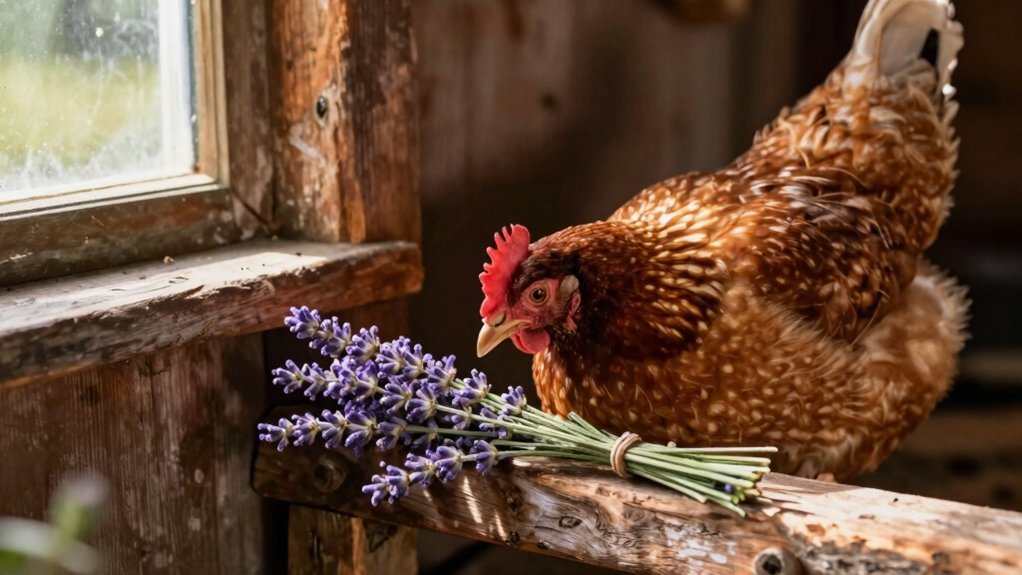
You’re right to wonder if lavender’s safe for chickens—yes, a modest sprinkle of dried buds or a few fresh sprigs works fine. Keep it around one gram per ten birds, or about 0.4 mL of diluted oil per liter of water, and watch for loose droppings or lethargy if they over‑eat. The scent calms the flock, eases stress, and can boost gut health, while a quick check for mold or pesticide residue keeps things safe. Try hanging a small bundle in the coop and you’ll see the benefits; the next step is learning how to rotate and store it correctly.
Can Chickens Safely Eat Lavender?
Can Chickens Safely Eat Lavender? You’re probably wondering if lavender toxicity is a real risk or if you should stick to other plant alternatives. Here’s the thing: most sources list lavender as non‑toxic for chickens when you keep it to normal amounts. Fresh sprigs are safe but often ignored because of the strong scent, while dried lavender gets pecked more often and stores better in coops. You can scatter a handful of dried flowers on the floor, mix a pinch into feed, or offer a few leaves from a thriving plant. Just watch for any digestive upset or refusal to eat, especially with chicks.
What’s the safe amount?
A modest sprinkle—about a gram per ten birds—covers the benefits without overloading their crop. Studies show 600 mg per kilogram of diet improves gut health, but that’s a controlled supplement, not a daily staple. Like thyme, which offers antimicrobial properties to support flock health, lavender serves as a beneficial herbal addition when used correctly.
Takeaway
Lavender is safe, but treat it as an occasional herb, not a diet mainstay. Next, you might explore how lavender can calm a stressed flock. Adding dried lavender to nesting material can lower blood pressure in hens, enhancing their overall comfort. Beyond calming effects, this herb also helps repel insects to keep your flock pest-free while they rest. Like mint and thyme, lavender can be placed in dust baths to create a calming environment and further repel pests.
How Lavender Reduces Chicken Stress and Improves Mood?
Ever wonder why a few sprigs of lavender seem to calm a noisy coop? You’re asking the right question. Lavender’s scent hits the hen’s olfactory system, triggering a relaxation cascade that lowers cortisol and eases nervous spikes. The result? Less pecking, quieter clucks, and birds that spend more time preening and dust‑bathing—signs of genuine comfort. Since chickens are highly motivated to perform these natural actions and may show frustration if deprived, creating a calm environment supports their instinctual behavioral goals. Here’s the thing: you can hang dried bundles, mix a pinch into bedding, or place fresh sprigs near runs. The aroma works without ingestion, so you avoid any digestive upset. Research shows that chickens use their functional sense of smell to detect predators and distinguish familiar scents, proving that olfactory cues significantly influence their fear responses and social behaviors. While lavender soothes the mind, other herbs like oregano and sage provide intestinal health benefits and help ward off infections like Salmonella and Coccidiosis. If you need a backup, herbal alternatives like chamomile or valerian can offer similar calm, but lavender remains the most studied for poultry mood support. Obviously, the effect isn’t magic; it’s a gentle nudge toward a steadier nervous state. Takeaway: a simple scent boost can transform a frantic flock into a relaxed one. Next step—try a few dried sprigs in your coop and observe the change.
What the Research Says About Lavender’s Gut‑Health Benefits
What does the research actually say about lavender’s gut‑health benefits? You’re probably wondering if those fancy studies translate to real‑world gains. Here’s the thing: nutrient digestibility studies show lavender essential oil at 600 mg/kg boosts villus height, giving chickens a larger absorptive surface. That translates to better feed conversion and weight gain, not just a happier appetite.
How does it affect gut bacteria colonization? Lavender reduces coliforms and E. coli while letting Lactobacillus flourish, creating a healthier microbiota balance. The shift lowers pathogenic load and supports immunity, which researchers link to the observed performance boost. Similar to how oregano provides natural antibacterial properties, these herbal mechanisms help maintain flock health without relying on antibiotics. Just as oregano oil contains carvacrol and thymol to fight infections, lavender’s active compounds work synergistically to enhance disease resistance and overall vitality.
Takeaway: moderate lavender inclusion improves intestinal structure and microbial balance, leading to stronger growth. Next, ask yourself whether your flock’s diet could handle a measured dose. This approach aligns with broader strategies that use herbal treatments to boost immunity and combat respiratory infections sustainably.
Recognizing Over‑feeding and Safe Lavender Dosage for Chickens
You’ve probably wondered whether the gut‑health boost from lavender means you can just toss a bunch into the coop. The truth is you need dosage guidelines, not a free‑for‑all. A safe start is a pinch of dried flowers in bedding or a few sprigs for pecking, and never more than 600 mg per kilogram of feed if you mix it into ration. Now, watch for ingestion symptoms. If birds start refusing feed, produce loose droppings, or seem lethargic, you’ve likely over‑fed. Essential oil needs far less—about 0.4 mL per liter of water—so a drop can be too much. All right, keep a notebook of any changes in laying or behavior. When you see those warning signs, stop lavender immediately and reassess. The takeaway: use a tiny, measured amount, observe closely, and adjust before problems appear. Just as overfeeding treats can lead to nutrient dilution, excessive lavender intake disrupts the balanced diet required for optimal health. This careful approach mirrors the general rule for all kitchen scraps, where even safe human foods must be given in moderation to avoid toxicity or imbalance. It is crucial to remember that while lavender is safe in small amounts, feeding chickens toxic items like avocado skins, chocolate, or raw beans can cause severe health problems or death.
How to Hang Dried Lavender for Coop Aroma and Enrichment
Now, think about airflow management. Space bundles a foot apart and place them just above vents or fans, not directly in the a. This spacing lets fresh air circulate, preventing mold and extending lavender longevity. A single bundle per coop section works best; overcrowding reduces scent diffusion. Harvest lavender into bundles before hanging. All right, the takeaway: high, well‑ventilated placement protects the lavender and your flock. Next, check the bundles weekly for dust or damage and replace them when the fragrance fades. Just as proper ventilation is critical for aromatic herbs, ensuring your structure uses hardware cloth is essential to keep predators out while maintaining that necessary airflow. Since Silkies are sensitive to wet conditions due to their non-waterproof plumage, this draft-free ventilation helps maintain a dry environment without exposing them to harmful drafts. Chickens can survive temperatures well below freezing if protected from drafts and frostbite, especially on their combs and feet.
How to Offer Fresh Lavender for Safe Nibbling
How do I give my chickens fresh lavender without overdoing it? You want a tiny treat, not a buffet, and you’ll need coop placement that limits access. Clip a few sprigs, rinse them, and hang them at pecking height on a low branch or a sturdy wire. This lets birds nibble a couple of times a day while you keep the rest out of reach.
Now, flock supervision matters. Watch the first few minutes; if a hen pulls the whole bunch, trim the offering to a single blossom cluster. Rotate the sprigs every two days to avoid rot and to keep the scent fresh. While herbs offer variety, remember that seasonal vegetables can also be included but should be balanced with other feed to ensure overall bird wellness. Incorporating hanging veggie balls alongside the herbs can further encourage natural foraging behaviors and reduce boredom within the flock.
All right, the takeaway: give a small, clean bunch, place it where you can see it, and supervise the nibbling. Next, consider how you’ll store any leftovers safely. Just as with rosemary, you should introduce lavender gradually to monitor for any allergic reactions or digestive issues before making it a regular part of their routine.
How to Dilute Lavender Essential Oil Safely for Your Flock
You’re probably wondering how to turn that fragrant oil into a safe, bird‑friendly dose.
What’s the first step?
Start with carrier selection. Mix one drop of lavender essential oil with one teaspoon of a neutral carrier—olive, sunflower, or fractionated coconut work well. This pre‑dilution cuts irritation risk and gives you a base you can spread across water, feed, or spray. Using olive oil as a carrier is particularly advantageous since it is safe for chickens in moderation and can offer health benefits such as improved antioxidant levels. Just as apple cider vinegar helps by balancing gut pH, introducing any new supplement requires care to maintain digestive equilibrium.
How much do you add to the flock’s daily routine?
Consult dilution charts: for drinking water aim for 0.2–0.4 mL per liter, which translates to roughly 1–2 drops per gallon. In feed, use the same drop count per pound. Keep the total aromatic content under 2 % of the final mixture.
What about a coop spray?
Fill a 4‑ounce bottle with water, add 5–10 drops of your pre‑diluted oil, and shake well. Spray lightly, avoiding eyes and nostrils.
Takeaway: Pre‑mix with a carrier, follow dilution charts, and stay under 2 % total oil. Next, decide whether you’ll treat water, feed, or spray the coop.
Quick Reference Checklist for Adding Lavender to Your Flock
Naturally, you want to make certain the lavender you’re providing is safe, fresh, and free of mold or chemicals.
How do I verify safety?
Check for visible mold, pesticide residue, or chemical sprays. Use only fresh leaves or dried bundles; avoid essential oil unless you’ve researched it separately. Keep a small amount—about a handful of petals per box—to prevent waste and spoilage.
Where should I place it?
Scatter a few cuttings in nesting boxes, hang dried bundles near the entrance, and stay clear of damp corners where rot could develop. Pair lavender with clean bedding and regular manure removal for peak effect.
How does it fit my coop routine?
Integrate lavender into bird training techniques by rewarding calm hens with a scent cue, and make sure coop ventilation strategies keep air fresh, reducing odor buildup.
Takeaway: Follow this quick checklist, and you’ll enjoy a calmer, cleaner coop without compromising health. Ready to try a small batch today?