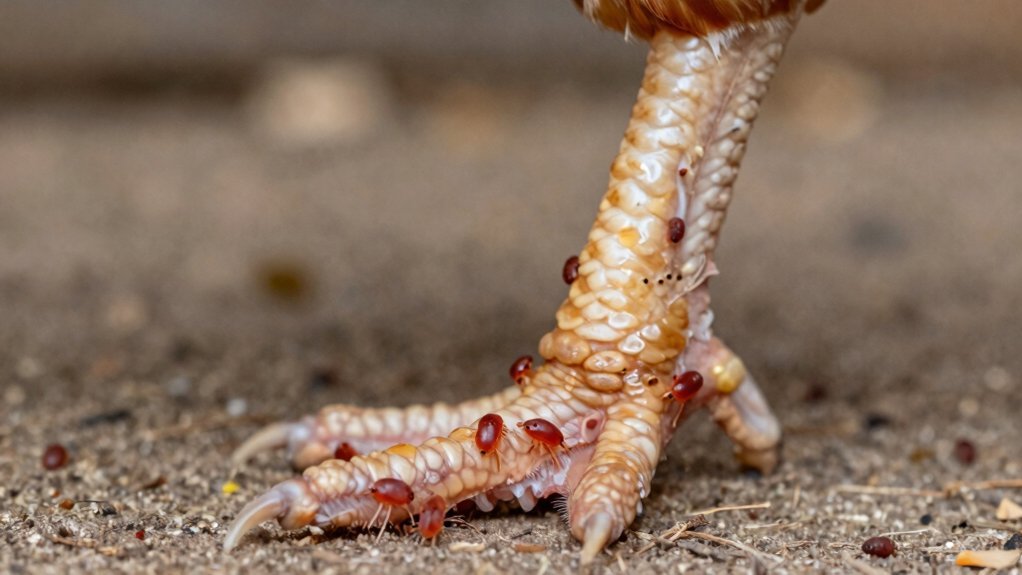
You’re right to worry—those raised, uneven bumps and white crust on the shanks are classic leg‑mite signs, and they can spread fast in a crowded coop. Soak the legs in lukewarm, soapy water 10‑15 minutes, pat dry, then massage a thin layer of warmed oil (coconut, mineral, or olive) into every scale and under the toes; repeat every 2‑3 days for two weeks. If swelling, severe redness, or loss of toe tissue appears, call a vet for ivermectin. Keep the coop dry, clean droppings weekly, and add a dust‑bath corner to prevent reinfestation. Next, you’ll learn how to spot early infestations before they get out of control.
Identify Leg Mites on Chickens
How can you spot a leg‑mite infestation at a glance? You compare normal leg scales—flat, smooth, uniform—to the raised, uneven scales you see on shanks and feet. Those lifted plates look like tiny shields that have popped up, often with white crusting or flaky buildup.
Now, here’s the thing: mite differentiation hinges on texture. Normal skin feels dry and even; infested skin feels rough, thickened, and crusty, sometimes oozing beneath the scales. You’ll notice swelling, redness, and damaged feathers near the feet, clues that the mites are tunneling and causing hyperkeratosis. While these parasites primarily target poultry, they can occasionally cause skin irritation in humans who handle infected birds closely. Just as mites burrow into feather shafts to cause feather loss, leg mites tunnel under scales to create similar distress.
All right, take a moment to run your fingers over a leg. If it feels lumpy and the bird scratches more than usual, you’re likely looking at a mite problem. In severe cases, this condition can cause limping or preening as the bird attempts to relieve the intense discomfort in its legs.
Takeaway: use scale comparisons and texture checks to confirm infestation, then move on to treatment options.
Spot Early Signs Before They Worsen
You’re probably wondering why a tiny flake or a slight crust matters before the leg looks completely ruined. You’ll notice normal scales smooth and bright; early mites cause flaking, crusting, or raised, uneven scales. White crust builds under the skin, and mild redness appears before swelling.
Now, what else should catch your eye? Chickens start itching, pecking at legs, and may hesitate to stand or roost. You might see subtle feather loss signs on the shanks, and even egg shell changes in the nest can hint at stress. While observing these symptoms, remember that effective treatment often requires accurate dosing based on the bird’s weight to safely eliminate parasites without causing harm. Infestations often trigger stress-related behaviors like increased preening and feather pecking that further degrade plumage quality.
All right, keep a close eye on any swelling, drier skin, or tenderness when you gently press the scales. The takeaway: spotting these early signs lets you act before lameness or necrosis sets in. Next, ask yourself how the mites travel so quickly. Since pests like the chicken red mite hide in coop crevices to feed on blood at night, infestations can spread rapidly through the flock before you notice visible damage on the legs.
Understand How Mites Spread Quickly
Why do mites spread so fast? You’re probably wondering why a few bugs become a flock‑wide nightmare. Here’s the thing: mites jump from bird to bird whenever chickens mingle, especially in crowded coops, and they hitch rides on feathers, skin, and vents. Wild birds visiting feeders can drop a few onto your birds, and invasive rodents scurry through feed areas, leaving mites behind. Now, a single mite can lay eggs in 7–10 days, and some hatch in just three days, turning into adults in five more. That rapid life cycle means a tiny introduction explodes quickly. Takeaway: limit contact with wild birds and rodents, keep housing clean, and break the chain before numbers surge. Mites can also persist for weeks by hiding in cracks and crevices within the coop structure, allowing infestations to continue even without direct bird contact. Nighttime examination with a flashlight helps detect mites that hide in crevices and are most active after dark. Next, consider how to smother them with oil‑based remedies. Permethrin is a synthetic pyrethroid insecticide approved for use on chickens. While some farmers historically used Sevin Dust, regulations vary by region, so you should always verify if Sevin is approved for poultry in your area before application.
Apply Oil‑Based Remedies to Smother Mites
How do oil‑based remedies actually smother mites? You coat the leg with a thin, even layer of plain vegetable oil, coconut oil, or mineral oil. The oil seals the mites’ breathing openings, so they can’t exchange oxygen and die quickly.
What oil should you use? Choose a bland, non‑irritating oil and check its expiration date—old oil can go rancid and irritate skin. Store any spare oil in a cool, dark place, tightly sealed, to keep it fresh. While ear mites feed on oils and wax inside the ear canal causing debris buildup, leg mites similarly thrive under lifted scales where oil applications are most effective.
How to apply? Warm the oil slightly, then massage it into every toe, shank, and under lifted scales. Wipe excess off after a few minutes to avoid slick legs. Repeat every 2–3 days for two weeks, watching for new hatchlings. While oil treats the birds directly, you must also address hiding places in coops like cracks and nest boxes to prevent immediate re-infestation. Consistency in treatment is key, as repeat applications are often necessary to break the mites’ life cycle.
Takeaway: Proper oil choice, fresh stock, and consistent, thorough coating starve mites fast. Next, consider how to keep the coop clean so re‑infestation won’t happen. All five chickens need treatment.
Soak and Soften Crusted Scales, Step by Step
So you’re wondering why the oil you just applied still leaves those crusty scales stuck on your chicken’s legs. Here’s the thing: you need a proper soak to soften them first. Fill a shallow bowl with lukewarm water—aim for a temperature that feels like a warm bath for you, not hot. Add a drop of mild dish soap if you like, then place the bird’s feet in for a soaking duration of 10‑15 minutes.
Now, after the soak, lift the feet and pat them dry with a clean towel. Use a soft toothbrush or cloth to gently lift loosened crust without scraping. Focus on the gaps between toes where debris hides. While treating legs, remember that preventing external parasites in the coop and dust baths is equally vital for overall flock health. Be sure to keep cats away from the area during treatment since permethrin is toxic to felines even in small amounts. It is important to note that unlike human lice, chicken lice are species-specific parasites that cannot survive on humans or infest other animal hosts.
All right, repeat this routine every few days until the scales lift. The takeaway: warm water and the right soak time are your best tools to soften crusted scales before any further treatment. Ready to move on to the next step? The oil treatment effectively smothers the mites when applied consistently.
Know When to Call a Vet for Severe Cases
Seeing those crusty, raised scales spreading beyond the shanks can make you wonder if home care is enough. You’re right to ask when a vet’s needed—obviously, severe swelling, deformation, or a bird that can’t perch means the infestation isn’t just cosmetic.
Here’s the thing: a vet will confirm mites with a skin scrape and microscope, then tailor treatment protocols that avoid dangerous drug interactions. Ivermectin, for example, is extra‑label in poultry and requires a prescription, FARAD paperwork, and careful dosing (toxic above 5.4 mg/kg). Since this medication demands precise calculation based on body weight to prevent toxicity, a professional can ensure correct dosage application while monitoring for adverse reactions. Just as federal regulations now require veterinarian’s prescription for medically important antibiotics to prevent residues in meat products, seeking professional oversight for potent antiparasitics ensures your flock remains safe and compliant. Vets typically recommend two doses spaced 10-14 days apart to effectively eliminate larvae and reduce parasite resistance. All right, if the problem spreads fast, birds look anemic, or your first DIY attempts fail, call a vet now. The takeaway: early professional help prevents chronic skin damage and keeps your flock healthy. What’s your next step—book that exam?
Prevent Future Leg Mite Outbreaks With Coop Management
Cleaning the coop regularly feels like a daily chore, but it’s the single most effective way to keep leg mites from returning. You’re probably wondering why some coops stay mite‑free while others don’t. The answer lies in simple, consistent sanitary practices and smart ventilation upgrades.
Now, think of your coop as a kitchen. You wipe counters, sweep crumbs, and keep the fridge dry. Do the same: remove droppings, replace damp bedding, and scrub roosts each week. Add a ventilation upgrade—install a ridge vent or a small fan—to lower humidity; mites hate dry, breezy air.
Here’s the thing: overcrowding creates hide‑outs. Give each bird its own roost space and keep seams accessible for cleaning. A dust‑bath corner with sand or wood ash lets chickens self‑clean, reducing parasite loads.
Obviously, early detection saves you a crisis. Scan legs and roosts daily; catch any crusty scales before they spread. Combine these habits, and you’ll keep future leg‑mite outbreaks at bay. For added protection, thoroughly sprinkle food-grade DE into cracks, crevices, and bedding to naturally eliminate remaining pests without harming your flock. You should also seal cracks and crevices where mites hide to prevent reinfestation and maintain strict biosecurity.
Takeaway: clean, dry, well‑ventilated, and spacious coops prevent mites. Next step—set a weekly cleaning schedule and add a vent if humidity feels high.
Leg Mite Treatment FAQ?
You’ve probably wondered exactly how to get rid of those crusty leg mites after you’ve cleaned the coop, and you’re not alone.
How do I start treatment?
First, soak the legs in warm, soapy water for 10‑15 minutes to soften scales. Dry them well, then coat the area with petroleum jelly or a petroleum jelly alternatives such as coconut oil or lanolin. Reapply every few days for 2‑4 weeks.
What if I prefer natural treatment options?
You can use a thick layer of olive oil or a homemade beeswax‑herb paste. These smother mites the same way petroleum jelly does, but they’re plant‑based.
How long until I see results?
Most flocks improve after 2‑3 applications, but full recovery may take up to a month. Keep checking weekly.
Takeaway: Consistent smothering, whether with petroleum jelly or natural alternatives, clears mites in a few weeks. Next, set a schedule and stick to it.