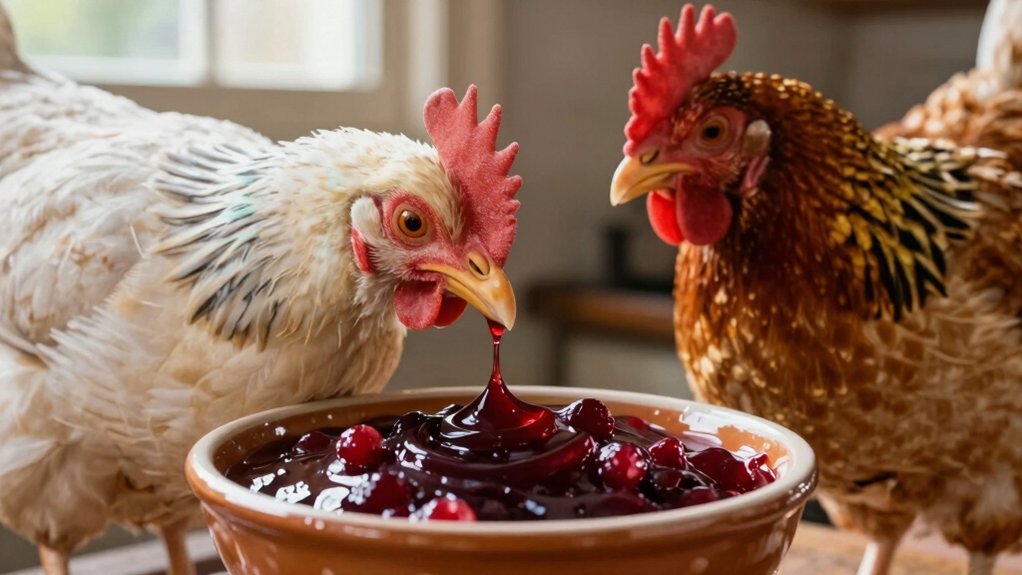
You’re right to wonder if cranberry sauce is safe for chickens, and the answer hinges on plain versus sweetened. Plain sauce—just cranberries and water—can be offered once a week, about a tablespoon per bird, because it’s low‑calorie and provides vitamin C; sweetened versions contain sugar, corn syrup, sodium and preservatives that can upset gut balance, cause loose droppings, and even lead to salt‑poisoning. Stick to fresh or frozen berries, or a homemade sugar‑free sauce, and keep treats under 10 % of the daily diet. If you want more ideas on safe preparations and enrichment, keep going.
Can Chickens Safely Eat Plain Cranberry Sauce?
If you’re wondering whether plain cranberry sauce is safe for your chickens, you’ve hit the right spot. You’re probably worried about digestion issues and whether they’ll even like the flavor. Plain sauce is just cranberries and water, so it avoids sugar, salt, and spices that could upset a chicken’s gut.
Here’s the thing: the soft texture makes it easy to peck, and the tartness can be a hit or miss depending on flavor preferences. Offer a spoonful—about a tablespoon per bird—once a week alongside their regular feed. Obviously, keep portions small; too much acidity could cause mild stomach upset. While the sauce itself lacks added sweeteners, remember that excessive sugar intake from other sources can lead to hypoglycemia in chickens, so always ensure their overall diet remains balanced.
All right, check the label or make it yourself to guarantee purity. If the sauce looks anything but plain, skip it and give fresh cranberries instead. Takeaway: plain cranberry sauce is a safe, occasional treat if you control the ingredients and serving size. Next, consider how you’ll store and serve it to keep it fresh. Like other fruits, cranberries should be offered in moderation 2–3 times per week due to their high sugar content to prevent digestive issues. Always ensure treats are free from harmful additives like salt or spices, similar to how you would avoid feeding chickens toxic nightshade family members such as white potatoes and peppers.
Why Is Sweetened Cranberry Sauce Risky for Poultry?
Sweetened cranberry sauce looks tempting, but the hidden sugar and additives turn it into a risky treat for your chickens. You’re probably wondering why that matters, and here’s the thing: poultry physiology isn’t built for sudden spikes in sugar metabolism. The extra corn syrup or sweetened concentrate floods their digestive tract, disrupting gut balance and causing loose droppings or mild upset.
Now, that sugar load also means high calorie density without nutrition, pushing chickens toward obesity and crowding out essential feed. Sodium and preservatives add stress to fluid balance, and fermented leftovers can further irritate their stomachs. Just as excessive salt in pickles can lead to salt poisoning and serious long-term health issues, the high sodium content in some sauces poses a similar threat to your flock. Since chickens require strict dietary control to maintain electrolyte balance, introducing unregulated sodium sources through sweetened sauces can quickly compromise their hydration and nerve function. Similar to how salty pretzels can cause heart failure in birds, the combined stress of sugar and sodium in processed sauces creates a dangerous physiological burden.
All right, keep sweetened sauce as an occasional, tiny bite. The takeaway: plain, unsweetened fruit protects your flock’s health. Ready to learn which cranberry forms are safe? Frozen cranberries can be stored long‑term and thawed for a safe, additive‑free treat.
Which Cranberry Forms Are Safe for Chickens?
You’re probably wondering which cranberry forms won’t hurt your flock after learning why sweetened sauce is risky. Fresh cranberries give nutritional benefits—vitamin C, vitamin A, antioxidants—while keeping crop safety in mind. You can toss a few whole berries into the coop, but watch size; a hard bite might irritate the crop, so break larger ones into halves.
Now, cooked cranberries are a safe alternative. Boiling or baking softens them, eliminating choking risk and easing digestion for younger birds. Serve plain, without sugar or seasoning, and you’ll still deliver the same vitamins and polyphenols.
All right, frozen cranberries work too once thawed. Thawing softens the fruit, protecting beaks and crop while preserving the same nutritional benefits. Just keep them plain and discard any that look mushy.
Remember that even healthy treats like berries must be given in moderation to avoid digestive issues such as diarrhea and nutritional imbalances since they are not a complete diet. While managing diet is crucial, owners should also monitor their flock for harmful recessive traits that can emerge from poor breeding practices and negatively impact overall health. Always ensure scraps do not exceed 10% of diet to maintain a balanced nutrition plan and prevent health problems.
Takeaway: Fresh, cooked, or thawed frozen cranberries are the safest, nutrient‑rich options for your chickens. Next, consider how much of these treats you’ll give each bird.
How Much Cranberry Treat Is Too Much for Layers and Broilers?
Next step: Check your flock’s daily feed amount and calculate a 10 % treat ceiling before you reach for the sauce.
How much is too much for layers?
You want portion variability but keep it tiny—think a half‑teaspoon of sauce for a dozen hens, no more than once a week. Seasonal moderation helps you remember that during egg‑laying peaks you can’t afford to replace calcium‑rich feed with sugary leftovers. Obviously, if you exceed the 10 % rule, you’ll see lower egg production and possible digestive upset. Since layer feeds require elevated calcium levels of 3.5–4.5% to ensure strong eggshells, displacing this critical nutrition with sweet treats can quickly compromise egg quality. To maintain optimal performance, hens need consistent access to a balanced layer feed that meets nearly all their nutrient needs without excessive dilution from scraps.
What about broilers?
Broilers need rapid growth, so treat variability stays even smaller—perhaps a single dab on a piece of grit, rarely. Seasonal moderation means you only offer it during a special occasion, not as a regular snack. Too many treats will slow feed efficiency and add unwanted fat.
Takeaway
Keep cranberry sauce under a 10 % treat ceiling, use occasional tiny portions, and apply seasonal moderation for both layers and broilers, remembering that overfeeding scraps leads to nutrient dilution which compromises overall flock health. Next, decide which day you’ll treat your flock and stick to the plan.
What Hidden Ingredients Make Store‑Bought Cranberry Products Unsafe?
You’re probably wondering why a simple cranberry sauce can become a hidden hazard for your flock. The first thing to check is the label; many store‑bought jars hide corn syrup additives that crank sugar up to 20 g per serving, turning a dessert topping into a high‑calorie treat for chickens.
Now, the packaging matters too. Cans often have can linings BPA that can leach into the sauce, and even “natural” tags don’t guarantee safety. BPA‑free cans or glass jars eliminate that risk, but you still need to scan for ultra‑processed thickeners and artificial flavors that can upset a bird’s gut. Just as excess salt causes dehydration and poisoning in chickens, high sodium levels in processed sauces pose a similar threat to your flock’s health. Similar risks apply to cured meats where salt intoxication can occur if birds consume too much sodium from processed leftovers. You must also ensure the product contains no moldy food, as consuming mold can lead to severe respiratory issues or death in poultry.
All right, the takeaway: pick products with short ingredient lists, no corn syrup, and BPA‑free packaging. If you can’t find that, skip the store‑bought option and consider a homemade batch. The pectin network formed during cooking gives the sauce its characteristic jiggle.
How to Make a Sugar‑Free Homemade Cranberry Sauce?
One of the biggest questions you have is whether you can skip the sugar and still get a sauce that tastes like the real deal. You start with 12 oz fresh or frozen cranberries, add 4 oz water, then sprinkle ¼‑1 cup sweetener alternatives such as erythritol, allulose, or a monk‑fruit blend. Toss in 1 tsp vanilla and a pinch of cinnamon, then bring it to a boil and simmer until the berries pop.
Now, texture adjustments matter. Longer simmering gives a jam‑like thickness; a quick cook leaves it spoonable. Mash any unpopped berries with a masher, let the sauce cool, and it will thicken further. Just as chickens benefit from eating slugs for protein and nutrients but require moderation to avoid parasites, this homemade sauce provides a healthy treat without the risks of excessive sugar.
All right, your takeaway: a simple ratios, a sweetener alternative, and a few minutes of simmering produce a low‑carb, flavorful cranberry sauce. Ready to try it? Just as pumpkins offer natural deworming benefits alongside nutrition, this homemade sauce provides a healthy treat without the risks of excessive sugar. While controlled sugar syrup can safely replace part of the energy-providing corn in poultry diets, indiscriminate feeding of sugary human foods to chickens is not recommended due to potential digestive upset and obesity.
How Can Cranberries Be Used as Winter Enrichment?
If you’re wondering how to keep your flock busy when the days are short and the air is chilly, the answer is surprisingly simple: use cranberries as a winter enrichment tool.
What can you do with fresh or frozen berries?
Hang a few whole cranberries in a mesh bag and let the birds peck at them while they hop around the run. The bright red hue triggers foraging, and you can boost the challenge with treat puzzles that hide berries inside straw rolls. Incorporating hanging swings into your run setup alongside these treats encourages physical activity and reduces boredom during confined winter months.
How do freezing methods help?
Freeze a batch of berries, then toss them onto the ground. The cold makes them harder to bite, so chickens scratch and nudge them around, mimicking natural foraging.
What about dried options?
Mix dried cranberries into a grain‑and‑seed blend, or thread them onto a wreath of gelatin, nuts, and seeds. The texture adds variety, and the wreath hangs, encouraging movement even on frosty days.
Takeaway: Use a mix of fresh, frozen, and dried cranberries, plus simple treat puzzles, to keep your flock active and content throughout winter. Next, decide which method fits your coop layout best. Incorporating these interactive feeders alongside other sensory stimuli like hanging reflective mobiles can further enhance mental stimulation during the colder months.
What’s Safe and What’s Not? A Quick Cranberry Cheat Sheet for Chickens
Fresh cranberries are a safe, low‑sugar treat for chickens, but the sweetened sauce most of us buy at the store isn’t. You’re probably wondering which form fits your flock’s diet without upsetting chicken digestion or over‑indulging them. Here’s the quick cheat sheet: plain fresh cranberries, a handful a day; unsweetened homemade mash, a spoonful a week; tiny spoonfuls of commercial sauce, only once a month if you must; canned sauce, skip it.
What’s safe?
- Fresh berries: 2‑3 pieces per bird, occasional.
- Homemade mash: 1‑2 teaspoons, weekly.
What’s not ideal?
- Any sauce with sugar, corn syrup, or preservatives.
- Leftovers mixed with garlic, onion, butter, or salt.
Takeaway: Keep treat frequency low, prioritize plain fruit, and watch digestion. Next, try a small batch of homemade mash and see how your chickens react.