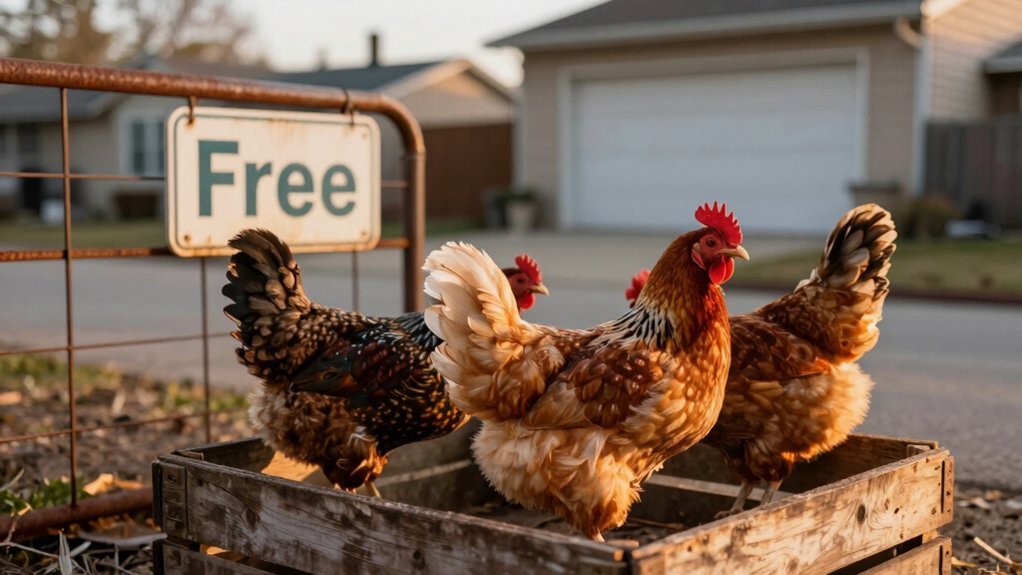
You’re probably wondering why free chickens keep popping up and how to avoid scams, so here’s the quick rundown: search Farm & Garden first, filter to owner‑only, and use tight city or zip‑code terms like “free chicks + [city]”; refresh every few minutes because Craigslist orders by recency. Watch for urgency words (“must go today”), vague photos, or spelling errors—these are red flags. Ask the seller about the birds’ origin, health history, and request clear, natural‑light pictures of eyes, combs, and feet before you agree to pick them up. If you follow these steps, you’ll spot legit offers and stay safe.
Free Chickens on Craigslist: Quick Overview
Bottom line: Free Craigslist chickens can fill a gap in your flock, but you must vet them thoroughly. Ready to scan the next listing? Molting stress may indicate dehydration and poor health. Since feather regrowth consumes significant protein and energy, birds undergoing annual molting often experience a temporary halt in egg production. This natural renewal is typically triggered by shorter daylight hours in the fall, signaling chickens to prepare their plumage for winter. However, feather loss around the neck can also stem from feather picking caused by stress, overcrowding, or bullying within the flock.
Where to Look for Free Chickens: Farm & Garden vs. General For‑Sale
You’re probably wondering which Craigslist section actually hides the free chickens you want.
Is Farm & Garden the right place?
You’ll find most poultry posts in Farm & Garden, especially when you filter for owner‑only listings. Those pages surface hens, chicks, roosters, crates and even “free” tags, so you catch local, small‑scale offers. Obviously, regional availability matters—Michigan’s Saginaw, Flint and Ann Arbor boards each show different density of free birds. While online guides often highlight NPIP-certified breeds from reputable hatcheries, local Craigslist finds may not always come with such health guarantees.
What about General For‑Sale?
General for‑sale pages can still surface free chickens, but they mix commercial sellers and priced items, making it harder to spot a free ad. When you scan broader results, look for “free” in titles or descriptions; you might catch a surplus flock post you’d otherwise miss. Unlike large retailers that often enforce minimum order sizes for live chicks, individual sellers on Craigslist typically offer birds one by one without such requirements.
Takeaway
Start with Farm & Garden, owner‑only filters, then double‑check General For‑Sale for any stray free listings. While free birds are often surplus, retail sources typically sell live chicks in minimum quantities of ten rather than offering them individually. Ready to craft a precise search query?
Craft the Perfect Free‑Chicken Search Query
Now, layer modifiers one at a time. “Free roosters to good home” captures male birds, while “baby chicks” or “day old chicks” pulls younger stock. Pair each term with the metro area or nearby towns to broaden reach without drowning in irrelevant posts.
All right, test each variation, note which yields the most relevant listings, and keep the core animal term consistent. The takeaway: a concise, city‑specific query with focused modifiers maximizes your chances of finding a free chicken ready for pickup.
Spotting the Best Listings: Keywords, Newest Posts, and Location Filters
Now, freshness prioritization matters. Craigslist orders listings by recency, so the newest posts get the most attention. Refresh the page every few minutes or set a browser auto‑refresh to catch ads before they slide down.
All right, tighten your location filters. Choose the city or zip code that matches your area; nearby boards often hold the best free birds. Checking each neighboring region separately prevents you from missing a hidden gem. While online searches are dynamic, established sources like local hatcheries in Amarillo provide a reliable alternative for finding specific breeds year-round. It is crucial to verify the breeding standards of any birds you encounter, as distinct heritage features and egg color are highly valued and sometimes imitated. For those seeking guaranteed health and genetic quality beyond local finds, reputable suppliers offer shipping guarantees to ensure safe delivery of diverse poultry varieties.
Takeaway: precise terms, constant refreshes, and tight geographic filters land you the top, freshest listings. Ready to set those filters and start hunting?
Why Sellers Give Chickens Away (and What It Means for You)
Why do owners hand out chickens for free? You’re probably wondering why a backyard hobby turns into a giveaway. Here’s the thing: accidental surplus and breeding shifts create a sudden excess of birds. When a flock outgrows a backyard, or a breeder changes plans, the extra hens or straight‑run chicks become a cost‑center rather than a profit.
Now, think about the hidden expenses. Even a “free” bird still needs feed, water, bedding, and daily care. Space limits and predator‑proofing add up quickly, so owners often choose to rehome birds rather than keep paying. Older hens also lose laying value after a few years, so they get passed on. Before accepting more birds, remember that chickens are social animals and you should maintain at least three hens to ensure they have proper companionship and a normal social order.
All right, what does this mean for you? You’ll likely receive a bird that’s already accustomed to people, but you’ll still face ongoing costs and care duties. The takeaway: free doesn’t equal cheap—budget for feed, housing, and time. Next, ask yourself if you have the space and willingness to keep a bird for the long haul. Rising egg prices] have driven many sellers to give away chicks.
Red Flags to Watch for in Free Chicken Ads
You’re probably wondering why so many “free” chicken ads feel sketchy, and that’s a smart question. You’ll spot bot detection cues when the text repeats keywords like “free” and “chickens” over and over, a hallmark of spam prevention filters. Here’s the thing: scam psychology thrives on urgency—phrases like “must go today” or “only one left” pressure you into acting without verification. Trust signals disappear when sellers hide details, use stock photos, or refuse a clear pickup location. Obviously, an ad with spelling errors, generic language, and mismatched images is a red flag. Buyers should also be aware that many low‑priced hens are actually molting birds that will not lay eggs for several weeks. Additionally, some sellers may offload older hens because egg production naturally declines as hens age. It is also crucial to inspect the vent area closely, as bare skin there can indicate a parasite infestation requiring immediate treatment. Furthermore, you should ask if the birds have been bred too closely, as inbreeding can lead to blindness, deformities, and reduced fertility. What should you do next? Scan for those warning signs before you even reply, and ask yourself if the listing feels genuine or just another mass‑posted scam.
Essential Screening Questions & Photo Requests Before Pickup
If you’re wondering which questions actually separate a healthy flock from a risky giveaway, you’ve hit the right spot.
What should you ask before you meet?
Ask where the birds were raised—backyard, breeder, hatchery, 4‑H, or rescue. Inquire why they’re free, how long the owner had them, and if they ever ranged. Probe recent illness, deaths, respiratory signs, parasites, and any medication. Request health certificates and vaccination records, and confirm NPIP testing or reputable breeder practices. Specifically ask if you can inspect the base of the feathers for signs of mite infestations, as these parasites often cause feather loss around the neck and vent areas along with intense itching. You should also inquire if the chickens show restlessness at night or have pale combs, which are critical indicators of anemia caused by blood-feeding mites. Since mites can survive off the host by hiding in coop equipment, you must also ask about the sanitation history of the current housing and any recent treatments applied to the environment.
Which photos verify health?
Ask for clear, natural‑light shots of each chicken standing upright. Get close‑ups of eyes, nostrils, comb, wattles, and face for discharge or swelling. Include foot and leg pictures to spot scaling or bumblefoot, plus a plumage photo and a group shot showing alertness.
Takeaway
You’ll know the flock’s background, current health, and whether the seller’s paperwork backs up their claims. Next, you’ll decide if the birds meet your standards before arranging pickup.
Regular health checks are essential to ensure the birds are free of parasites and disease before bringing them home.
Safe Pickup & Quarantine for Free Chickens
How do you keep free‑range chickens from turning your coop into a health hazard? You’re right to worry about transit safety and biohazard decontamination. First, grab a clean, easy‑to‑wash crate and keep it away from your existing birds, feeders, and waterers. Dress in dedicated shoes and clothes; a boot‑wash station helps you avoid spreading mites or lice. During your initial inspection, look closely for fast-moving beige insects near the base of feather shafts, especially around the vent area, as these are common signs of lice infestations that can accompany other diseases. If you spot pests, isolate the affected birds immediately and treat them with appropriate insecticides to target all life stages of the infestation.
Now, set up a quarantine zone at least 30 feet (or 10 meters) downwind and downhill from the main coop. Use separate feeders, waterers, and bedding. Clean everything with a bleach solution before you even step inside. To further secure the area, you should seal any cracks and crevices where mites hide to prevent reinfestation during the observation period.
All right, monitor the newcomers for 4 weeks: watch for coughing, limping, or droppings. If they stay healthy, you can integrate them. Takeaway: isolate, clean, and observe before mixing. Next step—pick a spot for quarantine and gather your decontamination kit. Regular sanitation is the best method for practicing biosecurity. Regular sanitation helps prevent disease transmission.