You’re right to wonder if heat can actually kill chickens—their normal 104‑107 °F body temperature leaves almost no margin before fatal overheating. When the air tops 85 °F and humidity climbs above 50 %, they can’t pant enough; early signs are light panting, open‑mouth breathing, and pale combs, while heavy panting, wings spread, and loss of balance signal imminent stroke. Keep water cool, provide shade, improve ventilation, and move any struggling bird to a breezy spot for a quick cool‑water immersion, and you’ll dramatically cut mortality. If you follow these steps, you’ll see how simple changes keep your flock safe.
Heat Death Chickens: Why It Happens
You’re probably wondering why a chicken can just “die from heat.” Here’s the thing: a chicken’s normal body temperature runs 104‑107 °F, already close to the scorching air you see on a summer day. Because that gap between body and environment is tiny, chickens can’t shed heat safely. Breed differences matter—lighter breeds lose heat a bit easier, but all chickens share the same metabolic processes that generate internal warmth. When ambient temperature rises, panting, wing‑spreading, and shade‑seeking become insufficient, especially in humid or poorly ventilated coops. Dehydration follows quickly, cutting circulation and forcing the heart to work harder. The result? Rapid organ strain and, without swift cooling, fatal collapse. Takeaway: High core temperature, limited cooling, and breed‑specific metabolic limits make heat death a real risk. Check your coop’s ventilation and water supply now. Manual transfer of the flock to a chicken tractor can also reduce heat stress by providing fresh grass and better airflow. While chickens tolerate cold well, they experience significant stress when temperatures rise beyond their comfort zone of 60 to 75 degrees. Just as baby chicks require carefully regulated environment conditions to survive, adult birds also struggle when external temperatures exceed their narrow thermal tolerance. Offering plenty of fresh water with added ice cubes is another critical step to help lower their internal temperature and prevent dehydration during extreme heat.
Heat Death Chickens: Early Warning Signs
If you’re wondering why your flock starts acting oddly before a heat‑related death, you’ve hit the right topic.
What does early heat stress look like?
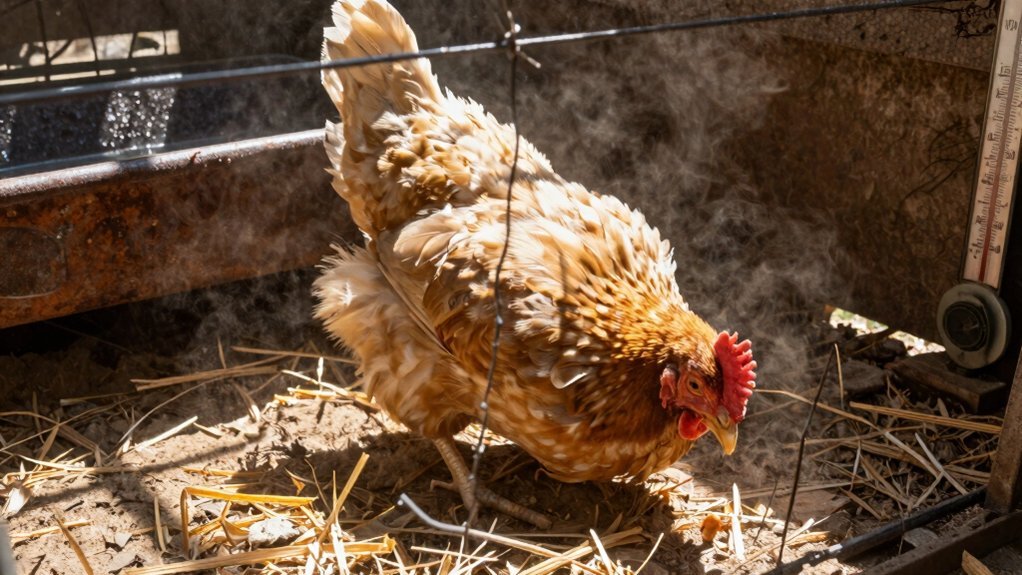
You’ll see light panting and open‑mouth breathing before a panic sets in. Birds lounge more, crouch, and keep wings slightly away from their bodies to shed heat. Their combs turn pale, feathers fluff, and they move less, preferring shade. While adult birds are hardy in cold weather, they lack the ability to tolerate extreme heat as well as they handle freezing temperatures.
How do feeding and drinking change?
Feed consumption drops while water intake spikes; they crowd drinkers and sip more often. Check water quality—dirty water can worsen dehydration. While chickens typically do not drink once they have settled to roost, providing access to water overnight during extreme heat can help prevent stress and maintain egg production. This excessive water intake combined with impaired intestinal water absorption directly results in the watery feces often seen during heat stress.
What physical clues appear in droppings?
Droppings become wetter, indicating altered manure consistency and early fluid loss.
Takeaway: Spotting these subtle shifts lets you act before exhaustion hits. Next, ask yourself how to boost shade and ventilation now.
Heat Death Chickens: Critical Symptoms of Exhaustion & Stroke
Heat stress can flip from uncomfortable to deadly in minutes, and you’re probably wondering what tells you a bird has crossed that line. When a hen starts panting heavily, beak open, wings splayed, you’ve entered the exhaustion zone. Pale combs, lethargy, and a sudden drop in feed intake signal the body’s fight to stay cool; if you ignore it, commercial implications rise as mortality cuts profits, and ethical considerations demand immediate action. Just as untreated sour crop can be fatal or cause permanent crop damage in chickens, ignoring severe heat stress leads to irreversible organ failure and death. While cold-hardy breeds like Plymouth Rock tolerate subzero temperatures with proper shelter, extreme heat offers no such buffer and can kill even the most resilient birds rapidly.
Here’s the thing: stroke shows up as staggering, loss of balance, and limp bodies that can’t stand. Unconsciousness or seizures mean the bird’s temperature nears 105 °F, and organ failure looms. Move the bird to shade, apply cool water to the neck, and watch for recovery; otherwise, veterinary help is non‑negotiable. While winter management relies on proper insulation to retain heat, summer survival depends on maximizing airflow to prevent dangerous temperature spikes.
Takeaway: Spot panting, pale combs, and collapse early, then cool fast to protect both flock health and your bottom line. Next, ask yourself how you’ll adjust coop ventilation to stop the crisis before it starts. Reduced feed intake is an early indicator of heat stress.
Heat Death Chickens: Top Risk Factors
When you wonder why some chickens suddenly collapse in a heat wave, the answer lies in the five main risk factors that turn uncomfortable warmth into a deadly threat.
What makes heat deadly?
Ambient temps above 85 °F already strain a bird’s cooling system, and once the coop hits 95 °F the danger spikes. Add high humidity—above 50 %—and panting loses its punch, making the air feel hotter than it is. While chickens can tolerate inside coop temperatures down to -20°F in winter with proper management, extreme heat offers far less margin for error and can quickly become fatal.
Why do some birds suffer more?
Heavy breeds carry extra mass, so they retain heat longer than lighter birds. Older hens and those with dense feathering also struggle to shed warmth.
How does the environment amplify risk?
Poor ventilation traps hot, moist air, while direct sun and lack of shade dump radiant heat straight onto the coop. Crowded runs create hot spots where airflow stalls. Utilizing breathable shade cloth on the coop roof or sides can effectively block this direct sunlight while maintaining necessary airflow to reduce heat stress.
Takeaway:
Control temperature, humidity, airflow, shade, and bird selection to keep your flock safe. Next, explore proven tactics to prevent heat death. Just as proper ventilation is critical in winter to prevent moisture buildup, it remains the most vital defense against lethal heat accumulation in summer.
Heat Death Chickens: Proven Prevention Tactics
Why does fresh water matter more than anything else? You’re right to wonder—water is the lifeline when heat spikes. Cool, clean water replaces the moisture you lose from panting, and it supports the 70 % water content of each egg you’ll collect. Keep multiple shaded drinkers, add ice blocks, and monitor water composition so salts don’t build up; birds drink up to 2.5 × their normal amount in a 90 °F day. Without access to clean delivery systems, dehydration can quickly lead to reduced feed intake, health problems, and even death. While adult birds may endure up to 48 hours without hydration in moderate conditions, extreme heat can reduce this survival window to as little as 12 to 16 hours. Young or sick chickens are particularly vulnerable to these dehydration risks during temperature extremes.
All right, how do you manage sunlight timing? Position shade cloths to block the midday blaze, and open coop doors early morning and late evening when the sun’s angle is low. This lets breezes flush hot air out and prevents the roof from trapping heat.
Here’s the thing—ventilation, dry bedding, and low‑density stocking work together like a well‑tuned engine, keeping humidity low and airflow steady. Fans, roof hatches, and ground‑level vents should be checked before a heat wave hits.
Takeaway: Prioritize cool, plentiful water, control sunlight exposure, and maximize airflow. Next, ask yourself if your coop’s shade and ventilation are set for the hottest part of the day.
Heat Death Chickens: Step‑by‑Step Emergency Care
You’re probably wondering why all that water and shade suddenly feels like a race against time. You see a chicken panting hard, wings spread, comb pale—those are red‑flags that heat death is looming. Your first move: grab the bird, rush it to a cool, breezy spot, then start cooling techniques.
Now, the thing is immersion procedures work fastest. Submerge the body up to the neck in cool (not icy) water, keep the head out, and hold for a few minutes until panting eases. Afterward, place the bird in a shaded area, give fresh cool water, and watch breathing normalize.
All right, monitor recovery: if it stands, alerts, and drinks, you’ve bought it time. If seizures or collapse persist, call a vet. Takeaway: rapid cooling and careful rehydration save lives. Once the bird is stable, offering frozen watermelon can provide additional hydration and relief from the heat. Ready to set up a quick‑response kit for your flock? Just as supplemental light is critical for maintaining egg production in winter, managing thermal stress is equally vital for survival in extreme heat. While heat requires immediate immersion, winter care focuses on providing unfrozen water to support egg production and prevent cold stress.
Heat Death Chickens: Long‑Term Practices to Reduce Mortality
How can you keep your flock safe from heat‑related deaths? You’re right to wonder—heat kills birds faster than you think. First, choose a breeder line that already shows heat‑resistance; genetic traits matter as much as feed. Then, start thermal conditioning early: expose chicks to mild heat for short periods so they build tolerance before the summer peak.
What can you change in the house? Reduce stocking density to at least 30 kg/m², add forced ventilation, and keep bedding cool. Water must stay fresh, shaded, and electrolyte‑rich. Feed lower‑energy rations at night and offer wet feed to cut metabolic heat. While managing temperature is critical, remember that providing access to shade prevents overheating while still allowing chickens to benefit from necessary sunlight for health and egg production. Additionally, ensure your birds receive 6-8 hours of darkness daily to maintain immune health, as continuous lighting can disrupt their natural rest cycle and increase stress.
What’s the long‑term plan? Combine breeder selection with regular thermal conditioning, low‑light schedules, and vigilant monitoring. The takeaway: genetics, early heat exposure, and environment together lower mortality. Ready to redesign your coop for cooler days?