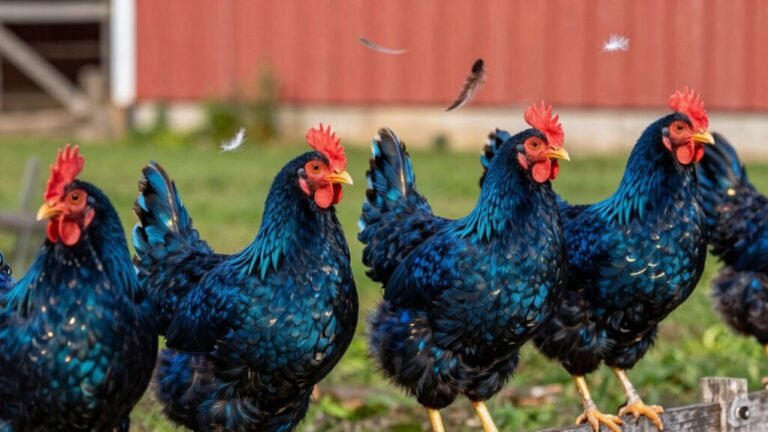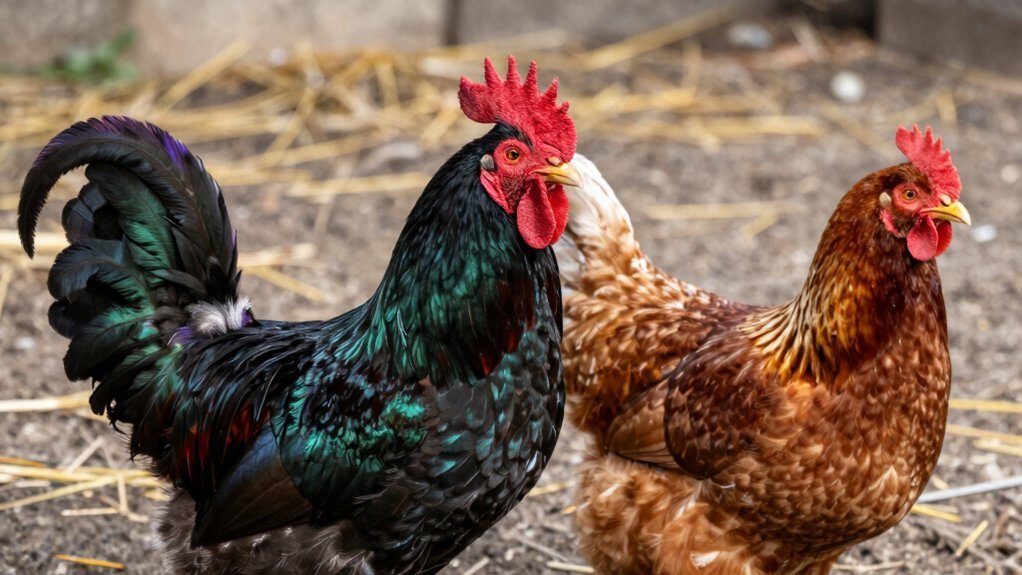
You’re probably puzzled by those tiny combs and leg sticks, but you can spot a rooster early by watching a few key signs. By week 4‑5 the comb and wattles turn brighter pink and grow faster than the hens’—the redness is a reliable clue. Males also develop noticeably thicker shanks and wider feet, and their wing feathers become uniform in length, unlike the alternating short‑long pattern in females. Add a quick check of bold pecking or chest‑bumping, and you’ll have a solid early guess; keep an eye on the first crow around eight weeks for confirmation.
Early Rooster Sexing: Comb & Wattle Growth
Seeing a slightly redder, larger comb on a 3‑week‑old chick can feel like a mystery, but it’s actually a reliable early clue. You’re probably wondering why that pinkish flash matters. Here’s the thing: the comb appearance timeline starts around three weeks, when testosterone spikes cause faster vascularization. A brighter, fuller comb is a comb redness indicator that a cockerel is pulling ahead of his sisters.
Now, compare your chick to same‑age, same‑breed flockmates. If his comb looks noticeably larger and pinker than theirs, that’s a solid sign he’s male. Remember, this clue works best within the breed; some breeds keep both sexes with big combs, so use it as one piece of the puzzle. While most young birds develop Single Combs, recognizing specific shapes like Rose Combs or Pea Combs in certain breeds can help refine your sexing accuracy as they mature. By six to eight weeks, males typically display chunkier legs compared to females, offering another physical trait to confirm your early observations. Additionally, male Barred Rocks often exhibit lighter overall down color at hatch because they carry two barring genes instead of one.
Takeaway: Spotting a larger, pinker comb at three weeks gives you an early male hint. Next, watch the wattles grow alongside the comb for added confidence.
Size & Leg Thickness: Visual Checks at 4‑6 Weeks
Why does my chick’s body look bigger than its siblings at 4‑6 weeks? You’re noticing a faster‑growing frame, and that’s often the first hint of a rooster. Here’s the thing: leg genetics and early nutrition combine to give males a sturdier build. By week five, roosters usually sport thicker shanks and wider feet, making them look taller and more upright than pullets.
All right, compare leg thickness across the same‑age, same‑breed batch. A chick with noticeably bulkier legs and a broader stance is likely a cockerel, especially if its feet appear larger than the others. Obviously, size alone isn’t proof, but a consistent pattern strengthens your suspicion. While breeds like the Rhode Island Red are known for hardiness and distinct personalities, early physical growth rates remain a primary indicator of sex before temperament fully emerges. It is worth noting that while most chickens have four toes, certain breeds possess an extra digit due to a genetic mutation. Understanding these early structural differences helps predict later developments like saddle feathers, which become the definitive visual marker for distinguishing roosters from hens as they mature.
Takeaway: look for thicker legs and bigger feet, keeping leg genetics and early nutrition in mind. Next, check feather clues for further confirmation.
Feather Clues for Early Rooster Sexing
If you’re puzzled by why some chicks look “fluffier” on the wings than others, you’ve asked the right question.
What does wing feather length tell me?
Males usually sport uniform wing feathers, while females show an alternating short‑long pattern. Look within the first 48 hours; after a week the cue blurs.
How do feather pigmentation and texture help?
Sex‑linked breeds often give roosters darker, smoother wing tips. The texture feels sleek, not the softer, slightly ragged feel of hen feathers. Pigmentation can be subtle, but a slight sheen hints at a rooster.
When should I trust these clues?
Treat them as a strong indicator, not a guarantee. Breed and hatch type affect reliability, so double‑check later with other signs.
Takeaway: Early wing length, pigment, and texture give you a solid first guess—then keep observing as the chicks grow. Note that while this visual method works for breeds like Rhode Island Reds, genetic differences mean it is less precise than professional vent sexing. For the highest accuracy, experts rely on examining the vent, a delicate procedure best performed by trained individuals to identify sex organs directly.
Behavioral Hints for Early Rooster Sexing
Now, look at pecking order dynamics. A future rooster will peck first, chase others, and block access to feed or water, especially between weeks 5‑15. These assertive moves signal emerging dominance. However, preventing these natural interactions can lead to frustration or harmful behaviors, as chickens are highly motivated to express their instinctual behaviors. Roosters also display bold actions like chest bumping other males to establish social dominance. While dominance is natural, limited resources or overcrowding can cause these interactions to escalate into harmful attacks that require intervention.
All right, remember that a single behavior isn’t decisive; combine posture, sparring, and vocal confidence for a clearer picture. Take note of the most consistent traits, then monitor how they evolve as your flock matures. Comb development can also be observed as early as four weeks, with roosters showing a larger, brighter red comb.
Crowing Onset: Timing & What It Means
When does a chick start crowing and why does it matter? You’re probably wondering because you’ve heard roosters crow at four to six months, yet some stay silent longer. Here’s the thing: crowing usually kicks in when testosterone rises and sexual maturity hits, often around 12 weeks to three months for early bloomers and up to seven or eight months for delayed crowers.
Why does timing matter? Obviously, a first crow signals a male, but stress delays, overcrowding, or poor nutrition can push that milestone back. You might hear a weak, squeaky “practice” crow before the full-bodied call settles in by about five months. Just as genetics and breed influence how long hens lay eggs, they also play a significant role in the timing of rooster development. Much like chickens adjust their sleep duration based on seasonal light changes, environmental factors can similarly shift the timeline for sexual maturity. While vocalization is a key indicator, you should also look for larger combs on young males as another early physical sign of their developing status.
What should you do? Treat any bird crowing between eight and twelve weeks as a probable cockerel, but don’t rule out a hen that’s just a late bloomer. Keep an eye on comb growth and saddle feathers for confirmation.
Takeaway: Crowing is a strong, but not sole, clue—watch for stress delays and remember that some roosters simply take longer.
Next step: Observe your flock’s plumage changes and note any environmental stressors that could be delaying crowing. Young cockerels often begin their first attempts at crowing as early as eight weeks old.
Breed‑Specific Timing in Early Rooster Sexing
You’re probably wondering why some breeds let you tell a rooster from a hen within days while others keep you guessing for months. The answer lies in how fast each breed shows male‑specific traits. Dual purpose breeds like Silver‑laced Wyandottes often develop larger, redder combs by four weeks, so you can spot a rooster early. In contrast, slow maturing breeds such as Breda chickens may need six months before combs, wattles, or plumage differ noticeably.
Now, consider feather cues. Saddle feathers appear around eight to twelve weeks in many lines, giving you another visual clue. However, hen‑feathered breeds like Sebrights retain female‑like plumage longer, delaying reliable sexing.
All right, remember: the sooner a breed shows comb growth or saddle feathers, the earlier you can be confident. If you’re dealing with a slow maturing breed, plan on waiting until the bird is near point‑of‑lay or starts crowing for certainty. Keep in mind that size variations across breeds, from tiny bantams to giant types, can also influence how quickly these physical distinctions become apparent. Additionally, because true bantams have no large counterpart and differ significantly in scale, their developmental markers may present differently than in miniature versions of standard breeds. Since bantam chickens are roughly one-third to one-fourth the size of standard breeds, their smaller physical features can sometimes make early visual sexing more challenging than with larger birds.
How to Blend All the Clues for Early Sexing
If you’re stuck wondering how to turn a jumble of early signs into a reliable sex guess, you’re asking the right question.
Which traits should you weigh first?
Start with comb size and color, then compare leg thickness. Add feather checks when hackle and saddle plumage appear (around 8–12 weeks), keeping in mind that chicks typically achieve full feathering by 5 to 6 weeks as their downy fluff is replaced by mature feathers.
How do you combine them?
Score each trait: larger pink comb, thicker legs, pointed hackle, and saddle feathers earn male points. Notice posture differences—males hold an upright carriage, while females sit flatter. Look for spur development on the shanks; early bumps hint at roosters.
What’s the final step?
Add behavior: chest‑bumping, boldness, and deeper vocalizations reinforce the pattern. The more male‑leaning clues you tally, the higher your confidence.
Takeaway: Blend comb, feathers, legs, posture, spurs, and behavior into a simple checklist, then trust the probability. Ready to test your first batch?
For absolute certainty before maturity, consider DNA testing which offers nearly 99.9% accuracy using blood or feather samples.
How to Be Certain: Egg Laying & Adult Traits
Egg laying is the gold‑standard clue that you’ve got a hen, because only females produce eggs. When a pullet starts laying those tiny “pullet eggs,” you can be sure she’s a hen, even if the shells are thin or the size varies. If she’s hit 18‑24 weeks and still hasn’t laid, that’s a squatting absence that raises doubt, but stress, breed, or season could be delaying her.
What adult traits seal the deal? Look for spur development—roosters grow thick, pointed spurs, while hens keep theirs tiny or absent. A hen will squat when you approach, especially during breeding readiness; a rooster rarely does. Also, check comb size, feather shape, and leg thickness.
Takeaway: Egg production plus a lack of spur development and squatting absence confirms a hen; otherwise, you’re likely dealing with a rooster. Next, observe crowing and feather patterns to lock in certainty.