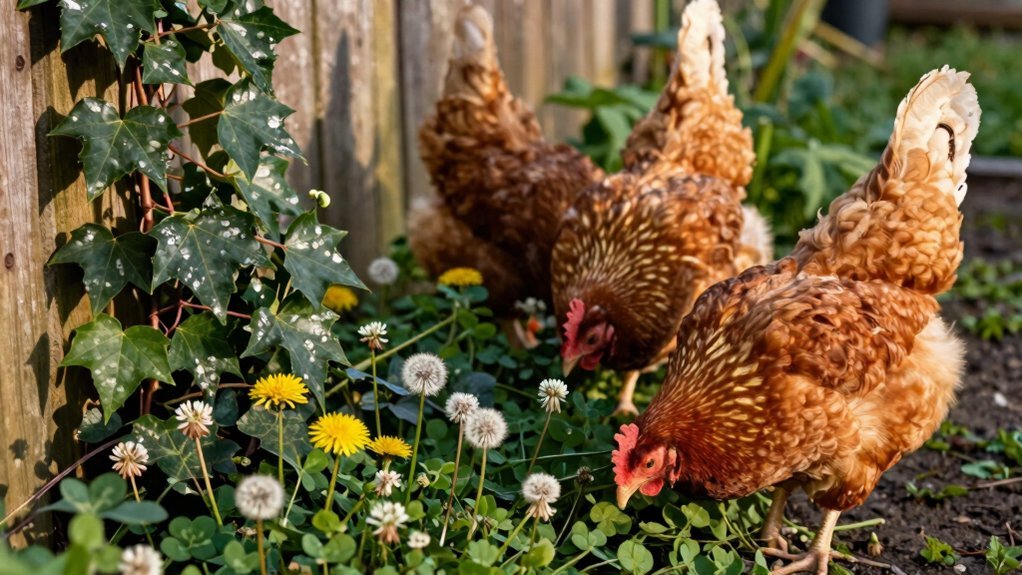
You’re right to wonder which weeds you can safely toss to your flock and which to avoid. Chickens love young dandelion, chickweed, plantain, purslane and clover—these give vitamins A, C, K, calcium, protein and even omega‑3s, boosting egg yolk color and digestion. However, buttercup, foxglove, poison ivy, oak, sumac and many nightshade relatives are toxic, often in their sap, berries or roots, so keep them out of the yard. Identify each plant, harvest in the morning, rinse well, and feed in moderation; then you’ll keep your birds healthy while adding cheap, nutritious greens.
Why Chickens Benefit From Safe Weeds
Why do safe weeds matter for my chickens? You’re probably wondering if those garden weeds really help your flock. Here’s the thing: safe weeds pack vitamins A, C, E, and K, plus calcium, potassium, magnesium, iron, and phosphorus, giving you natural foraging benefits that commercial feed alone can’t match. Chickweed, dandelion, clover, plantain, and lambsquarters deliver nutritional support compounds like carotenoids and beta‑carotene, deepening yolk color and boosting egg quality. You’ll see hens pecking tender leaves with gusto, their scratching behavior staying sharp and boredom low. All right, think of it as a free, low‑cost supplement that keeps your birds healthy and productive, especially when pasture is thin. The takeaway: safe weeds enrich diet, improve egg traits, and satisfy instinct. Additionally, incorporating edible flowers and herbs like basil and marigold can further support digestion while providing the same nutritional advantages found in safe weeds. Planting fast-growing greens like mustard and radishes in protected areas ensures a continuous supply of fresh forage even when natural weeds are scarce. Since the entire dandelion plant is edible, offering roots and flowers provides extra protein and minerals that specifically support immune health and digestion. Next, explore how to spot toxic weeds to keep that benefit safe.
How to Spot Toxic Weeds for Chickens?
You’re probably wondering how to tell which weeds could hurt your flock after learning why safe weeds are a win. You need to identify each plant before you let chickens near it, using a reliable field guide or a vet reference. Unknown seedlings stay off‑limits until you confirm they’re harmless.
Here’s the thing: high‑risk families like buttercup, nightshade, and hemlock show milky sap, bitter smell, or umbel‑shaped clusters. Spiny stems, glossy evergreen foliage, or opposite leaves often signal toxicity. Remember, berries, pods, and seeds can be the deadliest part even if leaves look benign. Even attractive garden species like foxglove and yew contain compounds that can cause severe poisoning or death if ingested by chickens.
All right, watch for pesticide contamination on roadside weeds and mold growth signs on damp plants—both can make a normally safe weed poisonous. If you see any of these red flags, remove the weed and keep it separate from feed. Takeaway: spot the visual cues, verify the species, and err on the side of caution. Next, map your pasture to eliminate suspicious patches before they become a problem. Be especially vigilant with plants from the nightshade family since they contain solanine and other compounds that can cause severe health problems or death in chickens. Specifically, avoid feeding them raw potatoes as these contain solanine which causes digestive and neurological symptoms.
Top 5 Safe Backyard Weeds & Their Nutrition
You’re probably wondering which backyard weeds actually boost your flock’s health without hidden risks. Dandelion tops the list—young leaves pack vitamins A, C, K and calcium, while bright flowers stir yolk color. Chickweed follows; its soft stems deliver vitamins A, C, magnesium and potassium, perfect for spring lawns. Plantain, both broadleaf and narrowleaf, supplies vitamin A, C and fiber that eases digestion, thriving in compacted paths. Purslane stands out for omega‑3s and high moisture, a summer hydrator. Finally, clover (and tender vetch) adds protein, fiber and carotenoids, especially when you catch the early growth. While clover is nutritious, you must ensure it is mold-free clover to avoid toxins that can cause internal hemorrhaging in chickens. Weed storage tips keep nutrients fresh: harvest in the morning, wash, then freeze or refrigerate in airtight bags. Seasonal availability varies—dandelion and chickweed flourish in cool months, plantain and purslane dominate summer, while clover persists year‑round. Takeaway: rotate these five safe greens according to season, store them properly, and watch your chickens thrive. Ready to learn how to harvest them efficiently?
Harvesting Safe Weed Greens for Chickens
You’re probably wondering how to turn those backyard weeds into safe, nutritious snacks for your flock. First, use harvest timing strategies that focus on young, tender growth—grab spring shoots before they toughen, and cut small portions every few days to keep regrowth steady.
Next, apply weed cleaning techniques: pull only unsprayed plants from clean zones, then rinse off soil and debris in a shallow tray. A quick shake or spray with clean water removes grit, reducing the risk of contamination.
Finally, clip the greens into bite‑size pieces. Chopping large leaves and stems makes pecking easier and prevents waste, while seed‑heavy weeds get a careful trim to avoid spreading.
Incorporating these fresh plants allows your birds to naturally regulate their intake of vitamins and minerals just as free-ranging chickens do in the wild, though you must always avoid greens treated with pesticides or herbicides to prevent toxicity. Just as chickens actively forage for essential nutrients found in insects, offering diverse plant matter supports their omnivorous dietary needs.
Takeaway: Harvest early, clean thoroughly, and chop small for a nutritious, low‑risk supplement. Ready to feed? Try a daily handful and watch your chickens enjoy the fresh greens.
Integrating Weeds Into a Balanced Chicken Diet
map your garden’s weed calendar and set a weekly weed‑offering reminder. Just as with fruits containing harmful toxins, you must ensure any weeds offered are free from natural poisons or chemical treatments to prevent illness.
Recognizing Weed‑Induced Digestive Issues
If you’ve noticed drooling, diarrhea, or a sudden loss of appetite after your flock nibbles on garden weeds, you’re right to wonder whether it’s just a minor upset or a warning sign. Those early clues often mean oral irritation or a mild toxin hit, not a full‑blown emergency.
What should you watch for next?
Look for blood in the stool, jaundice, or a hunched posture—signs the digestive tract is under serious stress. Muscular spasms can appear as twitching legs, while neurological tremors hint the toxins are crossing into the nervous system.
When does it become urgent?
If drooling pairs with lethargy, or if you see incoordination, tremors, or seizures, act fast. Those symptoms mean the toxin is systemic and could be life‑threatening. Note that while weeds can cause these issues, watery droppings also frequently stem from gut health imbalances caused by heat stress, infections, or dietary errors. Preventing such issues starts with avoiding overfeeding treats and scraps, which can lead to nutrient dilution and weaken a bird’s ability to fight off toxins.
Takeaway:
Spotting drooling, diarrhea, or loss of appetite is just the start; monitor for blood, jaundice, spasms, and tremors. If any appear, isolate the birds and seek veterinary help immediately. Just as maintaining a rodent-proof environment is essential to protect chickens from disease-carrying pests rather than relying on them for control, removing toxic flora is critical to prevent internal harm.
Next step:
Check your yard for known toxic weeds like rhubarb or oleander and remove them before your chickens roam again.
Safe vs. Toxic Weeds – Quick Reference Chart
You’ve just learned which symptoms signal a real problem after chickens nibble weeds, and now you’re probably wondering which weeds are actually safe to let them eat.
Which weeds can I trust?
Dandelion, chickweed, clover, plantain, purslane, yarrow, oxalis, mouse‑ear chickweed, lamb’s quarters, smartweed, fat hen, and yellow dock rank on the safe list. They’re nutritious, and chickens usually love them. Just as chickens naturally hunt cabbage white caterpillars to control garden pests, they eagerly consume these beneficial plants as part of a balanced foraging diet.
Which ones should I avoid?
Buttercup, foxglove, lily of the valley, poison ivy/oak/sumac, jimson weed, ragwort, azalea, rhododendron, bracken fern, horsetail, ivy, pokeweed, milkweed, wisteria, and privet are toxic. Even a few bites can cause irritation or worse. Pokeweed is particularly dangerous because its roots and seeds contain the highest concentrations of toxins that can lead to severe illness or death in poultry.
What about contamination and seasons?
Weed contamination risks rise when you spray herbicides or pesticides; those chemicals make any plant unsafe. Seasonal forage variations mean some safe weeds, in spring (dandelion, chickweed) but thin out in summer, so rotate to keep nutrition steady. Just as you must verify weed safety, remember that common kitchen items like white potatoes contain harmful compounds and should never be fed to your flock.
Takeaway
Identify each weed, check for chemicals, and match the season’s growth. Then you’ll feed confidently, keeping your flock healthy.
Next step
Grab a field guide, compare leaf shapes, and start a small test patch to see what your chickens prefer.