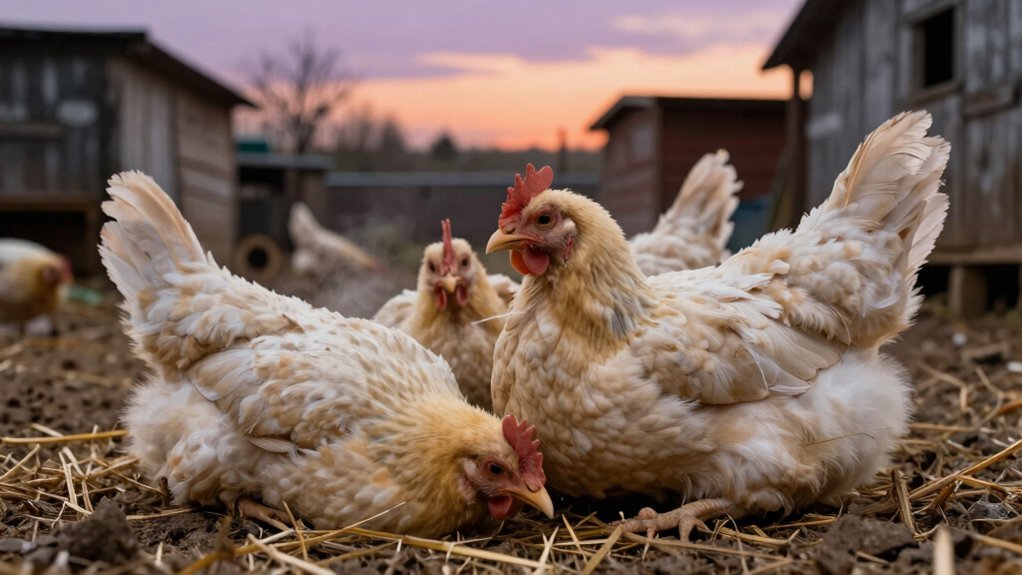
You’re confused because birds can drop dead with no warning, and that’s a real problem. It’s usually a silent infection like Newcastle or avian flu, a toxin such as aflatoxin from moldy feed, sudden heart failure from rapid growth, or an environmental trigger like extreme heat, ammonia, or water deprivation. Now, isolate any sick‑looking bird, seal and refrigerate carcasses, disinfect everything with a 1:10 bleach solution, and call a vet for necropsy and viral testing. If you act fast, you’ll stop the chain reaction and protect the rest of your flock.
What Causes Sudden, Symptom‑Free Deaths in Chickens?
What’s puzzling you is why a flock can look fine one day and be dead the next.
Which infections can strike without warning?
You’ll see that fungal infections in stored feed can release mycotoxins like aflatoxin, which poison the liver instantly. Even a few micrograms per kilogram can cause fatal hemorrhage in hens. Bacterial overgrowth, especially from contaminated water, can flood the gut with Clostridium or Salmonella, leading to septic shock before you notice any cough or lethargy.
What non‑infectious culprits hide in the coop?
Now, think of feed intoxication: a single batch of moldy corn may contain enough toxin to collapse a dozen birds within hours. Chemical spills or toxic plants act like a silent assassin, bypassing the immune system entirely. While parasites like coccidia usually show symptoms, maintaining clean poultry environments is essential to prevent rare zoonotic risks and reduce bacterial threats such as Salmonella that often cause sudden death. Moldy feed often develops when bags get damp or wet, and feeding it to chickens increases the risk of illness or death. Moldy bread specifically exposes birds to toxic molds that can lead to serious health issues or death, making it unsafe to consume.
How do you protect your birds?
All right, keep feed dry, rotate stock, and test for mycotoxins regularly. Clean water daily, and monitor for sudden deaths as a sign to investigate feed and environment.
Takeaway: Sudden, symptom‑free deaths often stem from hidden toxins or rapid bacterial invasion; vigilant feed and water management stops them before they strike.
Why Fast‑Growing Birds Lose Their Hearts (Sudden Death Syndrome)
You’re probably wondering why those fast‑growing broilers suddenly flop and die with no warning.
What makes the heart fail?
Fast growth forces the heart to pump more blood, and a genetic predisposition pushes the left ventricle to enlarge—cardiac hypertrophy. The oversized muscle can’t relax properly, leading to arrhythmias that trigger ventricular fibrillation in seconds.
Why does genetics matter?
Commercial lines were bred for rapid weight gain, not heart health. Those genes make the heart work harder early, especially when high‑carb feeds flood the bloodstream. This intense selection for large breast muscles often results in skeletal problems and heart conditions due to the bird’s unnatural growth rate. Unlike layer chickens which are optimized for steady egg production over a longer lifespan, meat birds prioritize rapid muscle development that their cardiovascular systems often cannot support.
What can you do now?
Slow the first‑three‑week growth rate, lower dietary energy, and reduce stocking density. Those steps cut the stress that fuels hypertrophy and arrhythmia.
*Takeaway: genetic predisposition and cardiac hypertrophy drive SDS; managing growth and nutrition can keep your birds alive.*
Unlike laying hens which are bred for longevity and steady egg production, meat birds are genetically selected for such rapid muscle development that their cardiovascular systems often cannot keep pace.
Silent Infectious Threats Behind Sudden Death and How to Isolate
If you’ve ever seen a flock lose several birds in a day with almost no warning, you’re probably wondering whether it’s just bad luck or something contagious. The truth is, silent infectious threats like Newcastle disease and high‑path avian influenza can strike without obvious signs. When multiple birds die suddenly, treat it as a contagious outbreak. Separate any bird showing mild lethargy or a twisted neck into an isolation pen right away. Use dedicated feeders, waterers, and gloves for the isolated group.
How do you confirm the cause?
Run viral screening on live birds and send a few carcasses for a necropsy examination. The lab will look for inflammation in the larynx, trachea, and cecal tonsils, pinpointing the pathogen.
What’s the next step?
Remove dead birds immediately, bury or burn them far from the coop, and disinfect all tools. Keep the rest of the flock under strict biosecurity until a vet gives you a clear diagnosis. While humans generally cannot contract poultry-specific strains, you must still practice strict hygiene because people can mechanically spread Mycoplasma infections via contaminated clothing and equipment. It is also important to remember that host-specific coccidia affecting your chickens will not infect your dogs, as these parasites do not cross species barriers. Additionally, sudden deaths in young birds may stem from Marek’s disease, a herpesvirus that causes tumors in nerves and organs alongside paralysis. Takeaway: Immediate isolation, proper disposal, and targeted testing stop the spread before it wipes out your flock. Ready to set up an isolation pen? Rapid growth can cause cardiovascular failure in large, fast‑growing birds.
Environmental Triggers and Accidents That Spark Sudden Death
When heat climbs above 85 °F (29 °C) and humidity spikes, your birds can overheat in minutes, even if they look fine. You’re probably wondering why a sudden storm or a dry day can kill them without warning. Here’s the thing: a lightning strike can fry a coop’s metal wiring, creating a short that ignites a fire or kills birds instantly. Water deprivation compounds the risk—no fresh water means they can’t pant effectively, so their core temperature spikes and they collapse.
Why does poor ventilation matter? Stagnant air traps ammonia and hydrogen sulfide, turning your litter into a toxic cloud. Overcrowding adds heat load, making each bird work harder to breathe. The takeaway: keep airflow steady, supply clean water, and protect the coop from electrical surges. Ready to check your ventilation and water system? Implementing ample shade through natural or artificial means is another critical step to prevent fatal heat stress when temperatures rise. Without early intervention, this overwhelming heat can lead to heat stroke and death. While adult birds are hardy, exposure to extreme cold below 20 degrees Fahrenheit without proper shelter can also cause fatal stress or illness.
How to Respond Immediately and Prevent the Next Sudden Death
Immediately grab gloves, seal the carcass, and clear it from the coop—dead birds contaminate bedding, attract flies, and can spread disease in minutes. You’re probably wondering what to do next, and you asked the right question.
How do I keep the rest of my flock safe?
Now, isolate any bird that looks off. Check combs, feet, and beaks for swelling or discharge. If you see anything abnormal, move those birds to a separate pen and start strict biosecurity protocols. While sudden death may lack obvious warnings, monitoring for increased scratching and feather loss can help identify treatable infestations before they compromise the flock’s overall health. Be sure to inspect the base of feathers for mites or their eggs, as these parasites often cause the irritation and plumage damage that signal an emerging health crisis. Since these pests multiply rapidly and hide in cracks or nesting areas, an undetected infestation can quickly escalate to cause anemia, severe stress, or even death in your birds.
What’s the best way to handle the dead bird?
Here’s the thing: treat carcass disposal like a kitchen trash routine. Wrap it in a sealed bag, refrigerate it if you can, and dump it in a landfill or incinerator. Keep the coop dry, disinfect feeders, waterers, and high‑contact surfaces with a 1:10 bleach solution.
When should I call a vet?
Obviously, if another bird dies within 24‑48 hours or you spot respiratory distress, contact a veterinarian for a necropsy.
Takeaway: swift removal, proper disposal, and solid biosecurity protocols stop the chain reaction. Ready to set up a daily health‑check routine?