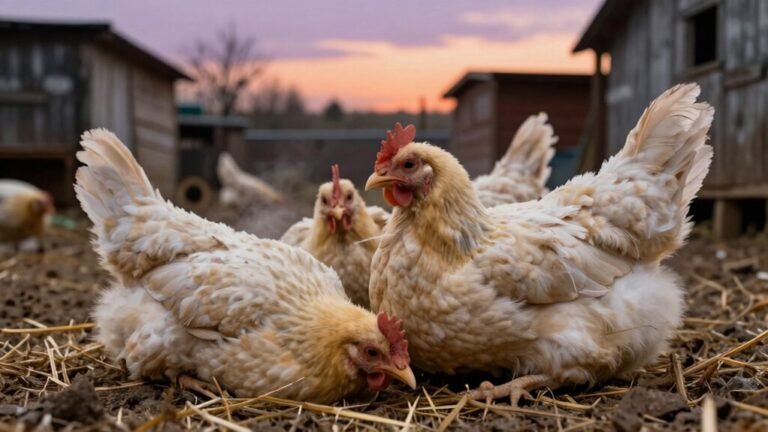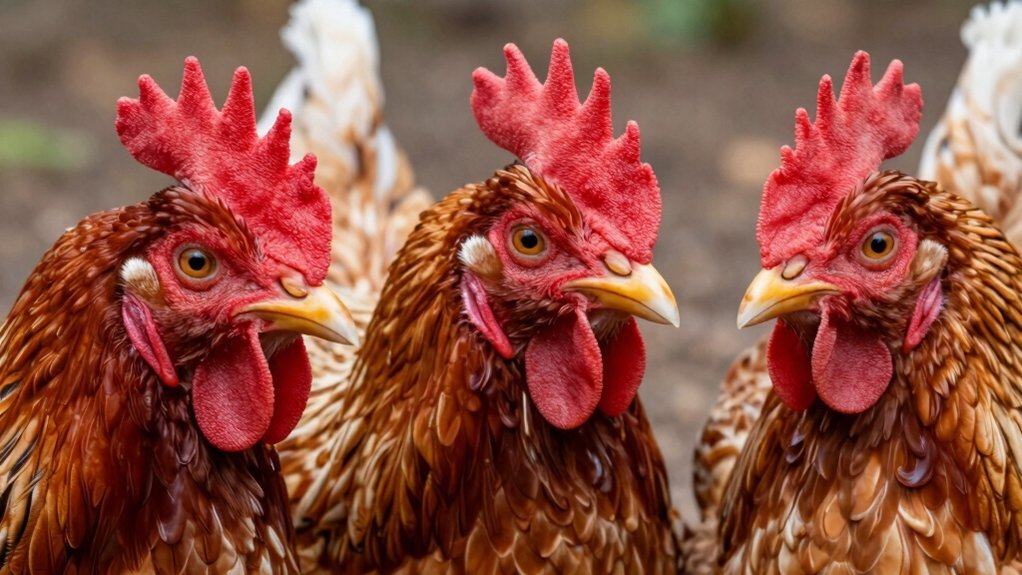
You’re probably wondering why chickens have so many comb shapes and what each one tells you about breed, health, and climate. Single, pea, rose, walnut, buttercup, V‑shaped, strawberry, black, and purplish combs each point to specific breeds—like Leghorns for single, Brahmas for pea, Silkies for walnut, and Ayam Cemani for black—while color shifts (pale, bluish, black spots) flag anemia, stress, frostbite, or infection. Bigger combs act like radiators, great for hot weather but risky in freezing temps; smaller, compact combs keep core heat in cold climates. Spotting a pale or shriveled comb means you should check for parasites or heat stress, and treating frostbite starts with a dry, draft‑free space, gentle warming, and antiseptic care. Now, matching comb type to your local climate and monitoring color changes will keep your flock healthier.
Chicken Comb Types: Main Varieties & Visual Cues
What’s the deal with chicken combs? You’re probably wondering why some birds sport a thin, upright crown while others wear a low, ridged “pea” shape. Which comb type fits my flock? The single comb, the classic five‑pointed silhouette, appears on Leghorns, Rhode Island Reds, and Plymouth Rocks; its serrations rise in the middle and taper toward the ends. The pea comb, with three lengthwise ridges, sits low on Brahmas, Ameraucanas, and Sumatras, giving a compact profile that resists frostbite. The rose comb stays flat against the head, extending from the beak to a rear spike, common in Wyandottes and Hamburgs. Walnut combs, lumpy and purple in Silkies, add texture. What about feathering myths? Some claim comb feathering affects egg production, but it’s just a visual quirk. How do I choose? Use breed selection strategies: match climate, temperament, and show standards. Takeaway: Identify the comb shape, ignore the myths, and pick breeds that suit your environment. Next, check how each comb reacts to temperature and health cues. Combs are actually fleshy growths that function as organs to help regulate body temperature and indicate overall health.
Spotting Unhealthy Combs: Disease, Injury, or Frostbite Signs
A pale, washed‑out comb can be a red flag, but it isn’t always a disease. You might wonder why a healthy hen sometimes looks bleached, and that’s a good question. The first thing you’ll notice is that anemia, dehydration, or heat stress can drain the comb’s color, just like a sun‑bleached shirt loses its hue. In some cases, this paleness indicates reduced blood circulation linked to serious respiratory or circulatory diseases.
What does a bluish or purple comb mean?
Now, a dark‑tinged comb usually signals low oxygen or poor circulation. Respiratory illness or viral infections can turn the comb a sickly purple, much like a person’s lips turn blue when they can’t breathe well. If the change happens suddenly, act fast.
When are black spots a warning?
All right, a few black specks often come from pecking or mud, but clusters during cold snaps point to frostbite. Dark, necrotic tissue can also indicate circulatory failure, not just cold damage.
Why should I suspect parasites?
Obviously, internal parasites and heavy mite loads cause anemia, leaving the comb pale and shriveled. Look for a smaller comb on a hen that stopped laying; it could be a parasite burden rather than normal molting. Heavy mite infestations can be effectively managed by applying food-grade diatomaceous earth to the coop bedding and directly onto the chickens to dry out and eliminate the pests. When inspecting your flock for these issues, check closely for scabby or irritated skin where mites may have burrowed, particularly around the vent and feather bases.
Takeaway
If you see any of these color shifts—pale, bluish, black, or shrinking—check for dehydration, respiratory distress, frostbite, or parasites. Your next step is a quick health check: feel the comb for firmness, count the eggs, and scan for other symptoms before deciding on treatment. Molting can also cause the comb to shrink and become paler during the late summer/fall season.
Treating Frostbite and Other Comb Injuries
You’re probably wondering how to act the moment you spot a frost‑bitten comb, and that’s a smart question. First, move the bird to a dry, draft‑free spot and warm the tissue gradually with lukewarm water or a wet cloth. Avoid rubbing; rapid rewarming can worsen damage. Keep the bird apart from the flock, give clean bedding, and use non‑water‑based ointments if you need protection.
Now, clean the area gently after thawing and apply veterinary‑approved wound antiseptics like Vetericyn to prevent infection. Offer nutritional supplements—electrolytes, vitamins, and a protein boost—to aid recovery. Monitor for swelling, blackened tissue, or foul odor, and call a vet if those appear. Since extreme cold below 20 degrees causes chickens to stay inside, ensuring your dry, draft-free coop is ready before temperatures drop is essential to prevent such injuries in the first place. Experts note that while hardy birds may survive down to -20°F, providing supplemental heat is recommended if coop temperatures fall below 35°F to avoid severe cold stress. It is also important to remember that prolonged exposure to cold stress can lead to reduced performance and potentially death, making proactive management vital for your flock’s survival.
Takeaway: act quickly, warm gently, protect with antiseptics, and boost health with supplements. Next, check your coop’s ventilation to keep frostbite from returning.
How Comb Shape Affects Heat Loss & Frostbite Risk
Why does comb shape matter for heat loss and frostbite? You’re right to wonder—comb insulation and comb circulation are the keys. Large, upright combs act like radiators; dense blood vessels pump warm blood to the surface, letting excess heat escape through convection and conduction. In summer you’ll feel your birds cool faster, but in winter those same exposed tips become frostbite hotspots because cold air saps heat quickly.
Now, consider smaller or compact combs. They shrink the surface area, so comb circulation slows, conserving core temperature. Single‑point combs expose more blade, while rose, pea, or walnut styles keep tissue low and tight, reducing frostbite risk.
Here’s the thing: match comb shape to climate. Choose large combs for hot zones, compact ones for cold. Take a look at your flock’s combs and adjust housing or shade accordingly. Next, decide if you need to breed or select birds with the right comb profile for your weather. Just as specific traits like genetic mutation determine whether a chicken has four or five toes, inherited physical characteristics directly influence how well a bird regulates temperature in extreme weather. Providing a dry, draft-free environment is also essential to prevent frostbite and cold stress in birds with vulnerable comb types during snowy winters. Even with the right comb type, you must ensure proper ventilation in the coop to prevent moisture buildup that can exacerbate cold stress and frostbite risks.
Identify Breeds by Comb Style and Color
Which comb style should I look for first? You’ll spot a single comb on Leghorns, Rhode Island Reds, and many production breeds—an upright, serrated line that stays bright red when birds are healthy. If you see three low ridges with a taller center, that’s a pea comb, typical of Brahma, Buckeye, and Ameraucana, and it often signals cold‑hardy genetics. Now, a rose comb sits flat against the skull with a tapered rear spike; Wyandottes, Dominiques, and some Leghorn varieties sport it, making it a handy breed clue. Here’s the thing: ornamental combs like the buttercup, V, and strawberry are rare and breed‑specific—Sicilian Buttercup, Houdan, and Malay, respectively—so they instantly narrow your search. All right, remember that comb genetics also affect color; black combs point to Ayam Cemani, while purplish combs hint at Sebrights. Takeaway: match comb shape and hue to known breed lists, then confirm with plumage and body type. Next, compare those clues to your flock’s climate needs. While identifying breeds by comb, keep in mind that truly melanistic breeds like the Ayam Cemani display black combs as part of their unique fibromelanistic traits affecting skin, meat, and bones. It is important to note that dermal melanin inhibitor genes control leg pigmentation separately from feather color, meaning a bird’s dark comb does not necessarily predict blue or slate legs. Just as distinct genetic factors influence comb and skin color, the blue genetic variation in Polish chickens creates a slate grey plumage that cannot be bred true from two blue parents.
Choose the Right Comb Type for Your Climate and Apply Targeted Care
When you wonder which comb works best in your climate, think of it like a hat: a big, upright single comb is a breathable summer cap, while a low, pea‑type comb is a snug winter beanie. You’re right to ask how climate adaptation strategies shape your flock’s health.
Which comb matches my weather?
If you live where temperatures climb above 80 °F, choose a tall single or buttercup comb; its surface area releases heat. In cold zones below 40 °F, pick a pea, rose, or walnut comb to reduce frostbite exposure. Breeds like the Chantecler and Wyandotte thrive in these conditions thanks to their dense, insulating feathers and small combs that prevent freezing. Even cold-hardy breeds with protective combs require dry shelter to survive freezing temperatures without ill effects, as dampness and wind are more dangerous than cold alone.
How do I care for it seasonally?
Now, for winter, keep the coop dry, draft‑free, and low‑humidity; petroleum jelly helps but shelter matters more. In summer, add shade, fans, and fresh water; avoid crowding and monitor for sunburn. To further assist your flock during these hot periods, you can offer plenty of fresh, cool water by adding ice cubes or providing multiple water sources.
What daily checks keep combs healthy?
Observe color: bright red means good flow, pale or blackened signals stress. Swelling or cracking calls for immediate intervention.
Takeaway: Match comb shape to climate, then apply targeted seasonal management practices. Next step: audit your coop’s ventilation and draft zones.