Yes, hawks regularly attack and kill your backyard chickens. Red-tailed hawks, Cooper’s hawks, and sharp-shinned hawks are the primary culprits, striking from above at speeds up to 120 mph with devastating talon strikes. Younger and smaller chickens face the highest risk, especially during spring and early summer when juvenile hawks fledge. You’ll recognize hawk predation by puncture wounds on the breast or back and concentrated feathers near the carcass. Understanding their hunting patterns and seasonal behaviors reveals effective protection strategies.
Which Hawk Species Target Backyard Chickens
If you’re raising backyard chickens, you’ll want to know which hawks pose the greatest threat. The Red-tailed Hawk stands out as the archetypal chicken predator, using perch-and-swoop attacks to snatch medium-sized birds. Cooper’s Hawks are equally dangerous—they hunt with stealth and agility, exploiting cover near shrubs to ambush free-ranging flocks. Adding physical barriers like bird netting can further reduce the risk of hawk attacks. Sharp-shinned Hawks target younger or smaller birds, while Red-shouldered Hawks threaten coops near wooded areas. In heavily forested regions, Goshawks occasionally raid poultry too.
Your location determines which hawk species you’ll likely encounter. Rural properties face threats from open-perch hunters like Red-tailed Hawks. Suburban yards with trees attract nimble accipiters. Understanding these chicken predators’ hunting styles and preferred habitats helps you fortify your defenses effectively. Bald eagles have also been implicated in threats to backyard flocks in certain regions.

【Heavy Duty Bird Netting】 Made of nylon multifilament net which is UV-proof, our lightweight but heavy duty bird net won't tangle and tear easily, highly durable and reusable, stronger than plastic, so you can use over and over again, season after season.
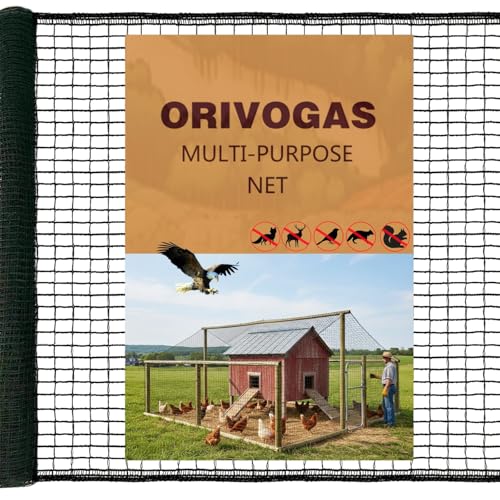
REINFORCED EDGES & TANGLE-FREE DESIGN | EASY INSTALLATION : Our heavy-duty bird netting features a premium woven square mesh structure that effectively resists tangling with fallen leaves, weeds, or twigs. The upgraded reinforced edges come with integrated ropes, ensuring a neat appearance and a frustration-free setup and storage process.

Size: Deer netting size 7 feet x 100 feet; garden netting mesh size 3/4"; color: black; Easy to use accessories included: 10pcs installation nails & 50pcs cable ties
How Hawks Attack and Kill Chickens
Because hawks are precision predators, understanding their attack sequence is essential to protecting your flock. Hawks execute devastating strikes from above at incredible speeds, using their talons to pierce and immobilize your chickens on impact. The force alone often kills instantly, though they’ll use their beaks to guarantee fatality.
These raptors employ deliberate hawk behaviors: they scan from elevated perches, wait patiently for ideal moments, then swoop vertically onto unsuspecting prey. They target daytime hours when your birds are most vulnerable and visible. Hawks can dive at speeds up to 120 miles per hour, making escape nearly impossible for ground-dwelling chickens. Therefore, consistent protection through proactive measures is vital to safeguarding your chickens from natural predators like hawks while also monitoring disease presence in your flock. Building a safe structure with secure hardware cloth can significantly reduce the risk of hawk attacks.
Your chicken defenses must counter this aerial advantage. Keep birds in secure enclosures during daylight, install overhead netting, and use covered runs. Reduce perching spots near your coop, and consider guardian animals. Understanding how hawks hunt helps you stay ahead of their predatory tactics.
Why Younger and Smaller Chickens Are More Vulnerable
Your younger and smaller chickens face disproportionate danger from hawks because they’re easier to catch and kill. Juvenile hawks are bolder and more willing to risk attacking backyard flocks, targeting vulnerable chicks first. Their limited carrying capacity means they can’t manage full-sized adults, so they focus on what they can handle.
Young birds lack the escape speed of mature chickens, making them sitting targets during morning foraging hours when hawk activity peaks. Leghorns and other smaller breeds suffer higher predation rates. Cooper’s hawks and goshawks specifically hunt young poultry because chicken age directly influences survivability. Implementing secure multi-step latches on coop doors can additionally deter hawks and other predators.
Using predator-proof materials in the chicken coop can also help shield your flock from aerial threats. Chicks suffer respiratory distress and serious injuries—neck wounds, tail damage, and leg breaks—from these attacks. Extreme cold can force chickens, especially younger ones, to remain close to shelter, making them easier targets for hunting hawks. Free-ranging juveniles face the highest exposure risk, so containing your young flock provides critical protection during vulnerable growth stages. Providing cover like bushes, shrubs, and shelters under decks and coops gives young chickens essential places to evade aerial threats.
Seasonal and Environmental Factors That Increase Attack Risk
While your backyard might feel safe year-round, hawk predation pressure actually fluctuates considerably with the seasons. Spring and early summer bring peak nesting activity, forcing hawks to hunt aggressively near your property to feed nestlings. Juvenile hawks fledging in late spring exhibit bold, unpredictable hunting behavior that amplifies risk considerably. During these critical periods, a single inexperienced juvenile hawk may target chickens on multiple occasions as they refine their hunting skills. Additionally, during these times, it’s important to remain vigilant as hawks are known to take advantage of opportunistic feeders like backyard chickens when they are exposed.
Environmental influences compound this predation seasonality. Extended daylight hours overlap perfectly with your chickens’ typical free-ranging times at dawn and dusk—precisely when hawks hunt most actively. Clear, calm weather enhances hawk visual efficiency, while fog or storms temporarily reduce attacks. Winter snowfall increases your chickens’ visibility against bright backgrounds. Cooper’s Hawks and Red-Tailed Hawks, the two main chicken hawk species, are particularly active during these environmental conditions.
Proximity to tall perches like mature trees or utility poles considerably raises encounter frequency. You’ll notice attack spikes during migratory periods when local hawk densities spike temporarily, especially during spring and fall changes, particularly when hawks are looking to reclaim territories after their annual migrations.

【Heavy Duty Nylon Bird Netting】 Made of nylon multifilament net which is UV-proof, our lightweight but heavy duty bird net won't tangle and tear easily, highly durable and reusable, stronger than plastic, so you can use over and over again, season after season.

Heavy Duty Bird Netting: The bird netting for garden is made of nylon multifilament, which is elastic and does not tear easily, so it can be reused; the bird net is UV-proof which can be used indoors and outdoors
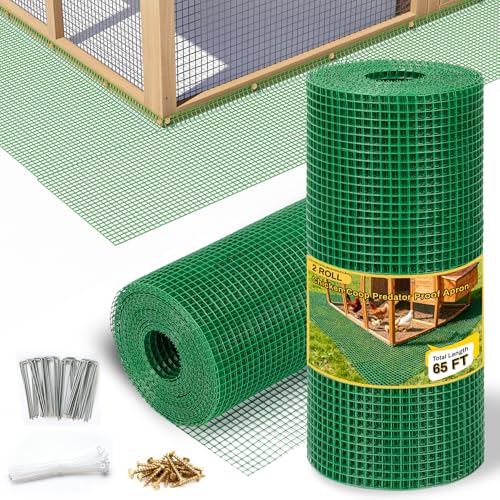
Keep Out Predators: This chicken predator apron is designed to prevent predators from digging under the chicken coop.Place wire mesh around the bottom of the chicken coop to effectively prevent predators from burrowing their way in.
Identifying Signs of Hawk Predation
When a hawk strikes your flock, it leaves a distinctive signature that’ll help you understand what happened. You’ll notice a single, centralized puncture wound on the breast or back—hawk behavior differs sharply from mammalian attacks. The carcass typically remains near the strike site, barely consumed, since hawks drop their prey upon detecting human presence. Additionally, hawks are known to attack vulnerable young chickens when they present an easy target. In some cases, the energy expended by hawks may allow them to capture larger prey than they can consume at once, similar to how double-yolk eggs can lead to multiple embryos developing in chickens. Owls, particularly large species like the great horned owl, can also pose a real danger to chickens, often preying on them at night.
Feather distribution reveals vital predation patterns. Look for tiny scattered feathers plucked directly from the body, often concentrated near the carcass rather than spread widely. Unlike ground predators, hawks won’t tear flesh extensively or carry away remains. Attentive roosters can alert you to hawk attacks through their alarm calls, which signal danger to the flock and prompt them to seek shelter.
The attack usually occurs in open daytime areas, indicating opportunistic strikes. You’ll find minimal neck damage compared to mammalian kills. These signs collectively confirm hawk predation and help you distinguish it from other threats.
The Hunting Patterns and Timing of Hawk Attacks
Because hawks are opportunistic hunters with distinct tactical approaches, understanding their methods helps you protect your flock effectively. Hawks employ multiple hunting strategies tailored to your landscape. Red-tailed hawks favor high soaring over open fields, spotting prey from 100 feet before diving. Cooper’s hawks use rapid aerial pursuit through wooded areas, targeting quick-moving targets. You’ll notice perch-and-swoop tactics most frequently in backyards—hawks wait on branches or poles near prey-rich zones, then strike when chickens move. During winter months when prey becomes scarce, some hawk species like Harris hawks may engage in co-operative hunting to take down larger targets more efficiently. Additionally, other predators like raccoons often target hens and may leave behind remains such as the head after an attack. To further secure your flock, consider implementing protective measures similar to those used against threats like crows. Incorporating natural deterrents, like spiky shrubs, can also help deter hawks from your garden area. Providing your chickens with adequate shelter will also enhance their safety from potential aerial predators. Furthermore, maintaining a balanced diet for your chickens can help keep them healthier and more alert, allowing them to better evade predators like hawks.
Peak attacks occur during daylight hours when prey availability is highest and your chickens free-range. Hawks target chicks and juveniles first, avoiding the heavy lifting required for full-sized breeds. Time your flock’s outdoor access strategically, supervising during vulnerable hours to minimize predation risk.
How to Eliminate Perches and High-Risk Areas
Now that you understand how hawks hunt your flock, you’ll want to eliminate the vantage points that give them an advantage.
Your perch reduction strategies start with identifying and removing trees within 50–100 feet that offer clear sightlines. Trim branches below 15–20 feet and eliminate dead snags. Cut back tall fence posts, shed roofs, and antenna near your run—hawks need elevated lookouts to spot prey. Additionally, consider incorporating proper ventilation techniques in your coop design, as maintaining a warm environment can help keep your chickens healthier and less vulnerable to predation. Ensuring that your chickens have a nutritious diet will also help them stay strong and resilient against threats.
Next, implement visual obstruction techniques by installing netting or hardware cloth over runs and ranging areas. Use low, dense shrubs and covered feeders to break up open spaces where chickens cluster. Regularly monitor for hawks and adapt your strategies as their behavior changes. Design staggered barriers and pergolas to interrupt direct flight paths.
Keep grass short within your flock zone so approaching raptors can’t use tall vegetation for cover. These combined strategies eliminate the hunting advantage hawks depend on.

Material and size: The size of the hardware cloth is 16 inch×50 ft and 1/2 inch×1/2 inch thickness, adopt 19 guage hot-dipped galvanized material

Material and size: The size of the black hardware cloth is 48 inch×100 ft square and 1/2 inch×1/2 inch thickness, black vinyl coated.

1. Superior Materials & Rust Protection - SEBOSS 19 gauge hardware cloth is made from low-carbon steel wire for high strength and flexibility. It features hot-dip galvanized after welding, ensuring that every joint—where rust often begins—is fully zinc-coated. Ideal for chicken wire fencing and long-term outdoor use.
Creating Safe Spaces and Cover for Your Flock
While eliminating perches reduces hawks’ hunting advantage, you’ll still need to provide your flock with secure shelter and cover. Strategic coop positioning is essential—place your structure in open areas away from dense brush where predators can hide. Elevate the coop three feet off the ground to minimize ground-level access and improve visibility around the perimeter. It’s important to recognize that various predators, including weasels, pose a significant threat to backyard chickens. Additionally, offering healthy treats like raspberries in moderation can keep your chickens happy and healthy. Silkie chickens tend to have a long lifespan and require special attention to stay healthy and protected from predators. Providing ample natural cover can also help minimize the visibility of your flock to aerial predators.
Install predator barriers like fences or hedges to deter approaching threats. Cover your chicken run with roofing or netting to block aerial attacks from hawks and owls. Use half-inch hardware cloth on all sides, including the top, creating a fully enclosed space your birds can access safely. These layered defenses transform your coop into a fortress against aerial and terrestrial predators alike. Bury hardware cloth at least one foot deep around the coop foundation to prevent digging predators from tunneling underneath. Additionally, clearing vegetation and debris around the coop is crucial, as it reduces potential snake habitats that could attract other predators.

Durable Welded Hardware Cloth & Ground Skirt: Features 1" x 1"(20 gauge) square welded hardware cloth on side walls with thickened PVC coating for superior durability and predator resistance. Combined with the extended ground skirt, it provides a professional safeguard for various poultry like dog kennels, rabbit cages, or sheep pens.

【 Heavy Duty Hardware Cloth】Constructed from heavy-duty hardware cloth, the walls of this chicken run are incredibly tough and built to resist damage. The tight mesh spacing provides an extra layer of security against predators while still ensuring plenty of airflow to keep your chicken healthy.

Beginner-Friendly Backyard Chicken Coop - It features front width 9.8 ft, side depth 13.1 ft and peak height 6.4 ft. Ideal for chickens, ducks and other poultry to roam and forage outdoors, also works great as a protective fence for garden plants. Our refined instruction manual sorts all parts clearly for smooth step-by-step assembly. Easy setup finished by just 1-2 people.
Timing and Additional Deterrents to Protect Chickens
Once you’ve fortified your coop’s physical defenses, timing becomes your next tactical advantage. You’ll want to delay free-ranging until 2pm or later, when hawks have already eaten their fill and activity drops considerably. Avoid early morning exposure when hawks actively scout for prey.
Your deterrent strategies should layer multiple approaches. Deploy fake owls mounted around your property, moving them regularly so hawks don’t habituate to static positions. Combine visual deterrents with human presence—simply being outside often startles hawks into dropping prey. An effective way to secure your coop is by reinforcing it with solid wood, metal, or welded wire to prevent raccoons from accessing the area. Furthermore, keeping feed stored securely and minimizing food waste can help reduce rat attraction, making your property less appealing to other potential threats. Adding 360° predator-proof enclosures can further enhance the safety of your chickens from aerial and ground predators.
Understand hawk behaviors shift seasonally. Winter intensifies attacks as young, desperate hawks target chickens. Early spring brings bolder juveniles taking greater risks near flocks. By timing your flock’s outdoor access strategically and employing varied deterrent methods, you’ll considerably reduce predation threats throughout the year.

Advanced Series with Upgraded High-Stability: This model features a robust galvanized steel structure with 8 reinforced support bars for reliable stability. Also comes with 2 bowls. It offers a high-performance solution for daily outdoor use, providing a secure and steady habitat for your poultry in any backyard

Rust-Resistant Heavy-Duty Steel Frame: Constructed with high-strength steel tubing and advanced galvanization technology, the chicken coop withstands corrosion even in harsh outdoor environments. Its sturdy structure provides ample space for the flock to move freely, while reinforced cable ties enhance protection against predator attacks

Durable Welded Hardware Cloth & Ground Skirt: Features 1" x 1"(20 gauge) square welded hardware cloth on side walls with thickened PVC coating for superior durability and predator resistance. Combined with the extended ground skirt, it provides a professional safeguard for various poultry like dog kennels, rabbit cages, or sheep pens.