You’ll find that your chickens can jump between 2 and 15 feet vertically, depending on breed, age, and wing condition. Unclipped birds reach the upper range through flight-assisted techniques, while wing-clipped chickens max out around 1-2 feet. Lighter breeds like Bantams outperform heavier utility breeds, and younger birds demonstrate superior agility compared to older flocks. Surface conditions and roost stability further influence their jumping capacity. Understanding these variables reveals why containment strategies must vary markedly across different chicken breeds.
Typical Heights for Domestic Chickens
While domestic chickens aren’t known for their athletic prowess, they’re surprisingly capable jumpers. You’ll observe that typical domestic chickens achieve jump heights of 2-3 feet through standard hopping mechanics. However, height comparisons reveal considerable variation among breeds. Lighter domestic varieties consistently outperform heavier ones, demonstrating that body mass remarkably influences jumping capacity. Medium-sized chickens frequently accomplish 4-5 foot hops, with some reaching up to 10 feet when employing flight-assisted techniques.
Age profoundly impacts performance metrics. You’ll notice younger, healthier chickens generate greater vertical distances than their older counterparts. This decline correlates with muscle deterioration and reduced wing strength over time. Clipping wings significantly reduces jumping height, which is an important consideration when managing your flock’s containment needs. Understanding these baseline measurements helps you assess your flock’s jumping abilities and establish appropriate containment strategies based on breed characteristics and individual bird conditions.

BIRD NETTING FOR CHICKEN COOP: Are you worried that hawks or owls might attack your chicken? This high-tenacity nylon netting features ultra-strong multifilament fibers—finer than ordinary coarse ropes yet with a 5.26kg tensile strength for superior tear resistance. You can keep Keep predator like hawks or owls out by simply draping your chicken run with this mesh netting. It keeps your chicken safely contained—no more jumping into neighbor's yard or destroying your garden!
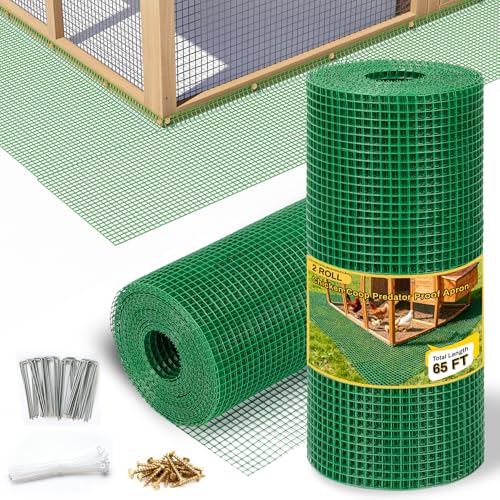
Keep Out Predators: This chicken predator apron is designed to prevent predators from digging under the chicken coop.Place wire mesh around the bottom of the chicken coop to effectively prevent predators from burrowing their way in.

REINFORCED EDGES & TANGLE-FREE DESIGN | EASY INSTALLATION : Our heavy-duty bird netting features a premium woven square mesh structure that effectively resists tangling with fallen leaves, weeds, or twigs. The upgraded reinforced edges come with integrated ropes, ensuring a neat appearance and a frustration-free setup and storage process.
Breed Variations and Their Impact on Jumping Ability
Breed selection fundamentally determines your chicken’s jumping capacity, as morphological and behavioral traits create dramatic performance disparities across varieties. Bantams and lightweight Mediterranean breeds achieve superior heights due to lower wing-loading and enhanced thrust-to-weight ratios, whereas heavy utility breeds like Orpingtons exhibit markedly limited jump mechanics. Muscular leg conformation directly correlates with improved take-off performance and breed agility. Wing morphology substantially influences vertical clearance—longer primary feathers and streamlined body shapes generate greater lift than compact, heavily-feathered breeds. Additionally, during the pullet stage, young hens undergo significant physical changes that may influence their overall agility, impacting their jumping ability as they mature. Furthermore, maintaining a balanced diet that includes nutrient-rich oats can support muscle development and overall health, enhancing jumping performance. Behavioral differences equally impact results: flighty landraces demonstrate higher jumping propensity through stronger foraging instincts, while docile utility breeds show reduced motivation for maximum-effort attempts. Feather condition, molt cycles, and perch-competition hierarchy further modulate your observable jumping heights across individual birds and breed categories. Heavier and more docile breeds like Silkies and Australorps tend to fly poorly, which directly correlates with their reduced jumping abilities compared to lighter, more active varieties.
Factors That Affect a Chicken’s Jumping Potential
Beyond breed selection, your chicken’s actual jumping performance hinges on multiple physiological and environmental variables that operate independently of genetic predisposition. Age influence considerably determines jumping capacity; younger chickens demonstrate superior agility and reach 2-3 feet height due to lighter bodyweight, while chicks at 5.5 weeks clear 4-foot fences effortlessly. Additionally, Old English Game chickens are known for their robust physical attributes, which can enhance their jumping capabilities. It’s important to ensure that chickens are fed properly, as cooked beans can provide them with essential nutrients that support overall health and agility. Infestations of mites may severely impact their health, affecting their jumping ability. Furthermore, healthy chickens, such as those like the Araucana breed, possess a strong genetic background that can contribute to improved jumping performance. Health impact proves equally critical—healthy chickens exhibit superior jumping skills, whereas poor health greatly reduces jumping capability. Interestingly, Sevin Dust has been used historically for chicken pest control to mitigate infestations that could hinder their jumping abilities. Surface conditions also matter; hard, textured surfaces enhance jumping height compared to soft substrates that limit performance. Additionally, surface texture prevents slipping during take-off, enabling more stable jumps. You’ll observe that ideal roost selection—featuring thick, textured surfaces—directly supports your flock’s jumping potential by facilitating secure positioning and stable launch points. Thigh muscle strength is essential for chickens to propel themselves effectively off the ground and achieve maximum jumping heights.

Natural ingredients: Our liquid chicken elixir formula contains Omega-3, Origanum Oil, Turmeric and essential poultry vitamins (D3, D & E). A natural alternative to artificial chicken medicine like poultry cell.

{Healthy Flock} Proper nutrition and a well-balanced microbiome can help your poultry defend against dangerous pathogens. Brewer's Yeast with Probiotics, Prebiotics and Niacin can help achieve exceptional health in your flock

All-Natural Dewormer for Poultry – Formulated with chili peppers and oregano, this powder promotes healthy digestion and helps keep your flock free from internal parasites.
Understanding Flight Versus Jumping Distinctions
Since chickens lack the sustained wing-powered lift that defines true flight, you’ll notice their aerial movements fall into distinctly different categories than those of naturally flying birds. Their flight mechanics rely on brief, explosive bursts—not true sustained flight—covering only 10-15 feet maximum. Understanding jumping anatomy reveals the distinction: chickens’ leg propulsion generates initial takeoff, while wings provide added height and controlled descent rather than primary propulsion. Additionally, some chicken breeds, like the Easter Eggers, are known for their agility and could potentially demonstrate better jumping ability under certain conditions. Providing homemade jungle gyms can further encourage and enhance their natural jumping abilities. Moreover, ensuring proper ventilation in their environment can help maintain an overall healthy condition that indirectly supports better physical activity. Introducing homemade chicken treats can also boost their energy levels, enhancing their ability to jump and explore.
You’ll observe that heavy body mass and underdeveloped pectoral muscles prevent prolonged aerial efforts. Their selective breeding prioritized ground foraging over flight sustainment, limiting wing capacity for short bursts only. When spooked, chickens perform hybrid jump-flaps, reaching 3-10 feet vertically through combined leg strength and wing assistance. This hybrid action distinguishes their movements from pure jumping or powered flight entirely. Lighter breeds like leghorns demonstrate superior jumping ability compared to heavier breeds that struggle with lift and vertical propulsion.

[INNOVATIVE DETACHABLE BOTTOM DESIGN] Tired of pet playpens that block your animals from the grass? Our new generation playpen features a fully removable bottom, allowing your chickens or bunnies to enjoy the natural turf while staying safely enclosed. When attached, the bottom provides a clean indoor surface; when detached, it can flip to the top as a professional sunshade cover to protect pets from UV rays.

Natural Material: Vehomy chicken perch stand is made of natural pine wood, no glue, no wire or no plastic, friendly and safe for chickens to peck, perch and scratch.

🐔 GREAT ADDITION TO ANY COOP OR BROODER - Roosting bars are perfect for training little chicks
Fence Containment Strategies for Different Breeds
Now that you understand chickens’ jumping and flight capabilities, you’ll need to match your fencing strategy to those physical limitations. Your fence height options depend entirely on breed-specific needs. Heavy breeds like Cornish Cross and Freedom Rangers require only 4-6 feet since their flight capacity remains limited. Standard docile breeds—Plymouth Rocks and Wyandottes—need 5-6 feet with outward overhangs. Sussex and bantams demand 6-foot barriers due to their agility and foraging activity levels. Larger breeds like Buff Orpingtons and Jersey Giants require maximum 6-7.5-foot heights with substantial run space, as (providing substantial calcium sources) is essential for maintaining their health and strong eggshell production. This is crucial as a quality coop can provide a safe environment that complements effective fencing. Additionally, providing appropriate nesting materials inside your coop can enhance hen comfort and overall welfare. Importantly, providing a predator-proof coop is essential to ensuring the safety and well-being of your chickens as they exercise within your enclosed space. Golden Campines present exceptional challenges, clearing 6-foot fences despite wing clipping. Hexagonal metal fences with small mesh holes are ideal for matching your chosen height to your flock’s breed composition and behavioral patterns for reliable containment. Additionally, be aware that coyotes are intelligent predators that can navigate fences, so reinforcing your barriers is key to keeping your chickens safe.

[CUTTABLE, SPLICEABLE] Chicken wire mesh measures 16.9 inches x 32.8 feet, which is suitable for large areas. Galvanized chicken wire is soft and flexible but stronge. It is bendable and easy to cut. You can also join mesh together if the height is not enough. Chicken wire fencing is double hot-dip galvanized for maximum rust protection and longer life. Designed with double twist hexagonal, chicken fence is more durable and less likely to break

Large Wire Mesh Roll: This package includes one roll of chicken wire fencing measuring 48 inches x 100 feet. The generous size offers plenty of material for a variety of uses such as fencing, gardening, and animal enclosures, making it a practical choice for farmers and gardeners.

Longth Metal Chicken Wire Fencing Mesh - 24 Rifny chicken wire mesh measures 16.5" (H) x 60ft (L), both lightweight and sturdy, making it easy to shape, spliceable and cut to your desired specifications. 1 inch hexagonal fine mesh design(even the chicks cannot pass) provides optimal protection while allowing airflow. This chicken Fence is perfect for securing a large area, whether it's for vegetable garden and yard, chicken coop, Raised Bed or any other purpose
Observed Behaviors and Real-World Limits
While controlled studies document chicken wing-flapping at consistent heights around 50–51 cm, real-world containment demands you account for individual variation and breed-specific performance. Observed behaviors reveal that motivational contexts—predator avoidance, food access, social hierarchy—significantly extend jumping capacity beyond laboratory maximums. Standard deviations of ±4.7 cm indicate substantial per-hen variation; some individuals consistently exceed mean heights while others fall noticeably below. Real world limits emerge when you factor breed differences: heavier broiler-type birds exhibit reduced upward jumpability compared with lighter laying strains. Latency periods spanning 35 seconds to over 7 minutes demonstrate that behavioral readiness influences measured performance. You’ll find that integrating 55 cm clearance margins and accounting for breed-specific kinematic patterns provides practical containment strategies addressing individual and population-level variation.
Wing Clipping and Its Effect on Height
When individual variation and breed-specific performance don’t adequately contain your flock, wing clipping offers a direct mechanical intervention to reduce jumping capacity. By trimming primary flight feathers on one wing, you create uneven feathering that disrupts flight dynamics and prevents sustained lift. This asymmetrical approach grounds chickens primarily through imbalance while decreasing aerodynamic efficiency.
You’ll observe your clipped birds achieving only 1-2 feet maximum height compared to unclipped chickens’ 10-15 feet flight range. The 55% wing area reduction considerably increases wing loading, restricting upward movement and causing rapid fatigue. For persistent escapees, clipping both wings enhances grounding effectiveness by further compromising lift generation. Clipping should be done outside of molting periods to avoid cutting pin feathers that could cause bleeding. Additionally, ensuring automatic waterers are securely placed can prevent birds from gaining extra energy to jump higher. Further supporting your flock’s health with herbs like fresh sage can also play a role in their overall energy levels. It is also important to consider the health of the flock, as poor hygiene around the vent area can lead to issues that affect overall energy levels. Providing adequate grit for digestion is also crucial for maintaining overall health, which supports their energy levels. Feathers regrow after molting, necessitating re-clipping to maintain enclosure security without expensive fence modifications.
Maximizing Enclosure Security for Your Flock
Since wing clipping alone doesn’t guarantee flock safety, you’ll need extensive enclosure security to protect against both escape and predation. Your enclosure types should incorporate ½-inch hardware cloth for walls and windows—superior to chicken wire due to heavy-gauge strength. Install secure materials including galvanised mesh (10mm x 10mm maximum) at all entry points. Establish adequate fence height with 2-foot wire mesh on walls to block hawk claws. For predator deterrents, implement electric fencing around your perimeter and automatic coop doors closing at dusk. Add roaming limits through buried hardware cloth skirts extending 18 inches outward with landscape staples. Establish protective coverings over run tops and add concrete or brick perimeter foundations. Position sensor and fox lights near your coop to scare off nocturnal predators during vulnerable nighttime hours. These safety installations create extensive habitat design against aerial and ground predators.

[Package Includes] - You will get 1 Roll of Hardware Cloth (available in 25FT/50FT) and a set of heavy-duty Zip Ties (Chicken Coop Not Included). A premium security part designed for Quictent and all standard poultry runs.

Hardware Cloth Master: Sanzeus chicken wire fencing features a 48 inch x 100 foot roll with 1/2 inch x 1/2 inch openings. Employ this to shield vegetables and flower roots, bulbs, rhizomes, etc from burrowing animals. It can be utilized to create individual baskets or line elevated garden beds

【Specifications and Material】 1/2'' x 1/2'' Mesh, 48'' W x 50' L (1.22 m x 15.3 m), 19 Gauge (0.91 mm diameter), using high quality annealed wire as base material, to ensure the superior performance of the product later. Please pay attention to the length and mesh size when purchasing to avoid wasting time and finish at once.