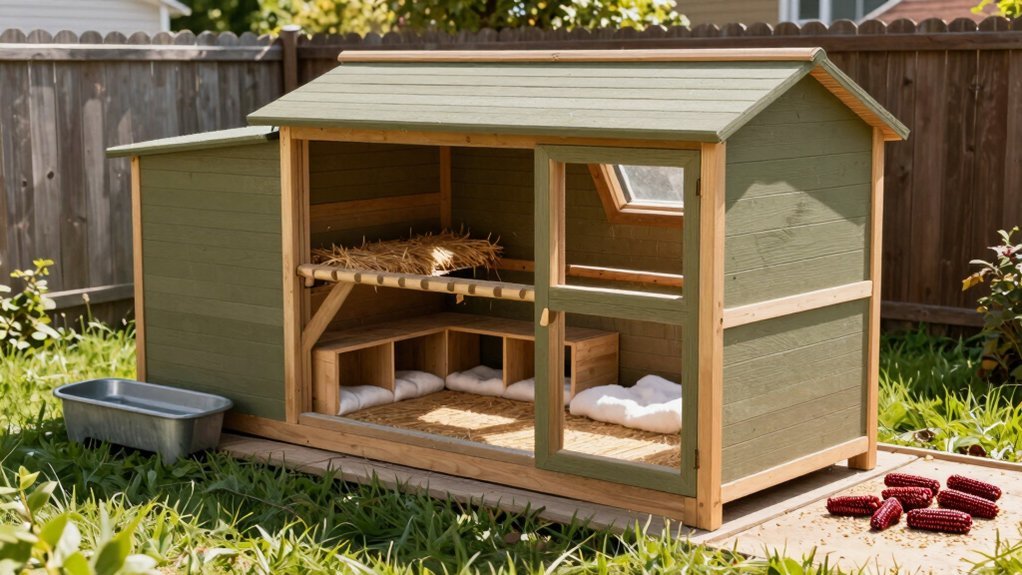
You’re probably wondering exactly how much room 13 hens need, and the answer’s simple: give each bird about 4 sq ft indoors (≈52 sq ft total) plus 8‑10 sq ft of run space, then add a few extra feet for feeders, waterers, and nesting boxes. A 6×10‑ft (60 sq ft) coop works well, and an 8×13‑ft run gives each bird roughly 9 sq ft to scratch, dust‑bathe, and stretch. Use predator‑proof hardware cloth, install high vents for airflow, and mount roosts 18 inches off the floor and higher than nest boxes; three to four 12‑×‑12‑×‑18‑inch nest boxes keep eggs tidy. Now you’ve got the basics, and the next step is planning the exact layout and materials for easy cleaning and climate control.
Calculate Indoor Space Needed for 13 Chickens
How much indoor space do you really need for 13 chickens? You’re probably wondering if the “4 sq ft per bird” rule applies to every flock. Here’s the thing: breeder standards set minimum limits at 4 sq ft for medium birds, which totals 52 sq ft for 13. If you keep bantams, guideline exceptions let you drop to 2 sq ft each, so 26 sq ft could work. Heavy breeds like Jersey Giants break the rule, demanding up to 10 sq ft per bird—130 sq ft total. Remember, feeders, waterers, and nesting boxes eat up floor area, so the usable walking space will be less than the raw total. Obviously, the more you can give them, the less stress you’ll see. Providing larger spaces than these minimums is beneficial to reduce stress and health issues among hens. If your flock lacks outdoor run space, you should increase the indoor coop space per bird by about 50% to maintain their well-being. Incorporating proper ventilation alongside adequate square footage is essential for preventing respiratory issues and ensuring a healthy environment.
Takeaway: Match your flock’s size to the appropriate sq ft per bird, then subtract space taken by equipment. Next, figure out the best coop dimensions for those 13 hens.
Select Coop Dimensions for 13 Hens
What size should your coop be for 13 hens? You’re probably wondering if a tiny shed will work, and the answer is no. A rectangular footprint of 6 × 10 ft (60 sq ft) or 6 × 12 ft (72 sq ft) hits the sweet spot for space efficiency, giving you enough room for roost bars, feeders, and 3‑4 nest boxes without feeling cramped.
All right, think of a 10 × 5 ft coop (50 sq ft) as a “tight‑fit” option that only works if you have a big outdoor run. Wider layouts like 8 × 8 ft improve circulation and reduce bottlenecks near pop doors.
Here’s the thing: choose a size that lets you add a perch or a box later—coop expansion is simple when you start with a solid 6 × 10 or 6 × 12 plan.
Takeaway: aim for 60‑72 sq ft now, and you’ll have room to grow. Next, consider how to design a run that matches those dimensions.
Design a Run for 13 Chickens (8‑10 sq ft per Bird)
You’re probably wondering how much ground you really need for 13 hens without turning the run into a cramped hallway. You’ll need roughly 104‑130 sq ft, so aim for an 8×13‑ft or 10×13‑ft layout. That gives each bird 8‑10 sq ft, keeping pecking and stress low. While these dimensions are practical, adhering to general best practices of providing up to 10 square feet per bird ensures sufficient space for movement and long-term health. Just as larger flocks require adequately sized outdoor runs to allow free movement and reduce disease risk, your 13 hens will benefit from ample room to roam. Design considerations should also balance practicality with the physical needs of the birds, taking into account factors like chicken well-being alongside breed and climate.
How should I zone the run?
Run zoning strategies split the area into feeding, watering, dust‑bathing, and scratching zones. Place feeders and waterers on opposite sides to cut competition. Add a shady corner and a dry‑earth patch for natural foraging.
What enrichment works best?
Enrichment integration methods add perches, low logs, and a sandbox for dust baths. Vertical elements let birds hop, reducing boredom. Rotate sections weekly to keep the ground fresh.
Takeaway:
A 130 sq ft, well‑zoned run with simple enrichment lets 13 hens thrive. Next, think about keeping the space clean and predator‑proof.
Keep Your Coop Fresh, Dry, and Safe From Predators
All right, you’re probably wondering why a dry, well‑ventilated coop feels more like a home than a hazard zone. Moisture control starts with absorbent bedding—pine shavings or hemp work well. Replace wet spots daily, and run a deep‑litter system only if you keep it aerated and never compacted. While pine offers cushioning, hemp bedding provides superior absorbency and antibacterial properties ideal for maintaining hygiene in nesting boxes. Avoid cedar shavings entirely because plicatic acid is toxic to chickens and can cause severe respiratory illness.
How do you keep the air moving without chilling your birds? Install high vents that let warm, moist air escape, then cover them with predator‑proof hardware cloth. Cross‑ventilation reduces condensation, so you’ll see less ammonia and fewer respiratory issues. Hemp’s low dust content further protects respiratory health by minimizing airborne irritants compared to traditional materials.
What steps stop raccoons and weasels from slipping in? Seal every gap, use sturdy mesh on windows and doors, and add an underground apron of wire. Secure latches that a raccoon can’t pry open.
Providing extra interior space helps prevent egg eating and reduces bullying among the flock. Takeaway: Consistent bedding swaps, proper vent placement, and complete predator exclusion keep your coop fresh, dry, and safe. Next, think about how to arrange roosts and nest boxes for your 13 chickens.
Plan Roosts & Nest Boxes for 13 Chickens
How much roost space do you really need? You need about 8 inches per standard hen, so 13 birds call for roughly 104 inches (8 ft 8 in). If you have heavy breeds, aim for 12 inches each—about 156 inches total. Choose a sturdy roost material like pine or reclaimed wood, and space bars 18 inches apart to let each bird perch comfortably. Mount the roost 18 inches off the floor, keeping it a foot or two from the ceiling so wings won’t hit. To ensure stability and prevent wood splitting, pre-drill holes before securely fastening dowel rods with screws to avoid wobbling under the birds’ weight.
Now, how many nest boxes? One box per 4‑5 hens works, so three to four boxes will keep crowding low. Use standard 12 × 12 × 18‑inch boxes, add box insulation for warmth, and place them away from roosts to discourage sleeping in them. While some sources suggest a ratio of one box for every 2-3 hens to prevent stress, maintaining minimum of two boxes is critical regardless of flock size to avoid competition. Remember that providing adequate indoor space is essential for maintaining a healthy flock and preventing the health problems associated with overcrowding.
Takeaway: Provide 104‑156 inches of roost length and 3‑4 insulated nest boxes, spaced and positioned for safety and comfort. Ready to sketch your layout?
Add Perches & Branches to Your 13‑Hen Coop for Enrichment
Your coop’s floor can feel cramped, and chickens love to get up high. You’re probably wondering how to give 13 hens safe, comfortable roosts without hogging space. Here’s the thing: natural perch selection matters more than fancy hardware. Choose sturdy branches at least 3 inches thick or a 2×4 board laid flat, and keep each perch 18 inches off the ground for night‑time roosting.
Now, let’s talk perch placement strategies. Install a “perching tree” by securing several branches at different heights on a post, with a lower rung around 12 inches for older birds. Keep perches higher than nesting boxes to discourage sleeping in nests, and leave a clear aisle for cleaning and egg collection. Consider adding hinged roosts to simplify coop cleaning while providing ample roosting space for your flock. Providing multiple roost levels helps reduce stress and aggression caused by the flock’s pecking order, ensuring lower-ranking birds have adequate space away from dominant hens. Positioning roosts at a slight incline helps keep droppings from falling on lower roosting birds.
All right, remember to fasten every branch with screws so it won’t shift. The takeaway? Mix varied heights, use natural branches, and maintain space; then you’ll see happier, healthier hens. Ready to sketch your layout?
Pick Materials & Layout for Easy Cleaning
What material lets you scoop droppings as fast as cat litter? You’re probably wondering which floor will keep cleanup painless. Sand works because it’s inorganic, low‑moisture, and you can scoop it like litter, cutting daily spot‑cleaning to a few minutes.
Now, think about layout. Choose modular components—removable roosts, pull‑out trays, and snap‑in nesting boxes—so you can lift each piece without dismantling the whole coop. Smooth, non‑porous surfaces such as UV‑resistant plastic or vinyl over plywood let you wipe down walls and floor quickly, and large access doors give you room to swing a hose or pressure washer.
Here’s the thing: pair sand with a simple scoop, a dustpan, and a handheld brush, and you’ll spend less time scrubbing and more time watching your hens.
Takeaway: sand floor, modular design, and basic cleaning tools keep a 13‑hen coop tidy with minimal effort. Next, decide how big each run should be for your breed and climate. 10 sq ft per chicken.
Tailor Coop Size and Run for Breed Size and Local Climate
If you’re wondering how big your coop and run should be for 13 chickens, you’ve hit the right spot. You need to match space to breed dynamics and climate factors. Small breeds need about 2‑3 sq ft indoors each, medium 3‑4 sq ft, and large 4‑5 sq ft. For 13 birds that means roughly 39‑52 sq ft, but push toward 60 sq ft if you have giants.
All right, the run follows the same logic. Standard guidance gives 4 sq ft per bird, but active or confined flocks benefit from 8‑10 sq ft each. That translates to 100‑130 sq ft for 13 chickens. If you’re in a cold climate, chickens will stay inside longer, so lean toward the upper indoor range. In mild zones, you can stay near the lower end.
Here’s the thing: aggressive or high‑energy breeds need extra room to keep peace, while docile birds tolerate tighter spaces. Mixed‑breed flocks require a little extra to avoid crowding at feeders and roosts. Takeaway: size your coop and run by breed size, activity level, and local climate. Next, sketch a layout that fits those dimensions before you start building. Considering options like prefabricated coops or shed kits can also be viable for those who prefer not to build these larger structures from scratch. To support the health and well-being of your flock, ensure your design includes adequate nesting boxes positioned off the ground alongside sufficient roosting space. While planning your dimensions, remember that attached runs can reduce the indoor space needed because birds have more outdoor room to roam.
Quick Checklist: Must‑Have Features Before You Build or Buy
A quick checklist clears the fog when you’re figuring out which features a coop must have before you start building or buying. You’re confused about what really matters, so let’s sort it out.
Do you have proper ventilation?
High vents above roosts keep moisture down, while side‑wall windows add airflow without drafts on sleeping birds. Covered vents protect against rain and snow, and cross‑ventilation from opposite sides helps in warm weather. *Takeaway: Good airflow prevents ammonia and keeps hens healthy.*
Are your roosts and nesting boxes set up right?
Sturdy roosts bars 1.5‑2 inches wide sit higher than nesting boxes, which should be at least 12×12 inches and sloped on top. One box per four hens works well, and easy‑access doors simplify egg collection. *Takeaway: Proper placement reduces mess and improves comfort.*
What about insulation specifics and bedding choices?
Insulate walls with foam board or straw bales, then seal gaps to keep temperature steady. For bedding, use pine shavings or straw; they absorb moisture and are easy to replace. *Takeaway: Insulation keeps coop warm, and good bedding controls odor.*
Do you have a clean, accessible design?
A full‑size human door, smooth sanded wood, and minimal clutter let you spot waste quickly. Litter or sand in the run improves drainage. *Takeaway: Easy cleaning means healthier birds.*
Remember that maintaining adequate space is just as critical as these structural features to prevent stress and disease in your flock, while installing secure locks ensures protection from predators like foxes and raccoons.
Now, with these basics nailed down, you can move on to sizing the run or choosing materials. What’s your next step?