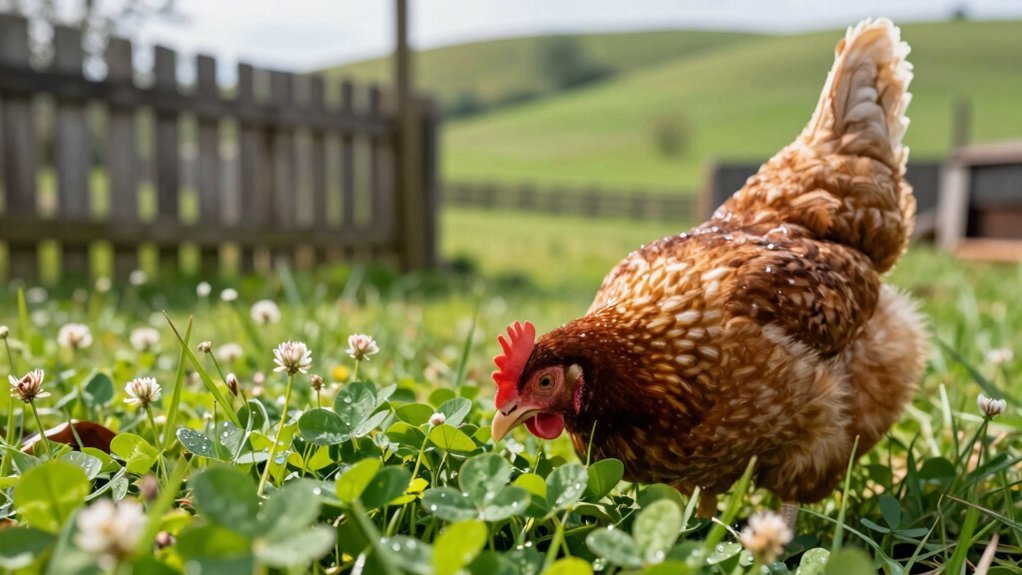
You’re right to wonder if clover is safe for chickens—yes, fresh clover can be a nutritious boost, but treat it like a snack, not a staple. Start with a tablespoon mixed into their daily feed, watch for squinting, feather‑picking, or soft droppings, and never let it exceed 10 % of the total ration (about half a cup for ten birds). Store it cold, discard any moldy bits, and if you see pale combs or bruising, call a vet right away. Now you know the basics, and the next section will show you how to keep the flock thriving.
How to Feed Fresh Clover to Chickens Safely
How do I start feeding fresh clover safely? You’re right to wonder; fresh clover can boost your flock if you handle it properly. First, harvest only clean, pesticide‑free clover, then rinse off dirt and insects. Chop it into bite‑size pieces so chickens can peck it quickly, preventing spoilage.
Now, store it right. Use airtight containers in the fridge and limit storage to 24‑48 hours; any longer invites mold and toxins. Rotate your feed: give clover a few days, then switch back to the regular mix, repeating the cycle to avoid over‑reliance. Be sure to monitor your birds for crop impaction if they consume excessive amounts of fibrous greens at once. Always verify that the plants you collect are safe, as toxic plants like poison ivy or foxglove can be deadly if mistaken for edible weeds.
All right, start with a tablespoon mixed into the daily feed, watch droppings, and increase slowly if birds stay healthy. Takeaway: fresh, properly stored clover in small, rotating portions keeps your chickens safe and happy. Ready to try a trial run? The chickens can easily pull the greenery out of the garden and eat it directly. For added variety and soil health, consider integrating other fast-growing greens like mustard or radishes into their foraging routine.
What Nutrients Clover Adds to a Chicken’s Diet
You’re probably wondering exactly what clover brings to your flock’s diet, and that’s a great question.
What protein does clover supply?
Clover packs roughly 240 g/kg crude protein, delivering essential amino acids like lysine, methionine, threonine, and tryptophan. Methionine’s sulfur content helps fill a common poultry gap.
How does fiber help?
The roughage slows feed passage, supporting steady bowel movements and gut health. Fresh clover adds bulk that differs from concentrated feed, reducing irregularity.
What vitamins and minerals show up?
You’ll see vitamins A, B‑group, and even vitamin C in red clover, plus calcium, potassium, phosphorus, iron, chromium, and niacin‑related nutrients—tiny but useful boosts.
Any hidden concerns?
Protease inhibitors can limit protein digestion if you overfeed, and excess fiber may raise bloating potential.
Takeaway: Clover enriches protein, fiber, vitamins, and minerals, but balance it to avoid digestive hiccups. Just as feeding seasonal vegetables in moderation enhances overall bird wellness without risking toxicity, clover should be offered as part of a varied diet. Remember that treats should only supplement balanced feed rather than replace the complete layer feed your chickens need for optimal health. Similar to how safe human foods provide nutrition when given without harmful additives, clover serves as a beneficial natural treat when integrated carefully.
Next, consider how to add clover safely without overfeeding.
How to Offer Clover to Chickens Without Overfeeding
You’ve just learned why clover’s protein, fiber, and vitamins matter, and now you’re probably wondering how to give it to your flock without turning it into a buffet.
How do I keep clover from becoming a free‑for‑all?
Now, establish a dense patch first. Let seedlings root for at least two weeks, then let it thicken before you let birds scratch. Rotate access: open a small area for a few minutes each day, then close it for 24 hours. This short, repeated access works like pest management, letting the plant recover while still offering foraging enrichment.
What feeding method works best?
Hand‑feed handfuls or scatter clover in several spots. Hang trays or use low trays to avoid trampling. Offer it after the main ration so chickens aren’t frantic. Combining this with other strategies like fermenting feed can further boost probiotics and nutrient content while reducing overall reliance on commercial feeds. Remember that clean water is always essential to support digestion when introducing new organic ingredients like clover to a balanced diet.
What should I watch for?
If birds crowd the clover, stools soften, or you see mold, cut back immediately. Adjust frequency until clover stays a treat, not a staple. By mimicking the way free-range birds naturally regulate intake, you ensure they enjoy clover as part of a balanced diet without overconsuming any single nutrient source.
Takeaway: set up a sturdy patch, rotate short feeding windows, and hand‑feed modest amounts. Next, ask yourself how much clover you can safely serve each day.
What Portion Size of Clover Is Safe for Chickens?
If you’re wondering how much clover you can safely give your chickens, you’ve hit the right spot. Fresh clover intake should act as a supplement, not a main dish. Aim for no more than 10 % of their daily feed, which translates to about half a cup for ten birds or a few bites per bird each day.
Now, how do you measure that? For a small flock, scatter a light handful of clover on the run and watch them self‑limit when other feed is available. Larger flocks need the same 10 % rule applied per bird, so keep a scoop handy and adjust to the size of your group. To maintain consistent production, ensure this green treat does not displace the complete layer feed required for balanced protein and calcium intake. Just as dark leafy vegetables are recommended to enhance yolk quality, clover serves best as a nutritious addition rather than a dietary staple.
All right, remember the takeaway: keep fresh clover intake modest, stay within daily portion limits, and let it complement a balanced ration. Similar to how high-sugar fruits can cause digestive issues, overfeeding greens may lead to soft eggshells if the diet becomes unbalanced. Next, consider how to store clover to keep it safe and tasty.
How Moldy or Dried Clover Can Harm Your Flock
You’re probably wondering why a handful of fresh clover feels safe, yet a bag of dried clover can turn dangerous. Moldy clover creates dicumarol, an anticoagulant that blocks vitamin K and stops clotting. When you feed chickens spoiled hay or silage containing this toxin, internal bleeding can develop slowly, often unnoticed until a flock collapses.
Here’s the thing: drying doesn’t erase the risk. If damp clover later molds, the toxin persists even after the visible fuzz fades. A single bite of contaminated feed can add up, because repeated small intakes still deliver dicumarol to the bloodstream. Beyond dicumarol, moldy feed can also introduce dangerous toxins like aflatoxin that cause fatal liver damage and diseases such as aspergillosis. Just as seasonal changes impact egg production cycles, environmental conditions during storage critically determine whether clover remains safe or becomes toxic. Feeding moldy bread to chickens similarly exposes them to toxic molds that can weaken immune systems and lead to death.
All right, keep stored clover dry, toss any musty‑smelling bales, and prefer fresh pasture. The takeaway: moldy or improperly dried clover equals hidden anticoagulant danger—don’t let it slip into your feed. What’s your next step? Inspect every batch before you offer it to your chickens.
How to Spot Negative Reactions to Clover in Chickens
Feeling unsure whether your chickens are reacting badly to clover? You’ll notice sudden lethargy, quietness, or a drop in foraging. If they isolate from the flock, move less, or lose appetite, those are early flags.
Here’s the thing: excess oxalates in red clover can irritate the gut. Watch for watery or green droppings, soft‑shelled eggs, and reduced pecking. Pale combs, bruised skin, or nosebleeds signal clotting trouble—don’t ignore them.
All right, photosensitivity shows up as squinting, feather‑picking, or facial swelling. Pair these signs with weakness, and you’ve got a reaction. Similar to how rhubarb leaves harbor oxalates leading to kidney failure, an overload from clover can cause comparable internal distress. Since dietary imbalances and intestinal inflammation are primary drivers of watery feces, persistent digestive issues after eating clover may indicate a deeper gut health problem. Just as natural toxins in raw beans can be fatal to poultry, certain compounds in plants require careful monitoring to ensure flock safety.
Takeaway: Spotting lethargy, digestive upset, bleeding, or skin irritation means the clover is harming your birds. Next, consider adjusting the diet or consulting a vet.
When to Call a Vet About Clover Use
You’ve just learned how to spot a chicken’s bad reaction to clover, and now you’re wondering when to actually call a vet.
When does a symptom become an emergency?
If you see blood in droppings, bruising, or sudden weakness, think internal bleeding. Collapse, labored breathing, or seizures demand immediate care—don’t wait.
What digestive signs merit a call?
Persistent diarrhea, especially bloody, or a refusal to eat for more than 12 hours signals dehydration risk. Repeated crop issues, vomiting‑like regurgitation, or a swollen abdomen that worsens over a few hours also require professional input. Since untreated sour crop can be fatal or cause permanent crop damage, seek help immediately if you suspect severe crop blockage alongside these digestive symptoms. A swollen, squishy crop that fails to empty overnight often indicates sour crop, a yeast infection that disrupts digestion and requires specific antifungal treatment.
When should reproductive concerns trigger a vet visit?
Heavy clover intake can disrupt hormone balance, leading to reproductive issues like dropped laying or abnormal eggs. If you notice a sudden change in egg production after clover exposure, contact a vet to assess hormonal effects and nutritional balance.
Bottom line
Call a vet if symptoms are severe, worsening, or affect multiple birds. Early intervention prevents complications and protects flock health.
Next step
Check your flock for any of these signs now; if you spot them, pick up the phone.