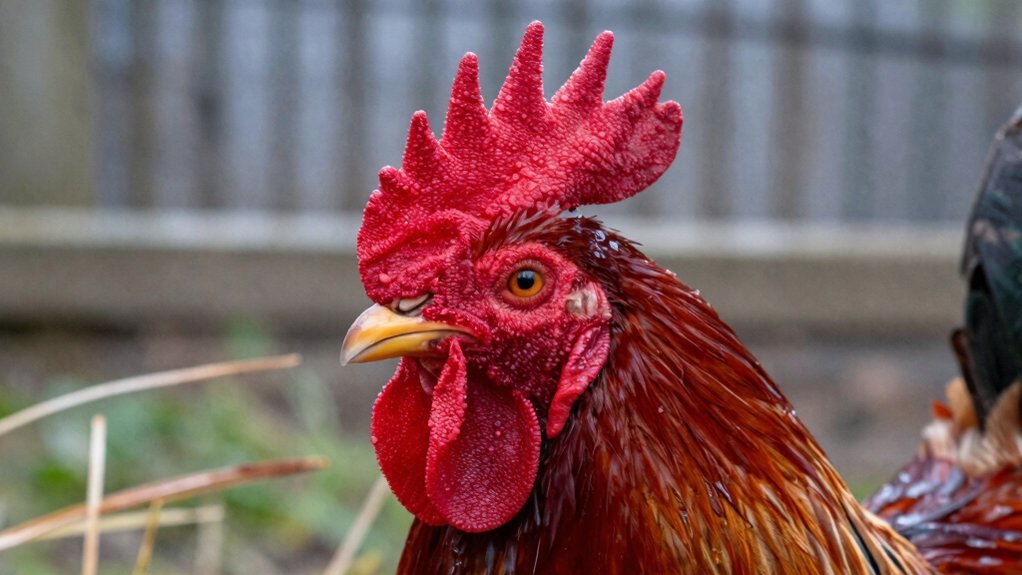
You’re probably wondering why chickens sport those red, fleshy plates on their heads—yes, they have combs, and they’re far more than décor. A comb is a thin, vascularized skin flap that works like a radiator, dilating blood vessels to dump heat in hot weather and constricting them to keep warm when it’s cold; its size and color also signal health, testosterone, and egg‑laying readiness. Different breeds show distinct shapes—single, pea, rose, walnut, buttercup—so you can tell a Rhode Island Red from a Silkie at a glance, and a bright, glossy comb usually means good circulation, while a pale or shriveled one flags dehydration or disease. Knowing this helps you spot problems early and choose the right birds for your climate; the next step is learning how to read those comb clues in detail.
What Is a Chicken Comb?
What’s confusing you is that a “comb” isn’t a hat accessory—it’s a real organ on a chicken’s head. You’ll notice it as a fleshy, usually red growth perched on top, varying by breed: single, rose, pea, walnut, cushion, and others. It’s vascular, glossy, and plump when healthy, and it helps regulate temperature—blood vessels release heat in summer, conserve it in winter. For instance, the Pea Combs found in Brahmas and Ameraucanas feature three distinct points that make them ideal for cold climates.
How does it show up elsewhere? Chefs sometimes use combs in cooking, slicing them for a salty crunch in Asian dishes. Artists also love combs in artistic representations, painting their vivid reds to signal vigor. While some breeds are prized for their fluffy feather crowns, the comb remains a distinct biological feature separate from ornamental plumage.
Obviously, the comb isn’t just decoration; it’s a functional organ. Now you understand its anatomy and cultural roles. Next, explore why healthy chicken combs matter. Unlike the ornamental feather crests found on breeds like the Appenzeller or Brabanter which can impair vision, the comb is a clear indicator of a bird’s overall health and vitality.
Why Healthy Chicken Combs Matter
You’re probably wondering why a chicken’s comb matters beyond looks. The comb acts as a quick health bar; bright red, plump tissue tells you the bird’s circulation is strong and nutrition is solid. Dull or shrunken combs flag stress, disease, or poor diet, so you can intervene before bigger problems arise.
Here’s the thing: comb condition serves as a nutritional indicator for the whole flock. When you feed balanced protein and vitamins, the comb stays glossy, reflecting good immune function and growth. Conversely, a lackluster comb signals you need to adjust feed or check for parasites. In some cases, paleness can indicate reduced blood circulation caused by anemia, dehydration, or internal issues that require immediate attention.
All right, predator defense ties in, too. A healthy, well‑vascularized comb can sustain minor injuries from fights or bites, helping the bird recover quickly and stay less vulnerable to predators. A weak comb makes a chicken an easier target because it signals overall frailty. Just as the confident demeanor of Malaysian Serama Bantams reflects their robust nature, a vibrant comb indicates a bird’s physical resilience and vitality. Families raising gentle temperament breeds often find these birds easier to monitor, as their calm nature allows for frequent, stress-free health inspections.
Takeaway: Regular comb checks give you early warnings about nutrition and resilience. Next, consider how combs help regulate temperature.
How Chicken Combs Regulate Temperature
You’re probably wondering why a bright, pulsing comb matters when the sun’s beating down. The comb’s anatomy is a thin, vascularized plate riddled with capillaries that sit right against the air. When temperature rises, your bird’s blood vessels dilate, pumping warm blood to the surface where a breeze can whisk the heat away, like a radiator on a car.
How does this work with genetics? Comb genetics determines size and density of those vessels, so larger, richer‑red combs can dump more heat. In hot weather, blood flow spikes, panting adds evaporative cooling, and feather positioning opens space for airflow. In cold snaps, vessels constrict, conserving warmth but risking frostbite on big combs. This thermal regulation is especially critical because while adult birds are hardy, they remain most comfortable and healthy within 60 to 75 degrees. Although chickens can withstand subzero temperatures if provided with a draft-free shelter, prolonged exposure to extreme cold stress can still lead to reduced performance or death. Experts note that while some birds tolerate inside temps down to -20°F, you should provide supplemental heat if the coop temperature falls below 35°F.
Takeaway: Watch comb color and fullness as a real‑time thermometer. Next, explore how size and color influence mating and laying.
How Chicken Comb Size & Color Influence Mating & Laying
Why does a rooster’s comb matter for love and eggs? You’re probably wondering why that bright, fleshy crown changes everything in a flock. Here’s the thing: a larger, deeper‑red comb signals strong testosterone, so hens spot it instantly and boost the rooster’s mating success. It also cements his place in the social hierarchy, letting him dominate rivals and win more mates. This visual dominance is often reinforced by bold behaviors like chest bumping other roosters to assert authority.
Now, look at hens. As a pullet nears laying, her comb swells and reddens, a clear cue that she’s ready to lay. You can tell a mature layer from an immature one by that vivid color shift. Bigger, brighter combs usually mean higher egg production and stronger shells. Just as earlobe color is genetically linked to eggshell hue, comb pigmentation serves as another visible marker of a hen’s reproductive status and genetic makeup. While comb traits indicate laying readiness, it is important to remember that specific breeds like the Sapphire Gem chicken are genetically programmed to lay brown eggs regardless of these physical signals.
Takeaway: Comb size and color act as honest signals for both mating success and laying readiness, guiding you in breeding decisions. Next, you might ask which comb types match specific breeds.
Identify Common Chicken Comb Types by Breed
You’re probably wondering which comb shapes belong to which breeds, and that’s a great place to start.
Which combs match popular breeds?
Single combs crown Rhode Island Reds, Leghorns, Plymouth Rocks, Australorps, Cochins, Delawares, Minorcas and Orpingtons. They’re tall, thin, serrated and love warm weather, but frostbite can bite. Pea combs appear on Brahmas, Buckeyes, Ameraucanas, Araucanas, Easter Eggers, Sumatra, Shamo, Cubalaya and Cornish; three low ridges keep them cold‑hardy. Rose combs sit flat on Wyandottes, Dominiques, Hamburgs, Sebrights, Red Caps and bantam Rosecombs, offering a nubby look and frost protection. Buttercup combs belong to Sicilian Buttercups, with a crown‑like cup that’s striking yet frost‑sensitive.
What about the rarer types?
Carnation combs show in Empordanesa and Penedesenca, strawberry combs in Malay and Yokohama, walnut combs in Silkie and Orloff, V‑combs in La Fleche and Sultan, and cushion combs in Chantecler. Unlike the ear tufts found on Araucanas, Ameraucanas feature distinct facial muffs and beards alongside their small pea combs to further reduce frostbite risk. While combs define many breed characteristics, some chickens like Silkies also display unique feather structures on their heads due to a lack of barbicels that create a soft, fur-like texture. These birds are further distinguished by their bluish-black skin caused by the melanotic gene, setting them apart from typical chicken breeds.
Takeaway: Recognizing these breed distinctions helps you read comb functions at a glance. Next, check how a comb’s health clues reveal seasonal changes.
How to Detect Health Issues & Seasonal Changes From a Chicken Comb
You’ve just learned which comb shapes belong to which breeds, and now you’re wondering how those same combs tell you about health and season.
What does a bright red comb mean?
A vivid red comb shows good blood flow and oxygen delivery. When you see it, you’re confirming normal circulation and that the bird isn’t stressed.
How can color signal trouble?
Pale pink or washed‑out combs often mean overheating, anemia, or molting; purplish or blue hints at poor oxygenation, so you should be evaluating circulation. White or blackened tips point to anemia, internal bleeding, or frostbite.
What about texture and swelling?
Dry, flaky combs signal detecting; check for drooping skin and feed water. Swelling or crusty lesions suggest infection or inflammation, so isolate the bird. Just as beta-glucan content in raw oats can interfere with a chicken’s nutrient absorption and gut health, internal digestive issues may also manifest externally through changes in comb appearance.
Seasonal cues
During lay, combs deepen; during molt they pale and shrink. Heat makes them paler; cold can darken edges. Broody hens often have smaller, paler combs due to inactivity and cessation of laying. If left unchecked, severe heat stress can overwhelm a chicken’s ability to regulate body temperature, leading to heat stroke and death. Since chickens prefer temperatures around 60 to 75 degrees Fahrenheit, maintaining a comfort zone is essential to prevent the stress that causes reduced appetite and poor egg quality.
Takeaway
Regularly scan comb color, texture, and size. Spotting a change lets you detect dehydration, evaluate circulation, and act before disease spreads.
Next step
Keep a daily comb log and compare notes with temperature changes to spot patterns early.