You’ll maximize egg production by balancing seven critical nutrients: 16-18% crude protein, 3.5-4% calcium, proper phosphorus ratios, and essential trace minerals like zinc and manganese. Adjust feed composition across four distinct growth phases, from brooding through peak lay. Daily intake should reach 100-120 grams by week eighteen. Monitor environmental factors—temperature, light, and water quality—as they directly influence nutritional requirements. Systematic production tracking lets you optimize formulations for your flock’s specific conditions and performance goals.
Essential Nutrients and Target Dietary Composition
Seven critical nutrient categories form the foundation of ideal layer hen nutrition, each serving distinct physiological functions that directly impact egg production and bird health. You’ll want to prioritize crude protein at 16-18%, sourced primarily from soybean meal supplemented by poultry by-product meal, meat and bone meal, or fish meal. According to many popular brands of chicken feed, maintaining a calcium-to-phosphorus ratio between 4:1 and 7:1, with calcium at 3.5-4.5% for robust eggshell formation, is essential. Additionally, providing oyster shells as a calcium supplement enhances eggshell quality and overall hen health, ensuring that hens receive a slow-release source of calcium which is crucial for eggshell strength. Incorporating whole grains and protein-rich components in their diet can significantly improve their overall health and egg production. Regular monitoring of nutritional deficiencies can prevent issues like small eggs and ensure your hens maintain optimal health. Balance metabolizable energy at 2,795 kcal/kg with your protein content to guarantee consistent nutrient balance. Include vitamin E at 500 mg/kg and trace minerals like zinc, selenium, and manganese for antioxidant protection. Nutrient deficiencies can lead to reduced egg production, disease, or death in your flock. You’ll optimize laying performance by selecting complete commercial feeds that deliver these protein sources and nutrient specifications consistently.

Essential Calcium Supplement: Pecking Order Oyster Shell is a rich source of calcium, crucial for the development of strong and sturdy eggshells. Adequate calcium intake helps prevent common issues like thin or brittle shells, ensuring your eggs are consistently high quality.

Optimal Health and Egg Production - Enriched with 16% protein from organic grains, this feed provides a balanced and complete diet for laying chickens and ducks, promoting growth and nutritious, supports strong eggshells

Superior calcium from Oolitic Aragonite: Provides high-quality calcium sourced from naturally occurring Oolitic Aragonite for optimal poultry nutrition
Feeding Stages: From Chick to Laying Hen
Because laying hen productivity depends on proper nutrition throughout development, you’ll need to adjust feed composition and management strategies across four distinct growth phases. During brooding (0-6 weeks), you’ll establish foundational feeding behavior while supporting rapid skeletal and muscle growth. The best brooder feeds typically include a mixture of grains and balanced protein levels to ensure the chicks get all essential nutrients they need. Providing constant access to clean water helps support their overall health and growth during this phase. The growing pullets stage (6-14 weeks) focuses on achieving uniformity and promoting feed consumption for ideal crop development. It’s also crucial to ensure that chicks are kept in optimal temperature conditions to support their health and growth during this period. During this stage, it’s essential to monitor the transition to layer feed to prepare hens for their upcoming laying phase. Pre-lay (15-18 weeks) involves hormonal maturation and medullary bone development, requiring a feed switch to 2-2.5% calcium. Finally, peak laying onset (19-30 weeks) demands layer ration with 16-18% protein and 3.5-4% calcium to maximize production and shell strength. Shifting feeds gradually over 4-5 days prevents digestive disruption and guarantees consistent chick development throughout each critical phase. Adequate space and proper lighting programs during the growing pullets stage prevent stress-related growth delays and ensure uniform flock development heading into the pre-lay period.
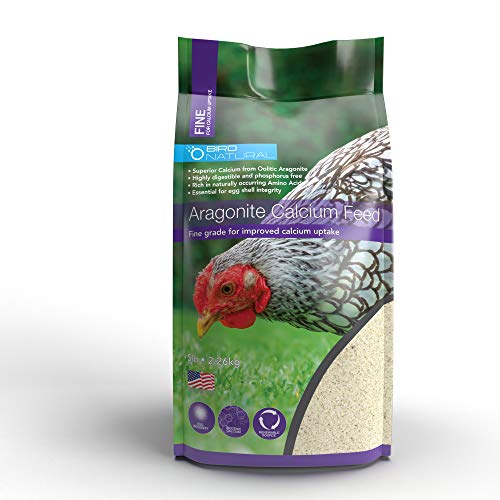
Superior calcium from Oolitic Aragonite

Calcium supplement without Vitamin D3 is

BLEND OF SOURCES OF CALCIUM : Chick’N Calcium from the Chick’N Swell product line is made from a blend of sources of calcium: calcium chloride and calcium propionate to provide essential calcium for all laying poultry including chickens, ducks, and quails; from backyard flock to commercial farms, our product is the perfect addition to your chicken water.
Daily Feed Intake and Feeding Management Strategies
To optimize laying hen productivity, you’ll need to understand and manage daily feed intake within the 100–120 g range that modern laying hens typically consume under temperate, non-stress conditions. Feed intake increases progressively from pullet to mature layer, stabilizing around 100–105 g/day by onset of lay at approximately 18 weeks for brown-egg strains. You should recognize that breed, body weight, egg size, and production rate appreciably drive intake differences. Implement ad libitum feeding schedules as standard practice to maintain steady consumption and production. A 50-pound bag of complete layer feed will sustain a laying hen for approximately 33 weeks, making it an economical choice for managing long-term flock nutrition. Ensure that the feed has a balanced diet consisting primarily of quality layer feed to promote optimal health. Ascertain adequate feeder space so all hens access feed simultaneously, preventing subordinate birds from experiencing reduced intake. Monitor feeding schedules strategically; offering feed during cooler periods mitigates heat stress effects on voluntary consumption while supporting consistent egg output.

KENT / BLUE SEAL HOME FRESH EXTRA EGG LAYER OMEGA CRUMBLE CHICKEN FEED, 50-LB BAG

Added Marigold Extract - For rich yellow yolks — A high level of xanthophyll, a coloring agent derived from marigolds, produces deep yellow egg yolks

ALWAYS PREMIUM NUTRITION: Our corn-free and soy-free chicken food 50lb (chicken feed 50 lb bag) is a complete diet for laying hens, boasting a guaranteed minimum of 17% protein. Your feathered friends will thrive on this super premium blend, producing top-quality organic whole chickens.
Calcium, Phosphorus, and Vitamin D for Optimal Shell Quality
Since ideal eggshell quality depends critically on mineral availability and metabolic regulation, you’ll need to manage calcium, phosphorus, and vitamin D3 in concert to support sustained production throughout extended laying cycles. Target dietary calcium at 3.0–4.5%, increasing to ~4% in late-phase layers, and employ coarse calcium sources like oyster shell to enhance nocturnal solubilization and shell thickness. Additionally, feeding crushed eggshells provides a natural source of calcium that hens can self-regulate for optimal intake. Providing both small and large particle calcium is essential for supporting immediate eggshell formation and bone health. Maintaining proper nutrient balance is essential to prevent complications like vent prolapse, which can occur from calcium deficiencies or improper feeding practices. A well-balanced diet also plays a role in supporting overall chicken health, further ensuring your hens are strong and productive. Maintain Ca:aP ratios between 8.4–11.0, as excess calcium impairs phosphorus balance and nutrient absorption. Provide 0.21–0.40% available phosphorus while monitoring interactions with elevated calcium levels. Include 3,000–4,000 IU/kg vitamin D3—or supplement with 25-hydroxyvitamin D3 metabolites—to optimize intestinal calcium and phosphorus uptake, directly supporting eggshell integrity and skeletal health throughout production. Vitamin D deficiency can lead to severe reproductive complications, including thin eggshells and reduced egg production, making consistent supplementation essential for maintaining flock performance.

STRONGER EGGSHELLS, FEWER BREAKS – Eggshells are 94–97% calcium carbonate; this crushed oyster shell replenishes what laying hens lose daily, reducing cracked and thin-shelled eggs.

The package dimension of the product is 3.3cmL x 3.3cmW x 10.2cmH
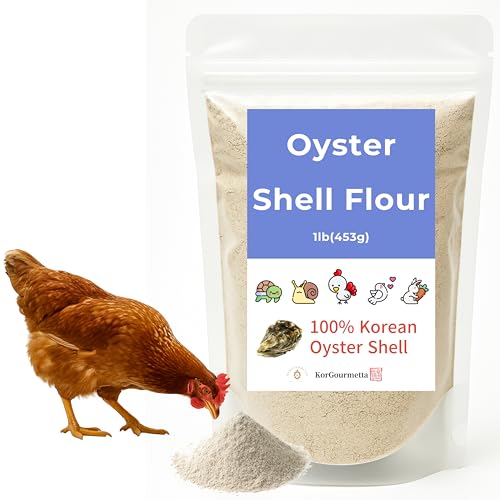
Finely Ground Oyster Shell Flour – Processed to a soft, flour-like texture that mixes well with common animal feed systems.
Trace Minerals, Electrolytes, and Supplementation
Three trace minerals—zinc, manganese, and copper—play indispensable roles in maintaining eggshell integrity and skeletal health throughout your laying flock’s production cycle. Manganese deficiency produces thinner shells due to altered organic matrix structure, while copper acts as a critical cofactor for collagen and elastin crosslinking enzymes. Zinc supports carbonic anhydrase function essential for eggshell formation and immune response. Feeding your laying hens fresh sage can also help enhance their overall health due to its antimicrobial and antioxidant properties. Additionally, premium complete feeds formulated with trace minerals ensure that your hens receive the necessary nutrients for optimal performance. Cream Legbar chickens are known for their blue egg production, highlighting the importance of trace minerals in overall egg quality. A thorough understanding of pest management strategies is helpful for maintaining a healthy flock environment.
To support proper growth in laying hens, you should also consider a high-protein diet that aligns with their nutritional requirements. You’ll benefit greatly from chelated trace mineral supplementation over inorganic forms. Chelated variants demonstrate superior bioavailability, reducing excretion while improving eggshell breaking strength, particularly during late production. Trace mineral benefits extend to reduced cracked eggs and enhanced yolk and albumen mineral transfer. Enhanced laying performance with reduced mortality rates has been documented in flocks receiving properly formulated chelated trace mineral supplements.
Additionally, you must maintain proper electrolyte balance through sodium, potassium, and chloride supplementation. Grains naturally lack these macro minerals; deficiency causes behavioral issues including feather pulling and cannibalism. Strategic trace mineral and electrolyte supplementation optimizes performance during stress periods.
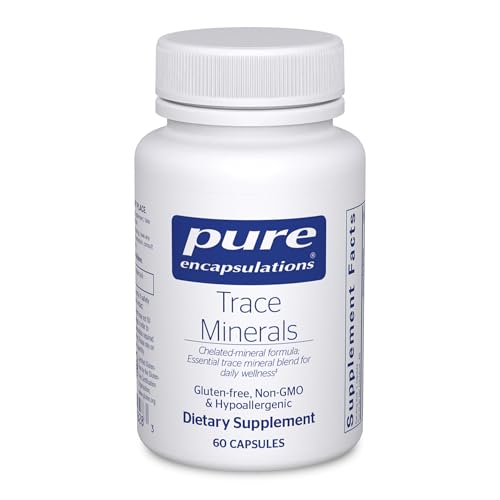
Essential Minerals: Pure Encapsulations Trace Minerals delivers a balanced combination of iodine, zinc, selenium, manganese, chromium, molybdenum, boron, and vanadium for wellness and DNA support*

Comprehensive: Provides 5 essential trace minerals

VITAL TRACE: Receive important Trace Minerals in one place now, with our Full Spectrum formula!
Environmental Factors That Impact Nutritional Needs
Beyond mineral and electrolyte balance management, you’ll find that environmental conditions—temperature, light, water quality, and ventilation—fundamentally reshape your flock’s nutritional requirements and the efficacy of any feeding strategy you implement. Temperature fluctuations directly alter metabolizable energy demands; heat stress increases electrolytic balance needs and antioxidant requirements, while cold stress elevates maintenance energy. Photoperiod variations and light intensity govern reproductive output, necessitating adjusted calcium and amino acid provisions. Additionally, introducing olive oil in moderation can support enhanced resilience to environmental stress, further optimizing your flock’s health. It’s important to remember that introducing high-quality black-eyed peas as an occasional treat can provide additional nutrients that support overall health. Furthermore, including coconut products can offer essential minerals that benefit digestion, immunity, and egg production. Humidity levels and ventilation quality interact with feed intake; poor ventilation impairs evaporative cooling, suppressing consumption. Water quality and availability critically influence nutrient uptake; inadequate supply or contamination disrupts mineral metabolism. Housing insulation and stocking density mediate thermal impacts, reducing costly dietary adjustments. Consistent access to fresh water ensures optimal nutrient absorption and prevents production drops in your laying flock. You’ll optimize layer performance by aligning feed formulation with your specific environmental parameters rather than relying on standardized protocols alone.
Measuring Success: Monitoring Production and Adjusting Diets
To optimize layer performance and profitability, you’ll need to systematically track production metrics and leverage technological monitoring tools that provide real-time flock data. Monitor hen-day production and egg weight daily to assess cycle performance. RFID technologies and machine vision systems deliver precise hen behavior tracking, achieving 95%+ detection accuracy across varying densities and lighting conditions.
Implement behavioral analysis through automated video monitoring alongside daily visual health checks to identify illness or distress early. Supplementing with natural sources like kelp or oyster shell can enhance the overall nutritional intake of your flock, supporting their health during critical periods. Record mortality rates to detect sudden spikes indicating potential issues. Advanced computer vision systems can be adapted specifically for cage-free environments where increased bird movement and natural behaviors complicate traditional monitoring methods.
Adjust your feeding strategy using production records and independent trial data measuring feed conversion and egg quality. Your lighting schedule directly influences laying windows—maintain 16-hour periods for consistent cycles. This integrated approach guarantees evidence-based nutritional modifications that maximize profitability and flock welfare simultaneously.