You’re probably wondering why Buff Orpington bantams stand out, and you’re right to ask. They’re a miniature version of the classic Buff Orpington, bred by Herman Kuhn around 1900, so they keep the same golden‑buff plumage, calm temperament, and neat single comb, but in a compact, stocky body that fits small spaces. You’ll get about 150 tiny brown eggs a year, excellent mothering, and a friendly, low‑pecking flock that’s perfect for families and shows. If you keep them dry, give each bird 4.5 sq ft indoor and 8–10 sq ft outdoor, and they’ll thrive—so you’re set for a low‑maintenance, good‑looking companion.
Where Did Buff Orpington Bantams Come From?
All right, the bantam version arrived later, around 1900, when German breeder Herman Kuhn shrank the established Buff lines. He kept the same calm temperament and buff color, giving you a compact, ornamental, yet practical bird. Like their Old English Game Bantam cousins, they possess a compact, muscular build that contributes to their hardy constitution. However, unlike the Pekin Bantam which is a true bantam breed, the Buff Orpington Bantam was developed from an existing large fowl counterpart. While they lack the heavy leg feathering of feather footed bantams, their clean legs make them less prone to mud accumulation and easier to maintain in damp conditions.
Takeaway: Buff Orpington bantams are a scaled‑down legacy of William Cook’s original English breeding program, preserving the dual‑purpose spirit in a smaller form. Next, you’ll want to see what they actually look like.
What Do Buff Orpington Bantams Look Like?
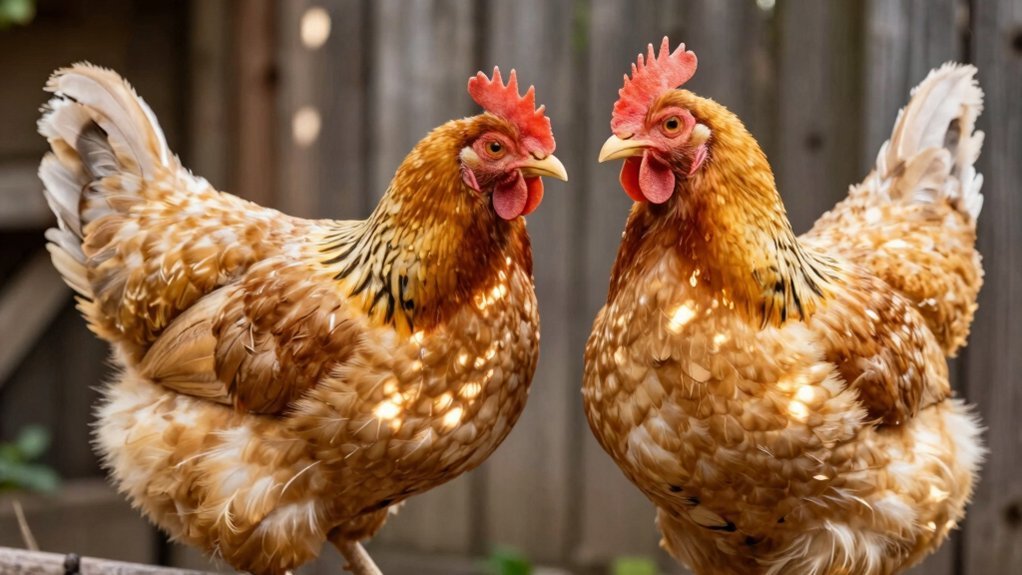
You’re probably wondering exactly how a Buff Orpington bantam looks, and that’s a great question. You’ll see a compact size that feels stocky yet adorable, with a broad, rounded body that’s heavier than most bantams. The bird’s silhouette is soft and full, thanks to dense, fluffy feathering that lies neatly against the flesh and adds feather fullness, making it appear larger than its 36‑40 oz weight.
Here’s the thing: the plumage shines in a uniform buff, ranging from warm golden to light reddish‑brown, and it stays even across the whole body, especially in good light. The single comb sits medium‑sized on a clean‑legged frame, while short legs keep the profile low and rounded. Although bantams are smaller, they share the standard breed’s trait of producing light to medium brown eggs with a friendly disposition. Developed in Orpington, England, these birds were originally bred by William Cook to be hardy and dual-purpose. While the bantam version is a miniature, the standard Lavender variety offers a striking heritage status with its unique fluffy lavender-colored plumage developed in the 1800s.
All right, you now know the visual hallmarks—compact size, feather fullness, and rich buff color—so you can imagine this charming miniature. Next, you might wonder how their temperament fits into a family setting.
Temperament Overview: Why They’re Great for Families
Why do Buff Orpington Bantams make great family birds? You’re probably wondering if their reputation matches reality. Here’s the thing: they’re calm, docile, and friendly, so you’ll enjoy relaxed interactions without the frantic pecking other breeds show. Kids can learn responsibility through supervised handling because the birds rarely bite or flap aggressively, making lessons safe and enjoyable.
How does their temperament fit a household? Obviously, they get along with other chickens, staying low in the pecking order, so you won’t need constant mediation. Their gentle nature means they love being petted, and they’ll follow you around like a quiet companion, not a noisy pest. Like other top choices for children, they possess good mothering abilities that reflect their inherently nurturing and protective instincts. Much like standard Orpingtons, these bantams are celebrated for their affectionate traits that further enhance backyard flocks. Even in colder months, their reliable laying habits ensure consistent egg production when other breeds might slow down.
Takeaway: Buff Orpington Bantams give you a low‑stress, kid‑friendly pet that encourages calm interactions and easy supervised handling. Ready to see them in your backyard? Consider how they’ll mesh with your existing flock or space.
Buff Orpington Bantam Cold‑Hardiness & Seasonal Care
If you’re wondering whether Buff Orpington bantams can survive a harsh winter, you’ve asked the right question. Their thick plumage acts like a down jacket, keeping warmth in, while small combs lower frostbite risk. However, wet feathers strip that insulation, so you must keep them dry.
How do you prevent wet feathers?
Cover runs with a roof or tarp so snow doesn’t soak belly feathers. Provide a draft‑free yet ventilated coop to stop condensation. Check roosters’ comb tips for ice buildup.
Why is dry bedding essential?
Moisture in the litter saps body heat and invites illness. Use straw or pine shavings, replace them regularly, and keep the floor raised to avoid damp ground. Since chickens have natural insulation from their feathers, most flocks rely on natural adaptations rather than artificial heat to stay warm during cold months. While these birds are resilient, prolonged exposure to cold stress can lead to reduced performance and potentially death if temperatures drop too low.
What’s the key takeaway?
Keep your bantams dry and their coop dry; then they’ll thrive through winter. Next, consider how to give them a comfortable shelter. Just as extreme cold requires management, owners must also recognize that high temperatures can cause heat stress in chickens, a potentially fatal condition where birds struggle to regulate their body heat.
Buff Orpington Bantam Housing Requirements
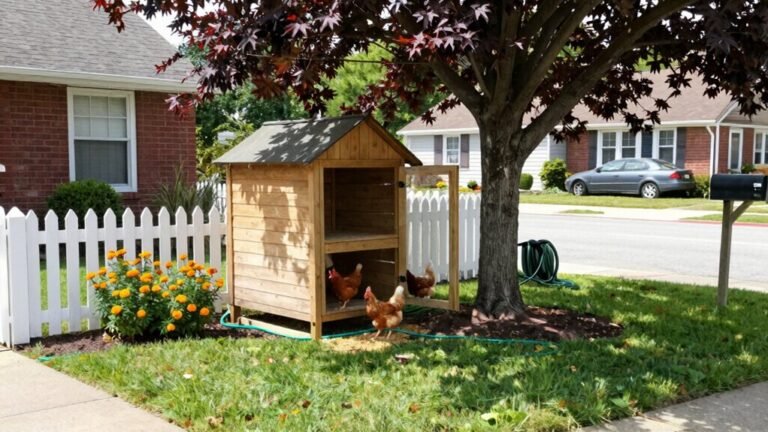
Keeping your Buff Orpington bantams dry is only half the battle; you also need a coop that gives them room to move without feeling cramped. You’re probably wondering how much space each bird really needs. Aim for 4.5 sq ft indoors and at least 8–10 sq ft in the run, so they can stroll, peck, and stretch without bumping into each other. While these bantams are smaller, remember that larger spaces are beneficial to reduce stress and health issues among hens. Although standard bantams may require less room, providing adequate outdoor run space allows you to maximize flock size comfortably within your coop dimensions. Since bantams have a strong tendency to fly and are vulnerable to aerial predators like hawks, installing a covered run is essential for their safety.
How do I design the coop layout?
Give each bird 9–10 inches of roost space, placed no higher than 20 inches off the ground. Use sturdy, low perches to prevent injury. One 12×12‑inch nest box per two hens works fine, and fill it with clean straw or shavings.
What about ventilation design and predator proofing?
Install adjustable vents high on the walls for airflow, but cover them with mesh to keep predators out. Seal gaps, use hardware cloth around doors, and add a lockable latch. This keeps drafts out while letting heat escape.
Takeaway
Provide 4.5 sq ft indoor, 8–10 sq ft outdoor, low roosts, and secure vents. Now you’ve got a safe, spacious home—next, think about how to keep your flock happy and healthy.
Buff Orpington Bantam Flock‑Dynamics Management
You’re probably wondering how to keep your gentle Buff Orpington bantams from getting pushed around by louder flock members. The key is stress reduction and equal resource access. Give each bird its own feeder and waterer, and spread them out so dominant birds can’t monopolize the spots.
Which mates are safe? Pair your buffams with other docile breeds—Silkies, Cochins, Plymouth Rocks. Avoid Rhode Island Reds and aggressive Easter Eggers that will chase them away from food and roosts.
What if the hierarchy shifts? Adding or removing birds can reshuffle the pecking order. Keep an eye on feather loss or weight drop; those are warning signs of chronic stress.
How do you keep peace? Provide plenty of space, hideouts, and visual barriers. Multiple feeding stations and quiet corners let lower‑ranking birds retreat without missing meals. Introducing multiple new hens at once rather than a single bird can also reduce bullying during the integration process. Treating any wounds promptly with bitter sprays helps discourage repeated pecking and prevents escalation. Ensuring adequate nutrition rich in protein and minerals is also essential to prevent deficiency-driven aggression.
Takeaway: Match temperaments, duplicate resources, and monitor stress indicators. Next, consider how many feeders you need for your flock size.
Breeding Basics: Ratios, Pullets, and Cockerels
How many hens should share one rooster? You’re probably wondering about the perfect breeding ratios for Buff Orpington Bantams. The usual guidance is 7 hens to 1 rooster, but many backyard keepers push it to 1:18 for smaller bantams. While lighter breeds often tolerate higher numbers, heavier varieties generally require fewer hens per male to prevent over-mating stress and injury. To maintain flock vigor and avoid inbreeding, it is essential to implement regular culling while dividing your best stock into small family groups.
What makes a good pullet? Choose healthy, near‑laying females with buff coloration, clean vents, and sturdy legs. Avoid undersized or weak birds—strong pullets boost future flock quality.
How do you pick a cockerel? Look for a calm, vigorous male with bright eyes, a clean comb, and balanced body proportions. Docile temperament beats aggression for this breed.
What about the pen? Keep a single rooster with a limited group of hens to track parentage, give 2‑4 ft roosts, and prevent overcrowding.
Takeaway: Match 7‑to‑1 ratios, select robust pullets and calm cockerels, and give them space. Next, plan your hatch schedule to keep a steady supply of replacement stock.
Egg‑Laying Performance of Buff Orpington Bantams
Here’s the thing: you’re probably wondering whether those cute Buff Orpington bantams will actually give you a steady stream of eggs. They’re good egg layers for a bantam, producing about 150 small brown eggs a year, and some reports hit 200–250. You’ll notice egg size comparisons: standard Buffs lay large brown eggs, while the bantams’ shells are tiny, creamy‑pale brown.
How long can you count on them? Laying longevity stretches through the first two to three years, with a modest start at five or six months and a gentle decline after peak years.
What affects the numbers? Flock management, stress reduction, and daylight drive output; winter doesn’t stop them, but shorter days and molting pause production.
Takeaway: Expect a modest, reliable clutch of small brown eggs for a few productive years, then plan for a slower pace. Next, think about how you’ll house them to keep stress low.
Showing Buff Orpington Bantams: Standards & Judging Tips
What should you watch for? The head must stay small and neat, the single comb firm and evenly serrated, and the beak strong and curved. Legs should be short, strong, and well‑set with four straight toes.
Here’s the thing: show disqualifications are unforgiving—yellow beak, shanks, feet, or skin instantly knock you out. Keep plumage clean, bright, and uniformly buff; any lightening near molt can cost points.
Takeaway: master the three‑area weighting, avoid any disqualifying color flaws, and present a confident, well‑conditioned bird. Next, you might wonder how to prep your bird for the ring.
Buff Orpington Bantam Practical Uses: Eggs, Shows, and Companionship
You’re probably wondering whether a Buff Orpington bantam can really serve a purpose beyond looking cute.
Do they lay enough eggs for a small kitchen?
Now, here’s the thing: a bantam hen lays tiny, light‑brown eggs—maybe a dozen or so a year, far fewer than the 170‑280 eggs a full‑size Orpington produces. Obviously, the utility limitations make them unsuitable if you need a steady supply, but for hobbyists who enjoy occasional fresh eggs, they work fine.
Can they win a show?
All right, their compact size, fluffy plumage, and historic color varieties make them exhibition stars. Judges love the ornamental appeal, and you’ll often see them dominate backyard poultry shows.
Are they good companions?
You’ll find them docile, kid‑friendly, and easy to house in limited spaces, which eases homestead considerations. Their calm temperament turns any flock into a pleasant, low‑maintenance pet.
Takeaway: Buff Orpington bantams excel in shows and companionship, while egg production stays modest. Ready to add a charming, low‑maintenance bird to your flock?