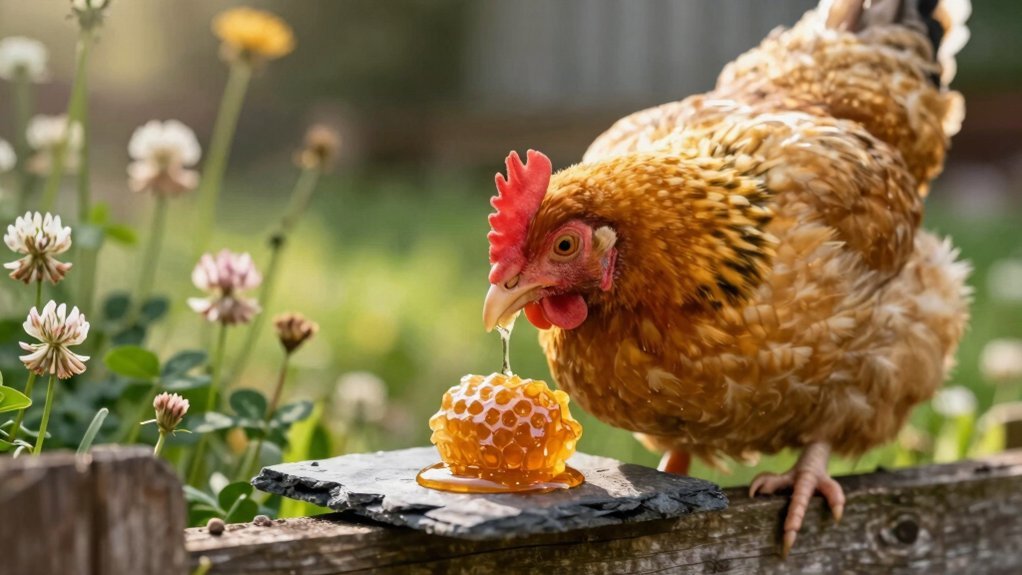
You’re right to wonder if honey’s safe for chickens; it can be a handy occasional treat if you keep the dose tiny and choose raw, unprocessed honey. Give a laying hen about 5–7 mL (one tablespoon) a couple of times a week, never more than 10 % of daily calories, and watch for watery droppings or lethargy. Too much sugar dilutes nutrients and can cause weight gain or digestive upset, so stick to short‑term use and monitor your flock’s health. This quick guide clears up the basics, and the next sections will show you how to mix honey safely and spot intolerance signs.
Can Chickens Safely Eat Honey?
Can Chickens Safely Eat Honey? You’re probably wondering if that golden drizzle will harm your flock. Here’s the thing: honey isn’t toxic, and a spoonful gives quick glucose for a tired hen. However, beekeeping hazards—like accidental bee stings or parasites—mean you shouldn’t let chickens chase live hives, and commercial adulteration can introduce unwanted sugars or chemicals.
Now, treat honey as an occasional treat, not a staple. A teaspoon mixed into feed once a week supplies energy without displacing balanced nutrition. Overfeeding leads to loose droppings, weight gain, and even fatty liver disease. Remember that offering too many sweet treats can cause nutrient dilution, so always prioritize a complete diet tailored to your flock’s life stage. Since adult birds typically require approximately 120 grams daily of quality feed to maintain health, ensure sugary snacks do not reduce their intake of this essential base amount. Providing supplemental calcium like oyster shells remains critical for laying hens to ensure strong eggshells regardless of occasional sweet treats.
All right, keep portions tiny, watch for digestive upset, and you’ll enjoy the sweet boost safely. The next step? Check which honey sources avoid adulteration and stay clear of live bees.
Honey also provides natural antimicrobial properties that can help maintain gut health.
Quick Safety Checklist for Feeding Honey to Chickens
If you’re wondering whether a splash of honey could help your flock without causing trouble, you’ve asked the right question.
What honey is safe?
Use plain honey only—no xylitol, artificial sweeteners, flavorings, or medication. Skip honey‑based syrups for people; they often contain poisonous ingredients. Discard any honey that looks moldy, fermented, or contaminated.
How much and how long?
Mix 10–20 mL per liter of water, occasionally up to 26 mL. Keep it short‑term—four weeks on, two weeks off. Too much sweet water can deter drinking and cause water spoilage.
What to watch for?
Check for cloudiness, bubbling, sour odor, or sliminess. Clean drinkers thoroughly after each batch. If birds drink less, get sticky beaks, or show lethargy, stop immediately and revert to plain water. Just as walnut shells pose a choking hazard to chickens, sticky residues from improper feeding can also create health risks if not managed carefully. Remember that avoiding toxic foods like chocolate, avocado, and raw beans is equally critical to maintaining a healthy flock alongside safe treat practices. Feeding items containing compounds like cyanide found in apple seeds can be fatal, so vigilance extends beyond just the treats you intentionally offer.
Takeaway: Stick to plain honey, dose conservatively, replace daily, and monitor for spoilage. Next, decide whether to try a short trial during a heat wave.
Energy and Antioxidant Benefits of Honey for Chickens
Why does honey boost a chicken’s energy and protect it from stress? You’re probably wondering if that sweet splash really fuels a bird. The simple sugars—glucose and fructose—jump straight into ATP production, giving a rapid lift when chickens face heat, laying, or transport. Adding about 20 mL per litre of water can cut panting and heart rate, showing honey eases stress physiology.
How does honey help antioxidant defenses? Its polyphenols and flavonoid‑like compounds act like tiny shields, lowering oxidative stress during rapid growth or hot days. Studies note a 0.1 % polyphenol level boosts serum antioxidant enzymes, supporting metabolic performance without changing feed texture. Research indicates that similar sugar sources can safely replace part of the energy in poultry diets without harming growth or liver function. Just as brewer’s yeast supplies essential B-complex vitamins to support overall wellness, honey provides complementary nutrients that aid in metabolic efficiency and disease resistance. Much like turmeric acts as a natural antibiotic to improve immune function and disease resistance in chickens, honey’s antimicrobial properties can further support flock health against pathogens.
Takeaway: A low‑dose honey boost in water supplies quick energy and antioxidant support, improving heat tolerance and overall performance. Next, consider how you might test a small honey addition in your flock’s water. Adding honey also increases activity of beneficial gut bacteria, further enhancing nutrient utilization.
How Honey for Chickens Supports Immune and Gut Health
You’re probably wondering how honey goes from a quick‑energy snack to a real immune booster for your flock.
How does honey act as an immune system booster?
Here’s the thing: honey given in‑ovo or after hatch raises anti‑NDV antibody titers and enlarges the spleen by 22‑29 %. Bigger spleens mean more lymphoid tissue to churn out antibodies, so your birds fight vaccines and infections better. Mortality drops after Newcastle disease shots when you add 10 % honey to water for 28 days. Similar to how natural antibacterial properties in oregano oil help reduce infections without antibiotics, honey provides a complementary natural defense mechanism for your flock. Just as antiparasitic properties in oregano help prevent common illnesses, honey supports overall flock resilience through its own unique bioactive compounds.
What about gut health?
All right, honey’s prebiotic‑like polysaccharides feed good bacteria. Lactobacilli surge, while E. coli and Salmonella fall dramatically. sIgA levels climb, strengthening the intestinal barrier and mucosal defense. This microbial balance improvement also boosts diversity, swapping Proteobacteria for Bacteroidetes.
Takeaway: Honey serves as a dual‑action supplement—immune system boosters and gut microbiome support—helping your chickens stay healthy and resilient. Just as dried mealworms provide essential vitamins and minerals to boost overall health and the immune system during molting, honey offers a complementary layer of protection for your flock. Next, you might wonder about ideal dosing and timing.
Potential Digestive and Metabolic Side Effects of Honey
Honey can turn a sweet treat into a digestive upset if you overdo it. You’re probably wondering why a tiny drizzle can cause watery droppings. The answer lies in honey’s concentrated sugars: they pull water into the gut, creating osmotic shifts that loosen feces and may even slow crop emptying. This mechanism mirrors how heat stress leads to excessive water intake and impaired intestinal water absorption, resulting in watery feces. While diet often explains color changes, such as when red cabbage produces a bright blue tint, persistent abnormal droppings alongside sugar-induced looseness could signal deeper health issues like infections. Overfeeding sugary scraps can also harm egg production and overall bird wellbeing by displacing the balanced diet required for optimal flock health.
How does honey affect blood sugar?
Because honey mimics fructose and glucose, it spikes your flock’s blood sugar quickly. Frequent high‑sugar feeds add metabolic strain without protein, calcium, or phosphorus, so birds can gain unwanted weight and miss essential nutrients.
What about overall diet balance?
A spoonful adds calories but no real nutrients, so it can displace nutrient‑dense feed and dilute mineral intake—especially risky for chicks and layers.
Takeaway: Use honey sparingly, monitor droppings, and keep it a treat, not a staple. Next, consider how much honey is safe each day.
Recommended Daily Honey Dose for Chickens
When you wonder how much honey you can safely give your chickens, the answer hinges on their size, purpose, and how often you feed it. The key is dose variability and administration timing. For an average laying hen, aim for about 1 – 1.5 tablespoons per day, which translates to roughly 5 – 7 mL of honey mixed into water or feed. If you’re raising broilers, research shows 13 – 26 mL per liter of water works, but the best results come from giving 26 mL once every three days rather than daily. Now, think of honey as a treat, not a staple. Limit total honey to under 10 % of the bird’s calorie intake, and rotate a two‑week on/off schedule for layers during heat stress. Avoid continuous daily dosing; instead, offer it a couple of times per week. Just as with pumpkin seeds that naturally deworm chickens, moderation ensures treats remain beneficial rather than harmful. Remember that treats and extras should generally be limited to about 10% of the diet to ensure hens remain healthy and productive. While treats like honey provide energy, hens require a complete layer feed formulated with balanced protein and calcium to maintain year-round egg production. The takeaway: keep the amount modest, space out the feedings, and watch your flock’s energy levels. Ready to try a simple water‑mix trial?
Best Honey Types and Preparations for Chickens
You’re probably wondering which honey will actually benefit your chickens without turning the feeder into a sticky mess. Here’s the thing: raw, unprocessed honey tops the list because it keeps enzymes and antioxidants intact. Look for medical grading labels and seasonal harvesting notes on the jar to verify the beekeeper didn’t heat‑process it.
Which honey works best in a feed mix? Light‑flavored clover or acacia stay liquid longer, so you can drizzle a teaspoon without clumping. Tupelo resists crystallization, making it easy to spread evenly.
What should you avoid? Heavily processed supermarket honey loses most of its bioactive compounds, and dark, strong varieties like buckwheat may turn off picky birds.
Takeaway: Choose a single‑ingredient, locally sourced raw honey with medical grading and recent seasonal harvesting for the safest, most effective boost. Next, consider how much to give each day. Just as precise dosing is critical when administering ivermectin pour-on treatments to avoid toxicity, honey should also be offered in strict moderation to prevent digestive upset. Always ensure treats are free from harmful additives like salt or spices, similar to how you would prepare safe kitchen scraps for your flock.
How to Mix Honey Into Water or Feed Without Overfeeding
How do you keep honey from turning a simple drink into a sugary overload? You’re right to wonder—too much sweet water can curb a chicken’s normal intake. Start with proven water ratios: 1 quart warm water, 3 tsp raw honey, 1 tsp apple cider vinegar, and a crushed garlic clove. Warm water dissolves honey fully, so you avoid clumps that birds reject.
Now, here’s the thing: use a mixing method that lets the honey spread evenly. Stir the honey into the warm water, add the vinegar, then let the blend steep for a few hours. For larger batches, halve the gallon recipe to match daily consumption and prevent waste.
All right, keep plain water available alongside the honey mix. This simple step guarantees birds can choose, preventing overfeeding while still getting the boost you intended. Takeaway: measured water ratios, gentle stirring, and offering plain water keep honey a helpful supplement, not a sugary trap. First drink after travel‑induced dehydration helps rehydrate chicks before regular water with apple cider vinegar is introduced.
Signs Your Chickens Aren’t Tolerating Honey (What to Do)
Honey can sound like a harmless boost, but if your chickens start ignoring their feed, you’ve probably hit a tolerance issue.
Why are they refusing the honey?
You’ll see reduced appetite, pecking once and walking away, or a whole bowl left untouched. That early warning often precedes weight loss and weaker immunity.
What does their droppings tell you?
Watery droppings or diarrhea appear when sugar overload overwhelms their gut. Persistent looseness signals honey allergies or honey spoilage, and dehydration risk rises quickly.
How does their energy level change?
Lethargy, fluffed‑up posture, and inactivity mean they’re crashing after the sugar surge. If they seem dull or slow, stop the honey and give fresh water.
When should you act?
If open‑mouth breathing, coughing, or yellow throat material shows up, isolate the bird and call a vet.
Takeaway: Stop honey at the first sign of appetite loss, watery droppings, or weakness, hydrate, and return to a balanced diet. What’s your next move to keep the flock healthy?
Daily observation helps catch these early signs before they become serious.
Special Feeding Tips for Chicks, Sick Chickens, and Overweight Hens
If you’re wondering why a tiny chick, a sick hen, or a plump layer each needs a different feeding plan, you’ve hit the right spot.
How do I feed newborn chicks?
Offer clean water right away; dehydration hits fast. Warm water (around 90 °F) helps a tiny honey dose dissolve, making the first two days easier. Use beak‑dipping to teach the source, then switch to plain starter feed. Remember age considerations—treats stay minimal until they’re a week old.
What should I give a sick chicken?
Warm sweetened water can coax drinking when appetite drops, but it’s a short‑term aid, not a cure. Keep fresh water available, isolate the bird, and keep feeding a balanced diet.
How can I manage an overweight hen?
Cut calories, not honey. Stick to measured layer feed, limit treats, and encourage foraging.
Takeaway: Tailor water temperature and nutrition to each bird’s age and health. Next, monitor intake and adjust as they grow.