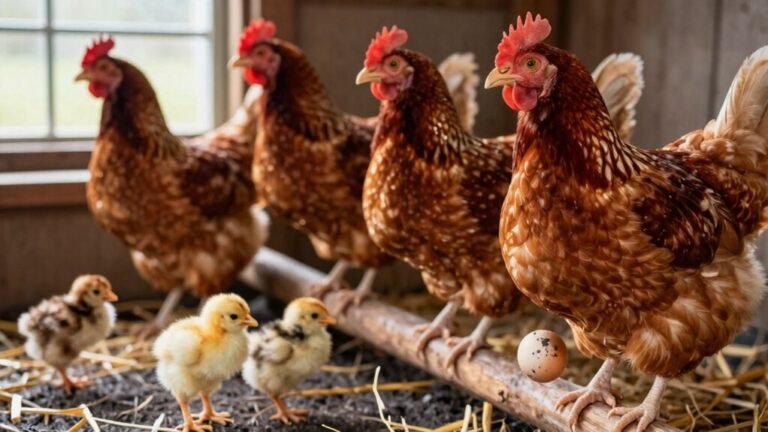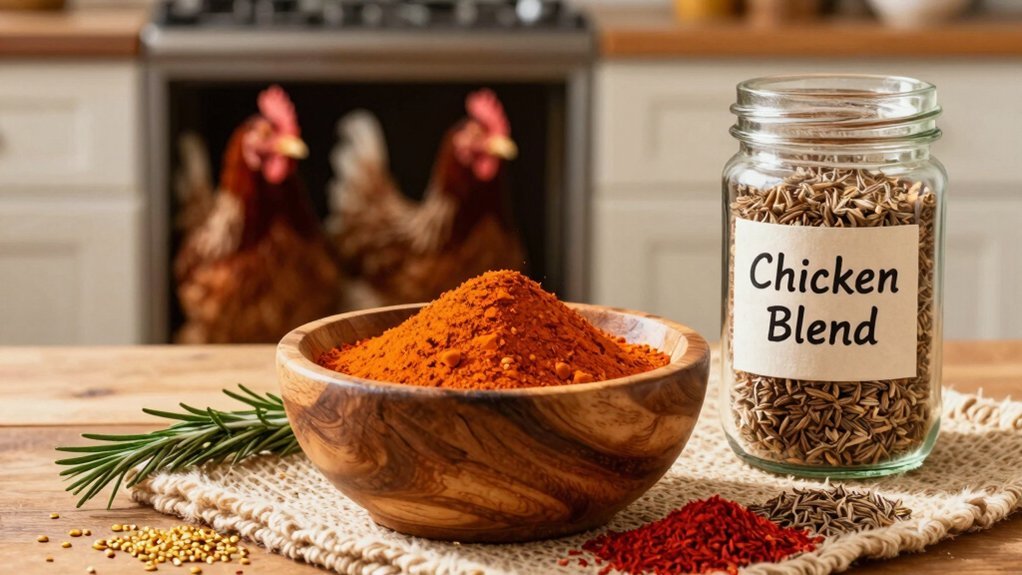
You’re probably wondering which spices actually help chickens without turning their feed into a medicine cabinet, and you’re on the right track. Oregano and thyme (½ tsp each per bucket) act like natural antiseptics for the respiratory tract, garlic (½ tsp per 10 lb feed) gives antiviral punch, and a pinch of cinnamon (≤ ½ tsp) supports blood sugar and gut health; add turmeric with a dash of black pepper for anti‑inflammatory power. Use dried herbs in tiny amounts—under a gram per bird—to keep appetite steady, rotate weekly, and you’ll see a healthier flock. Keep reading for simple DIY mixes and safety tips.
How to Add Spices to Chicken Feed
How do I actually mix spices into the feed? You’re probably wondering how to keep the blend even without upsetting your birds. First, choose culinary‑grade herbs—oregano, basil, thyme, a pinch of cayenne. Store them dry in airtight jars. Then crush dried herbs to a fine texture; fresh herbs get chopped finely. Sprinkle the powder lightly over a bucket of feed, then use a sturdy shovel or a large spoon to turn the mixture for at least two minutes. This processing steps guarantee no clumps form and every bite contains a hint of flavor. The capsaicin found in cayenne acts as a natural circulatory stimulant that can help improve blood flow and keep your flock warm during cold weather. Beyond warming effects, incorporating turmeric serves as a natural antibiotic alternative that supports immune function and digestive health without adverse effects when dosed carefully. Thyme can also be offered as an herbal tea to help reduce stress in chickens while preventing parasites.
Now, safety monitoring kicks in. Wear gloves when handling hot spices, keep the area well‑ventilated, and watch the flock for reduced appetite or selective pecking. If you see any change, cut the amount in half and try again. Takeaway: start small, mix thoroughly, and monitor birds closely. Next, decide whether you’ll add the blend daily or just once a week.
Spices can irritate or kill internal parasites.
Top 5 Immune‑Boosting Spices for Chickens
You’ve just figured out how to keep a spice blend even in the feed, and now you’re wondering which spices actually help your flock stay healthy.
Which spice gives the strongest probiotic support? Oregano tops the list. Its antibacterial and antioxidant punch protects gut flora, especially when you add a pinch each week. Use it as seasonal supplementation during winter stress. Chickens will happily consume fresh oregano leaves directly from the garden or coop area to support their immune health naturally. The powerful compounds carvacrol and thymol found in oregano oil work synergistically to improve intestinal health and boost natural antibody production without relying on antibiotics.
What spice can you safely give often without overdoing it? Garlic offers antiviral and antibacterial benefits, but keep doses tiny—about ½ teaspoon per 10 pounds of feed—to avoid digestive upset. Research confirms that natural antimicrobial agent properties in garlic create an environment hostile to parasites and bacteria while remaining safe for regular consumption.
Which herb balances respiratory and digestive health? Thyme delivers antiparasitic and antioxidant effects, making it a solid all‑rounder for cold‑weather months.
What spice adds anti‑inflammatory power? Ginger‘s antioxidant profile supports immune function and eases stress, perfect for occasional winter boosts.
Which spice rounds out the immunity toolkit? Turmeric provides broad antimicrobial action and pairs well with other spices for thorough flock resilience.
Takeaway: Rotate these five spices, adjusting amounts for season, and watch your chickens thrive. Ready to plan your next seasonal supplementation schedule?
Pair Turmeric & Black Pepper for Anti‑Inflammation
If you’re wondering why turmeric alone isn’t a magic bullet for inflammation, the answer lies in how your birds actually absorb it. The curcumin in turmeric triggers anti‑inflammatory mechanisms by dialing down NF‑κB and COX‑2 activity, but without piperine it stays mostly in the gut.
Why pair black pepper with turmeric?
Here’s the thing: piperine boosts curcumin’s bioavailability enhancement up to threefold, letting more of the compound hit the bloodstream. That means your chickens get stronger suppression of IL‑1, IL‑6, and TNF, and better antioxidant protection.
What does the combo do for digestion?
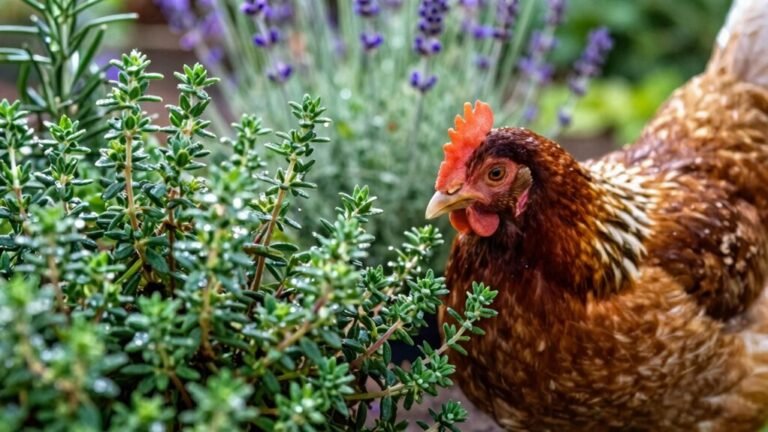
All right, black pepper also nudges pancreatic enzymes—lipase, amylase, protease—so nutrients break down faster. Better digestion supports feed conversion and growth, especially under heat stress. While dietary spices support internal health, incorporating herbs like rosemary and lavender into nesting boxes can further reduce stress and repel pests to promote overall flock wellness. Chickens generally avoid fresh lavender due to its strong scent, so they often prefer dried lavender which still offers calming benefits and helps stabilize blood pressure. Just as certain herbs aid internal systems, fresh rosemary provides neurological support and liver protection when introduced gradually to the diet.
Takeaway
Use a modest mix of turmeric and black pepper to release curcumin’s full anti‑inflammatory power and improve gut health. Next, consider how you’ll incorporate the blend into your feed schedule.
Use Oregano & Thyme for Respiratory Health
Why you’re hearing about oregano and thyme for chicken lungs
You’re probably wondering how herbs can actually help your flock breathe easier. Here’s the thing: oregano’s carvacrol and thymol, plus thyme’s strong aromatic compounds, act like natural antiseptics and expectorants, cutting down E. coli and Salmonella load in the airways. Oregano is frequently noted for its anti-parasitic properties, helping protect chickens from illnesses like avian flu and coccidiosis while supporting respiratory function.
How do you apply them?
Mix a pinch of dried oregano or thyme into feed daily, or offer fresh cuts as a treat. For a stronger boost, try poultry aromatherapy: diffuse a few drops of diluted essential oil in the coop, or use essential oil nebulization to mist the air during dusty periods.
What should you watch for?
Only use modest amounts—over‑concentration can irritate mucous membranes. Keep an eye on any birds showing inflammation and adjust the dose.
Takeaway: Consistent, low‑dose oregano or thyme supports immune health and clears mucus.
Next step: Have you tried a simple herb‑infused water regimen yet?
Oregano and thyme also help to restore the gut microbiome balance after antibiotic use. These powerful herbs work alongside other natural additives to fight harmful bacteria and prevent common diseases without relying on synthetic antibiotics. Just as red pepper flakes offer mild natural antibiotic effects to support flock health, these aromatic herbs provide a complementary layer of protection against pathogens.
Why Cinnamon Helps and Safe Dosage?
Now, about safe dosage. Most backyard guides cap it at about ½ teaspoon per bird daily—roughly 1 % of a mixed diet in research. Water mixes can go up to 5 g per liter, but you must watch flavor enhancement and palatability considerations; too much can make feed unappealing. Cassia varieties contain coumarin, so keep it moderate. Favoring Ceylon cinnamon reduces toxicity risks due to its naturally lower coumarin content while still providing anti-fungal and digestive benefits. Just as chickens require fresh water constantly to maintain health, ensuring spices are introduced alongside adequate hydration supports overall digestive function. Without access to water, chickens face a drastically reduced survival window of only 12 to 48 hours depending on the ambient temperature.
Takeaway: A modest sprinkle improves health without hurting taste. Next, try measuring a half‑teaspoon per bird for a week and note any changes in appetite or egg production.
Garlic & Mint for Parasite Deterrence – Dosage Tips
How much garlic and mint should you actually use? You’re probably wondering why the dosage feels like a guessing game. Here’s the thing: for water, crush about a quarter of a clove per bird and give it for a few days after the starter phase; that’s roughly 2.5 mg of allicin per chicken, enough to keep worms at bay without killing palatability. For feed, mix 1 g of garlic powder per kilogram of mash, or 0.5 g/kg if heat stress hits—think of it as a sprinkle of seasoning, not a bulk ingredient.
Mint works best as a living barrier. Plant a few pots around the run and rotate the herbs seasonally; fresh leaves release menthol that repels mites and rodents. When you choose a breeder, pick one that already incorporates mint in its yard design—this breeder selection saves you the extra planting step.
Takeaway: Use garlic sparingly in water and feed, and let mint grow around the coop, swapping it out each season. Next, test the water for a week, then observe any drop in parasite counts.
Fresh vs. Dried Herbs: When to Use Each
If you’re wondering whether to toss fresh herbs into the feed or keep a jar of dried ones on the shelf, you’ve hit the right spot. Fresh herbs bring high water content differences, so you need more volume to match the aroma of dried herbs. Their herb concentration factors are low, making them perfect for short‑term treats or garden‑run foraging. While dried forms are safe, fresh dill provides the most nutritional benefits including vitamins, minerals, and antioxidants that support digestive and immune health.
All right, dried herbs pack a punch. Because they’re dehydrated, herb concentration factors rise dramatically, and a pinch—about ¼ tsp per pound of feed—delivers the same effect as a handful of fresh. They store well, resist mold, and work great in dust baths or nesting boxes. You can even place dried mint in nesting areas to repel parasites naturally while keeping chicks healthy. Incorporating herbs like lavender and thyme into dust baths can also create a calming environment that reduces stress in your flock.
Here’s the thing: use fresh when you have pesticide‑free greens on hand and want a quick, moist boost; switch to dried for consistent dosing, longer shelf life, and when you need to sprinkle aroma throughout the coop. Your takeaway: match the form to the task, and you’ll keep your flock healthy without waste. Next, decide which herbs you’ll grow or buy, then plan a simple rotation schedule.
herbs can act as natural dewormers when incorporated into feed.
Simple DIY Spice Mixes for Daily Feed
You’re probably wondering how to turn a handful of dried herbs into a daily feed boost without over‑complicating things.
Which herbs should I mix?
Start with a dry sprinkle blend: crumble ½ tsp oregano, ½ tsp thyme, ¼ tsp parsley, and a pinch of basil. That amount stays under a gram per chicken, preserving normal intake while delivering nutrient optimization.
How do I keep it fresh year‑round?
Rotate the mix weekly—swap basil for dill in summer, add a dash of rosemary in winter. Seasonal adaptation prevents over‑reliance on one spice and keeps gut microbes happy. Just as kitchen scraps should only supplement a balanced complete layer feed rather than replace it, these spice blends work best when added to a nutritionally complete diet. Incorporating these natural additives supports overall flock health alongside a quality layer feed containing 16–20% protein.
What’s the simplest way to apply it?
Sprinkle the blend over the morning ration, or stir it into a small portion of feed as a top‑per. You’ll see a subtle flavor boost without reducing feed consumption.
Takeaway: a modest, rotating herb blend offers steady health benefits. Next, test a week of the sprinkle method and note any changes in egg yolk color or flock vigor.
Chicken‑Specific Herb Safety Checklist
What should you watch for when adding herbs to your flock? You need preventive integration and species verification before you toss anything into feed or coop. First, confirm each plant’s identity—mistaking wormwood for rosemary can poison your birds. Then, start with a pinch, like a quarter teaspoon per ten chickens, and watch for irritation or appetite loss.
How do you keep toxic plants out? Store herbs in sealed containers, keep wild bracken, ground ivy, and hemlock away from foraging zones, and rotate safe herbs—oregano, thyme, parsley—every two weeks to avoid overreliance.
What’s the quick check after you introduce a new herb? Observe your chickens for a day; if they puff up, stop eating, or show lethargy, remove the herb immediately. The takeaway: verify species, use moderation, and monitor response. Next, try a simple dust‑bath blend and note how they react.
Troubleshooting Common Spice‑Feed Issues
Why does my flock stop eating after I add a new spice? You’re probably dealing with dosage confusion or sudden flavor shock. First, check your measurements: most studies recommend 5–20 g of herb per kilogram of feed, which translates to about 1–2 teaspoons per kilo for dried spices. Adding a kitchen‑handful can make the feed taste bitter, so birds skip it. Herb dosage should stay within the 0.5%–2% range to avoid health issues. All right, heat stress can turn any additive into a dehydration hazard. When temperatures climb above 90 °F (32 °C), cut the spice or boost water stations. Birds will drink more and stay calmer, keeping intake steady. Here’s the thing: powdery spices love moisture and cause feed clumping. Store additives dry, mix them into a small batch of feed first, and watch for mold. If clumps appear, discard that batch and re‑mix. Takeaway: measure precisely, adjust for temperature, and keep the feed dry. Next, try a tiny trial—one teaspoon per kilo for a week—and record appetite changes before scaling up.