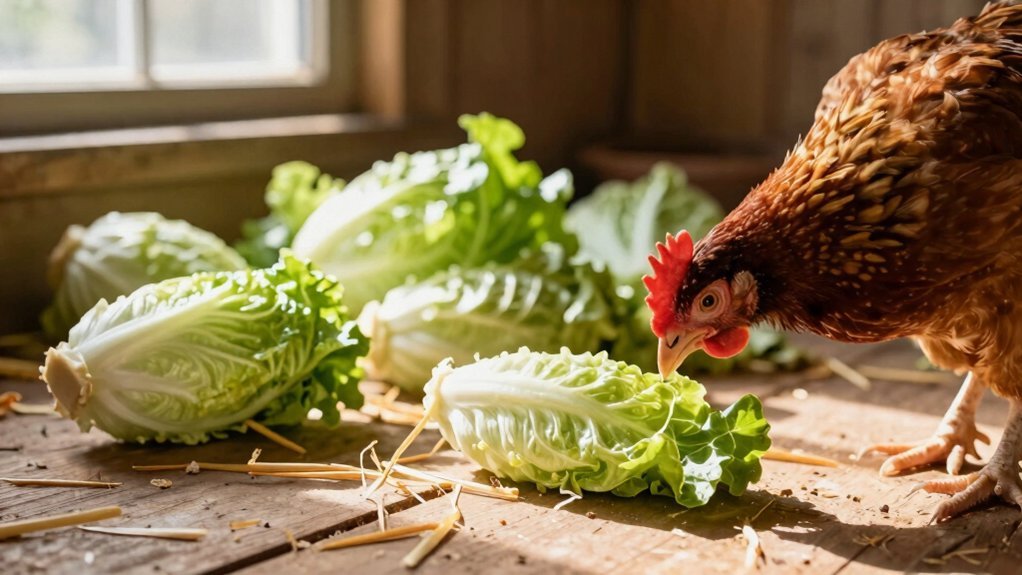
You’re right to wonder if iceberg lettuce is a good snack for your chickens—yes, they can eat it, but only in tiny, occasional bites. Because it’s about 95 % water and offers almost no calories, vitamins, or protein, it behaves like a high‑water filler rather than a nutrient source, so feeding more than a couple of tablespoons a week dilutes their balanced feed and can cause loose droppings. Stick to a few bite‑size pieces once or twice weekly, pair them with richer greens, and you’ll keep your flock happy and healthy.
Can Chickens Eat Iceberg Lettuce? Quick Answer
If you’re wondering whether iceberg lettuce belongs in your chickens’ diet, you’ve hit the right spot. You’re probably asking if it’s safe and worthwhile. The quick answer: yes, you can feed iceberg lettuce, but only in tiny, occasional servings.
Here’s the thing: lettuce is mostly water, so its nutritional value is low. Offer a few leaves once a week, not daily, to avoid upsetting digestion. Hand‑feed or hang a head to encourage pecking and reduce waste. Watch droppings; loose stools signal you’ve over‑fed. While lettuce offers hydration, remember that sweet potatoes are safe and beneficial treats unlike white potatoes which contain harmful solanine. All right, keep it simple: treat lettuce as a hydrating snack, not a staple. The takeaway? Use it sparingly, monitor your flock, and stick to a balanced feed for real nutrition. Be sure to serve the greens fresh and unseasoned to prevent health issues caused by salt, sugar, or oils. Unlike white potatoes that carry toxic risks, sweet potatoes belong to a different plant family and pose no such dangers to your flock.
Why Is Iceberg Lettuce Low in Nutrients for Chickens?
You’re probably wondering why that crisp iceberg lettuce you tossed to your flock doesn’t pack a nutritional punch. The plant breeding behind iceberg lettuce focuses on crisp texture and long shelf life, not on vitamin or protein content. Commercial cultivation selects varieties that stay watery and flat, leaving only about 5 % of the weight as anything but water.
That’s means you give your chickens a bulk‑filled snack with almost no protein, energy, or essential minerals. Compared with kale or romaine, iceberg supplies a fraction of vitamin A, calcium, and iron—nutrients chickens need for strong feathers, eggshells, and growth. The fiber is modest, and phytonutrients are scarce, so the lettuce can’t replace a balanced ration. Unlike nutrient-dense options such as leafy greens like kale, which support overall bird wellness, iceberg lettuce offers minimal health benefits. Since a healthy flock requires a diet centered on quality layer feed containing 16-18% protein and adequate calcium, relying on watery vegetables can dilute the essential nutrients needed for egg production and feather development. To ensure your birds receive proper nutrition without synthetic additives, consider incorporating organic feed options which promote cleaner health and better egg quality.
Takeaway: Iceberg lettuce is fundamentally a high‑water filler, not a nutrient powerhouse. Offer it sparingly and pair it with darker greens for real benefits. What’s the next best veggie to boost your flock’s diet?
What Digestive Problems Can Over‑Feeding Iceberg Lettuce Cause?
What digestive problems can over‑feeding iceberg lettuce cause? You’ll see loose droppings within a day because the high water content acts like a mild laxative. The sudden surge of watery treats upsets gut balance, so stool softens and you may notice “poo‑y bum” around the vent. This mess can soil feathers, attract flies, and hurt coop cleanliness, making it harder to spot other health issues.
Now, the lettuce crowds out the balanced ration, leading to feed reduction of essential protein, calcium, and energy. Birds fill up on water‑rich lettuce, so they eat less of the nutrient‑dense feed, which can weaken body condition over time. Additionally, this dietary imbalance can disrupt intestinal water absorption, further contributing to the production of watery feces. Remember that scraps should only serve as a supplement to a complete layer feed rather than replacing it entirely to avoid these nutritional gaps. Prioritizing dark leafy vegetables like kale and chard instead ensures better yolk quality without the excessive moisture.
Here’s the thing: short‑term diarrhea is usually diet‑related, but if watery droppings persist beyond a couple of days, you should investigate parasites or spoiled feed.
Takeaway: keep lettuce under 10 % of the diet, monitor droppings, and maintain coop cleanliness. Next, consider which leafy greens give you more nutrients without the watery side‑effects. Over‑feeding can also cause fatty liver and lead to severe health complications.
Better Leafy Greens Than Iceberg Lettuce for Chickens
When you wonder why iceberg lettuce isn’t the best treat, you’re actually on the right track. Darker greens pack more vitamins and minerals, so they make far better salad alternatives for your flock. Romaine, kale, and cabbage each deliver higher A, C, and K levels, and they boost yolk color with pigment‑rich nutrients.
What greens should you add as foraging supplements? Try Swiss chard, beet greens, or turnip greens for calcium and magnesium, and sprinkle in spinach, broccoli leaves, and bok choy for variety. Even wild edibles like clover or chickweed work as natural foraging treats. Like mustard greens, these vegetables provide valuable vitamins when introduced gradually to avoid upsetting a chicken’s digestive system. However, because spinach contains high oxalic acid that can bind with calcium and inhibit absorption, it should only be offered in very small, occasional amounts to prevent soft-shelled eggs.
The takeaway: swap iceberg for nutrient‑dense dark leaves, keep portions small, and rotate varieties to keep chickens healthy and curious. Next, consider how to prep these greens safely. To prevent choking hazards, always ensure these vegetables are chopped or mashed into small pieces before offering them to your flock.
How Should You Prepare Iceberg Lettuce for Your Flock?
Iceberg lettuce can be a revitalizing snack for chickens, but you’ve probably wondered how to get it safe and appealing for them. How do you clean it? Wash each head under cool running water, rub away dirt, then pat dry. Remove any slimy, brown, or wilted outer leaves and inspect the core for mold or insects. These food safety tips keep pathogens out and prevent digestive upset. How should you cut it? Tear or chop the lettuce into bite‑sized pieces—think chicken‑friendly strips, not whole heads. Smaller chunks reduce competition, help younger birds peck comfortably, and lower the risk of swallowing large pieces. What temperature works best? Offer room‑temperature lettuce for daily feeding; a few chilled pieces on hot days give extra hydration, but avoid ice‑cold or frozen lettuce that can deter pecking. How often should you serve it? Treat lettuce as an occasional snack, not a meal. Pair it with complete feed to maintain dietary balance considerations, and remove leftovers promptly to avoid spoilage and pests. Remember that overfeeding treats can lead to nutrient dilution, so always prioritize their main feed. Providing access to grit alongside treats supports proper digestion and overall chicken health. While treats are enjoyable, the best practice is to offer unlimited access to a complete feed to allow chickens to eat according to their needs and reduce pecking order conflicts. Takeaway: Clean, cut, and serve lettuce in moderation, using simple food safety tips and dietary balance considerations to keep your flock happy and healthy. Next, ask yourself how many treats fit into a safe daily ratio. The chickens are especially excited when a treat activity like lettuce tetherball is introduced.
What Is a Safe Treat Ratio for Iceberg Lettuce?
You’re probably wondering how much iceberg lettuce you can safely give your chickens without upsetting their diet. The 90/10 rule says treats stay under 10 % of total intake, so for a laying hen that eats about a half‑cup of feed a day, you should cap all treats at roughly two tablespoons. That means iceberg lettuce should appear only as an occasional snack, not a daily staple.
Now, serving frequency matters: give a tiny piece once or twice a week, not a handful every day. A nutritional comparison shows darker greens—kale, romaine, collards—pack far more vitamins and minerals, so keep lettuce to a low‑impact role. Since excessive treats can dilute the essential nutrients found in balanced feeds required for egg production and health, it is vital to prioritize their main diet over snacks. Incorporating hanging snack dispensers with vegetables encourages natural foraging behaviors while helping you manage treat portions effectively. Just as broccoli contains compounds that support immune health, selecting treats with higher nutritional value ensures your flock avoids issues like reduced egg production.
All right, the takeaway: limit lettuce to 1–2 Tbsp per bird per day, stay under the 10 % treat ratio, and prefer nutrient‑dense greens for regular treats. Next, decide which richer greens you’ll rotate in to keep your flock thriving.
How to Use Iceberg Lettuce for Hydration & Enrichment
Sounds like you’re wondering how to turn iceberg lettuce into a cool, hydrating treat that also keeps your flock entertained. You can chill whole heads in the fridge, then slice large pieces and hang them from a sturdy branch. The chilling methods lower leaf temperature, encouraging birds to peck even when appetite drops.
Now, let’s talk activity duration. Hang a bundle for a few hours, then replace it with fresh leaves to keep the novelty alive. Longer activity duration means more foraging time, which reduces boredom and heat‑stress behavior.
Here’s the thing: always wash lettuce first, remove leftovers after a day, and never replace clean water. While lettuce offers moisture, it cannot substitute for the clean, fresh water required for proper digestion and temperature regulation. Since an adult chicken typically drinks about 500 ml of water daily, relying solely on lettuce could lead to insufficient hydration and reduced egg production. The takeaway? Use chilled lettuce as a short‑term, hydrating enrichment, then rotate with other greens for balanced care.
Key Takeaways on Including Iceberg Lettuce in a Balanced Poultry Menu
You’re probably wondering how iceberg lettuce fits into a balanced poultry menu without throwing off nutrition. Here’s the thing: iceberg is 95 % water, so it adds almost no calories or vitamins. You can still offer it, but only in limited portions—think a few leaf shards a few times a week. That keeps the treat share under the 10 % calorie guideline and protects the protein‑rich feed your flock needs.
All right, when you do menu lettuce, treat it as a refresher, not a staple. Pair it with higher‑value greens like kale or romaine if you want extra vitamin A and K. This way, your menu planning stays simple and your birds stay healthy.
Obviously, overfeeding watery lettuce can cause digestive upset and displace essential nutrients. The takeaway: use iceberg sparingly, keep it under 10 % of total calories, and prioritize nutrient‑dense treats. Ready to try a balanced mix? Start with a handful of dark greens and add a tiny lettuce bite as a surprise.